From the Dining Room to the Mountain: Benjamin Dupas & Domaine de La Riva
On the steep western slopes of Villeneuve, where the Rhône pours into Lake Léman beneath the limestone ramparts of the Rochers de Naye, Benjamin Dupas — formerly a sommelier at some of Europe and Asia's most decorated tables — tends one hectare of old vines and bottles Chablais wine with nothing added, ever. Organic certified, hand-farmed from pruning to harvest, sulfite-free from crush to cork.
Domaine de La Riva began, in Benjamin Dupas's own words, out of passion: "I took over these vines, fascinated by cultivating and vinifying these magnificent Alpine hillsides of Lake Geneva." After years spent advising guests on the world's great bottles — as head sommelier at Michelin-starred addresses including L'Oiseau Blanc and LiLi, and at the Royal Savoy Lausanne — he traded the dining room for the terraces above Villeneuve in 2022, becoming vigneron and propriétaire-récoltant on a single, spellbinding hectare.
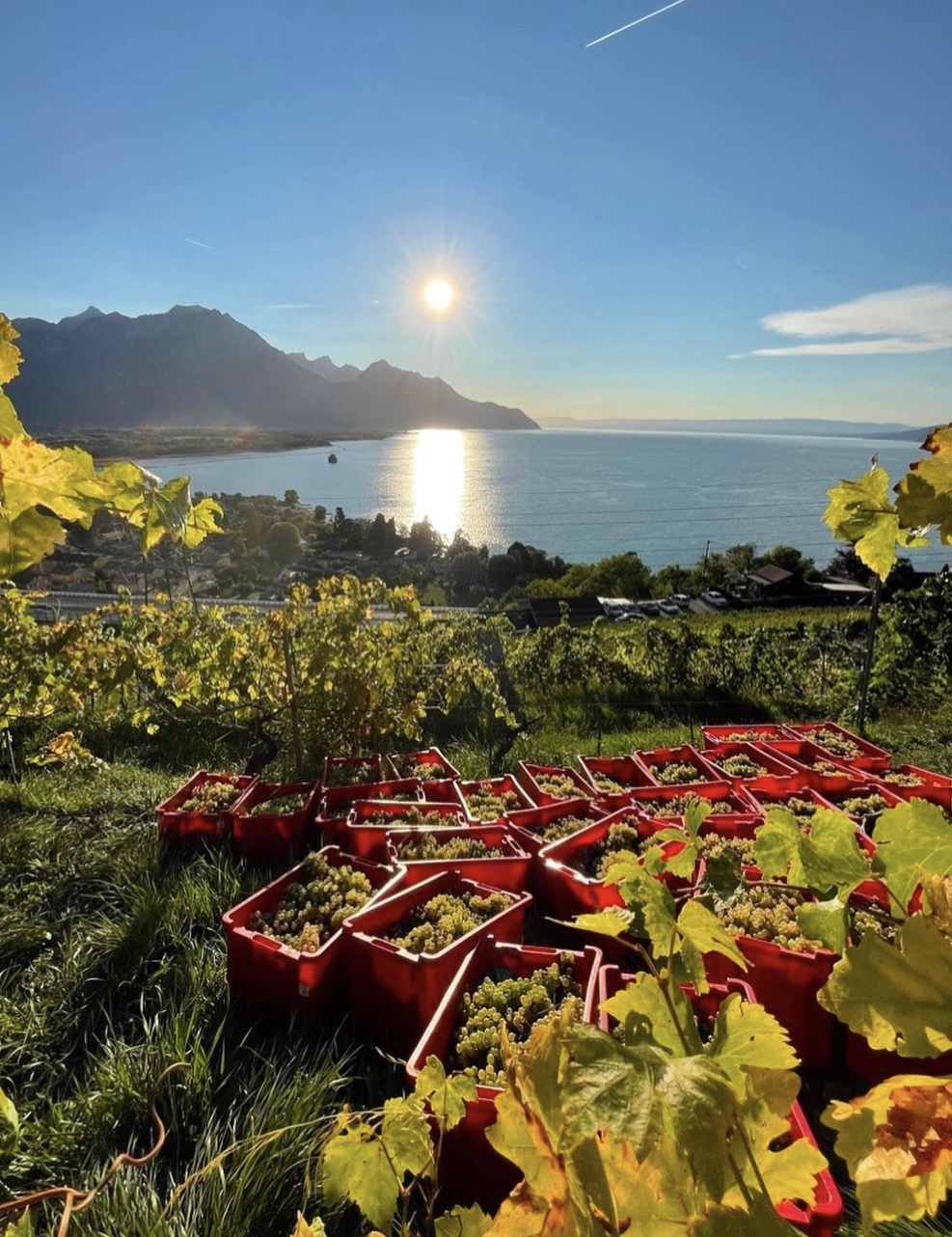
The vineyard he chose is not an easy one. Two parcels — "Sur La Rivaz" and "Les Terreaux" — climb the western slopes of Villeneuve at roughly 550 metres, terraced along the forest's edge on paths that lead hikers up toward the Rochers de Naye. The old plantings are the treasure: Chasselas vines dating from 1984 and 1988, kept alive on steep ground most modern growers would abandon, joined by Malbec, Merlot, Gamaret, Garanoir, Dornfelder, Chardonnay, Pinot Gris and Pinot Meunier.
The Place — Haut-Lac, Moraines & Limestone
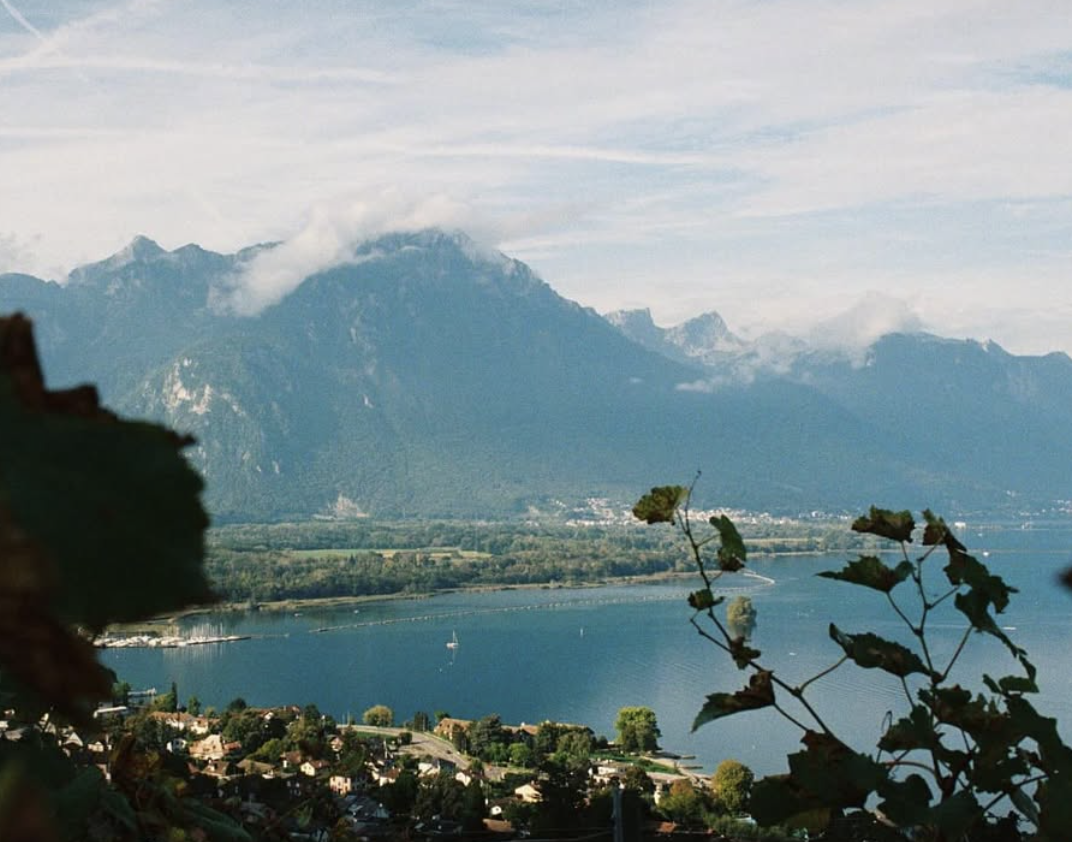
The Haut-Lac takes its name from its geography: the head of the lake, where the Rhône ends its Alpine descent and dissolves into Léman. Here the coteaux were once buried under a thousand metres of Rhône glacier, and the soils still carry that violence — glacial moraines from the last ice age over a deep clay-limestone base that gives the Chablais Vaudois its signature. Lake light by day, cold mountain air by night.
Beneath the Rochers de Naye
The parcels sit under the Rochers de Naye, the 2,042-metre limestone wall of the Vaudois Pre-Alps, at around 550 metres altitude. A short walk up the Tinière stream reaches the Col de Chaude — the continental watershed between the North Sea and the Mediterranean. Few vineyards in Switzerland stand so exactly at the meeting point of water, stone and sky.
The Marble of Mont d'Arvel
Villeneuve's subsoils have supplied building stone since Roman times: the quarries of Mont d'Arvel produced a crystalline limestone polished into "marble" that built the region. Château de Chillon — a few minutes' walk from the vines — rises from the same rock the vines root in. The lake's only natural island, the Île de Peilz with its mysterious old plane tree, sits just offshore.
Organic, Certified
All vines are grown without synthetic products and certified organic by BioInspecta. The only treatments are sulfur and copper against fungal pressure; no chemical herbicides touch the rows. Grass is kept wherever possible to feed biodiversity, keep soils alive and let mycorrhizae flourish.
Everything by Hand
Every task in the vineyard — pruning, training, harvest — is done by hand, and the grapes come down the terraces in small crates. On ground this steep there is no other way; and for Benjamin, that physical intimacy with each vine is not a cost of the terroir but its point.
Winemaking — Only Grapes, Guided Not Made
The cellar method is the vineyard method continued. Grapes are crushed and destemmed, macerated for more or less time depending on the wine, then pressed and left to ferment entirely on indigenous yeasts — no cultured yeast, no enzymes, no corrections. There is no fining and no filtration: the wines clarify by natural sedimentation over the winter. And not a single additive — sulfites included — enters the process at any stage, from crush to bottling.
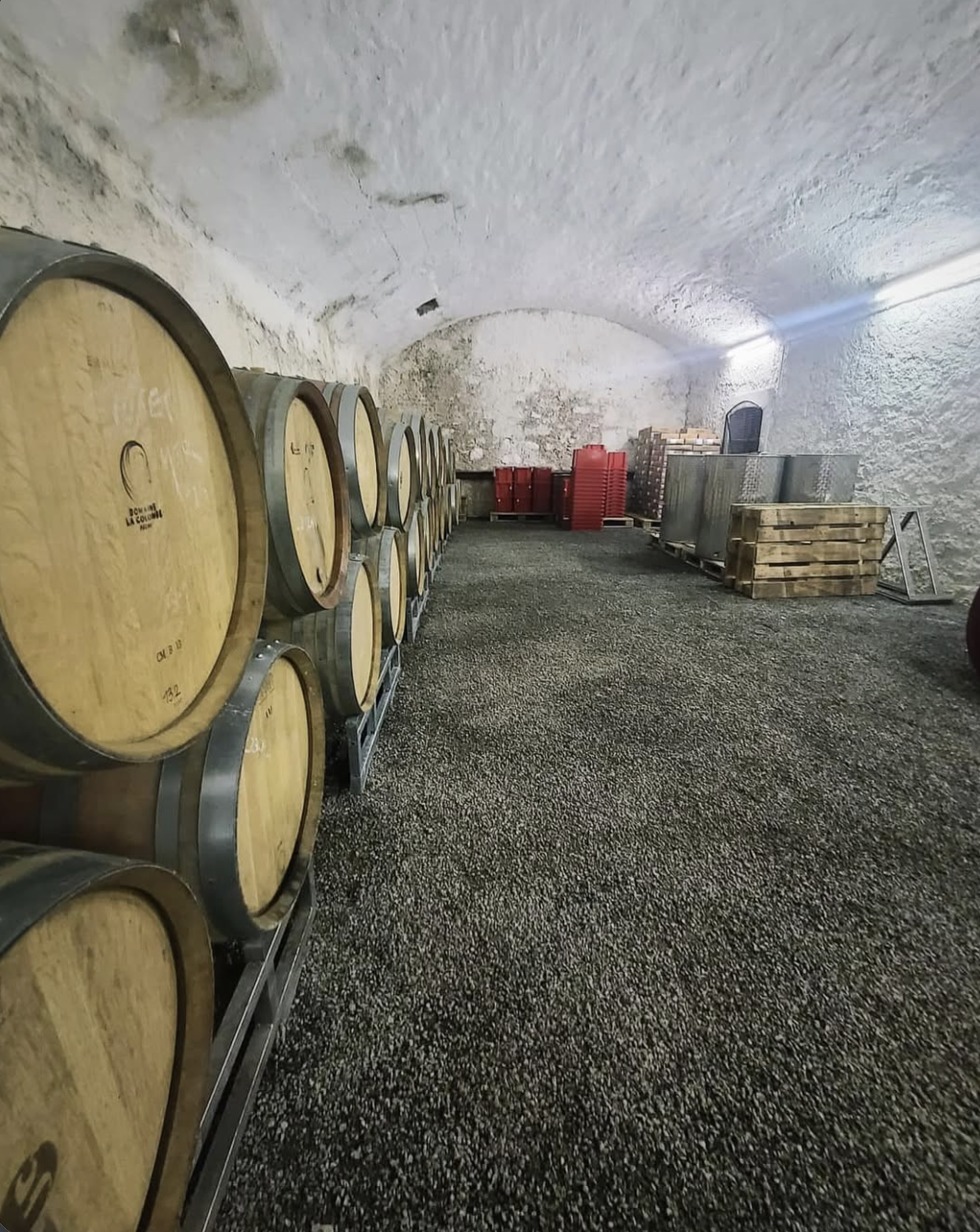
Ageing is patient and old-school. Most of the range rests gently in second-hand Burgundy barrels, letting time enter into harmony with the wine — a deliberate echo of the Côte de Beaune, whose mineral Chardonnays these alpine slopes quietly resemble. The cellar is his own now: a vaulted stone cellar in Yvorne, just up the hill from the Villeneuve slopes, where the wines rest through the winter until they settle clear on their own — and where visits are arranged by appointment.
From crush to cork, nothing is added and nothing is taken away: natural wines, pure and of terroir, made with nothing but the grape itself. "I guide and accompany the wines rather than create them," Benjamin says, "following my instinct and the vintage."
The Wines — Chablais, Unfiltered & Unadorned
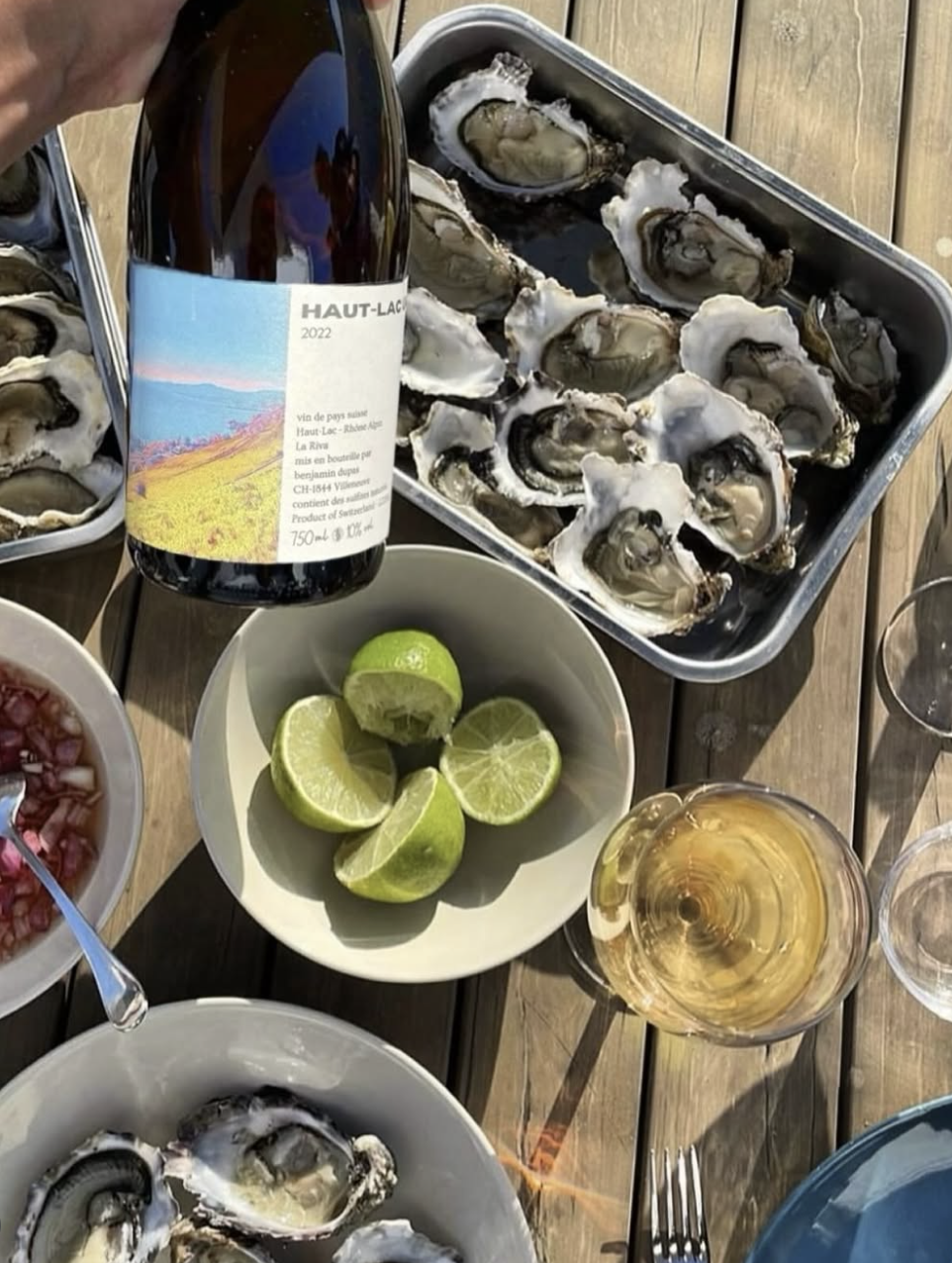
Production is tiny — a few thousand bottles a vintage — and roughly half to two-thirds leave Switzerland for natural-wine shelves across Europe. Every cuvée is spontaneously fermented, unfined, unfiltered and bottled without a trace of added sulfur.
In Chasselas We T…
The signature white — old-vine Chasselas, 1984 & 1988 plantingsThe Chablais' historic grape, raised on glacial moraine and limestone, fermented and aged in old Burgundy barrels. Crisp, mineral and quietly deep — the antithesis of the neutral Chasselas stereotype, and the purest expression of the domaine's slopes.
Kitoko Makasi
The orange wine — five varieties, skin contact, Lingala poetryChardonnay, Chasselas, Pinot Gris, Pinot Meunier and Malbec macerated together for apricot, spice and texture. The name is Lingala — "beautiful strength" — and the wine lives up to it: vivid, structured, and the domaine's most talked-about bottle abroad.
Bords d'Eaux
The supple red — Malbec & Merlot at 11%Whole-cluster Malbec and Merlot fermented in open vats, raised in neutral wood — juicy, floral and featherweight. A lake-country red built for charcuterie, cool service and second glasses.
Sur le Rocher
The alpine blend — Gamaret, Garanoir & Dornfelder at 12%Switzerland's own crossing, Gamaret, leads this stony, aromatic red with Garanoir and Dornfelder. Darker fruit, mountain herbs and real structure — the most terroir-driven of the reds, and a glimpse of what the Chablais can do beyond Chasselas.
Blouge & Small Lots
The experiments — an unvintaged Merlot-led red and one-off cuvéesBlouge — Merlot and Dornfelder without a vintage on the label — plus occasional micro-cuvées like a Chasselas–Pinot Gris orange blend. Few hundred bottles each; they surface at natural-wine fairs and specialist shops, then vanish until the next harvest.
Legacy — What a Sommelier Leaves Behind
Domaine de La Riva is a study in small-scale conviction. One hectare, two parcels, a few thousand bottles a year — and yet the wines travel: to natural-wine fairs, to specialist shops from Copenhagen to Paris, to lists where Benjamin himself once stood on the other side of the table. The domaine pours with the Association Suisse Vin Nature, appears in the RAW WINE directory and on Raisin, and holds its organic certification not as marketing but as proof of discipline.
The second legacy is custodial. Those 1984 and 1988 Chasselas plantings on terraced slopes beneath the Rochers de Naye are exactly the kind of vineyard Switzerland loses a little more of every year — too steep, too small, too old. By vinifying them without makeup and naming the results after the rock and the water, Benjamin keeps both the vines and their story alive: a lakeside Roman toll town, Savoyard castles, glacial moraines and all, in Burgundy bottles under natural cork.
And the legacy is a bridge between two worlds. A career spent serving great wine becomes a career making it; the dining room's demand for purity becomes the cellar's refusal of inputs. In the Haut-Lac — the head of the lake, where the Rhône ends and everything Alpine gathers — that feels like exactly the right place for a second act.