
Abruzzo.
Overview — The Wild Heart
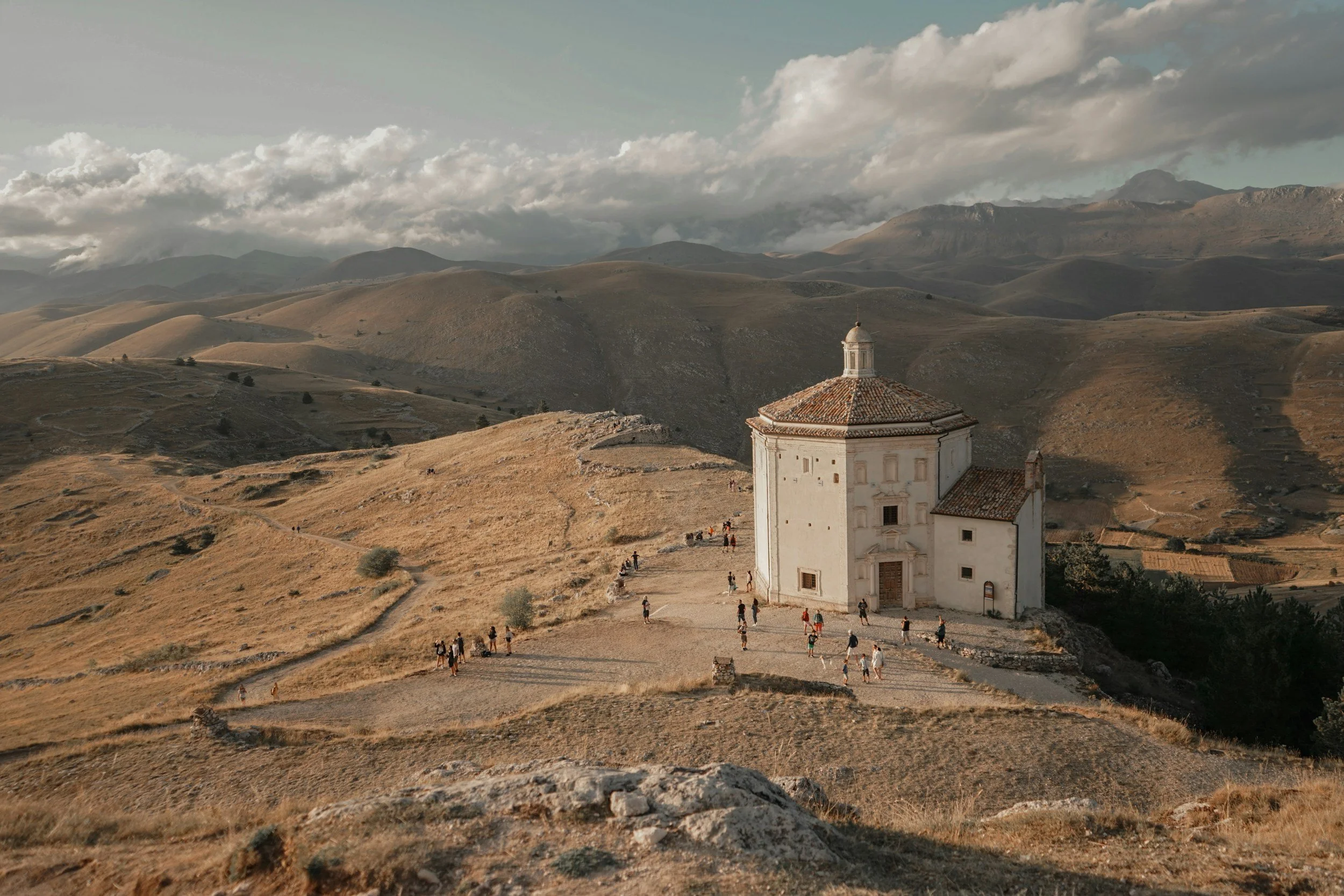
Abruzzo is where Italy stops being manicured. The Apennines run through its middle like a spine — Gran Sasso, Majella, Sirente-Velino — dropping to an Adriatic coast threaded with ancient fishing machines called trabocchi, and to a wilder, greener interior of high pastures and beech forest. A third of the region is protected parkland; it is routinely called the greenest region in Europe. The vines grow in the seams: on hillsides between 200 and 600 meters, in calcareous-clay soils, in a climate that swings between mountain cold and sea warmth.
For most of the twentieth century this meant one thing: Montepulciano d'Abruzzo, pumped out by cooperatives as reliable, cheap, dark red for export — the wine that taught America to mispronounce an Italian town. But two families refused the script. Emidio Pepe farmed biodynamically from 1964, destemming by hand and fermenting by wild yeast, making Montepulciano and Trebbiano of legendary longevity. Edoardo Valentini treated his old vines like an archive and his cellar like a temple, bottling tiny quantities of Trebbiano that collectors now chase like Burgundy.
Today the revolt is generational and confident. Cristiana Tiberio revived the almost-lost Pecorino grape from organic massal selections. Francesco Cirelli farms by the sea with amphorae and lunar calendars. I Fauri bottles biodynamic Montepulciano with zero sulfur and maximum nerve. The region's natural identity rests on three pillars: altitude (freshness no southern region can copy), native whites (Trebbiano, Pecorino, Passerina, Cococciola — a portfolio the reds overshadowed for decades), and continuity — in Abruzzo, natural wine isn't a trend; it's what the legends were already doing.
History — From Shepherd Tracks to Cult Bottles
Transhumance, monasteries, cooperatives — and two families who walked away from all of it.
Antiquity — Italic Tribes & Roman Roads
The Italic Piceni and Vestini tribes farm the hills before Rome; the Via Claudia Valeria and Via Tiburtina carry Roman legions and their vines from Rome to the Adriatic port of Hatria (Atri). Viticulture spreads through the interior valleys — the same corridors shepherds will use for millennia.
Middle Ages — Monasteries & Transhumance
Benedictine and later Celestine monasteries keep vines and cellars alive through the feudal centuries. The great sheep drove-roads — the tratturi — cross the region twice yearly; along them grow the taverns and traditions of Abruzzese pastoral cooking. Wine stays farmhouse, local, unrecorded.
1800s–1900s — Phylloxera & the Cooperative Age
Phylloxera arrives with the century's turn; replanting on American rootstock favors quantity. After the World Wars, cooperatives — Cantina Tollo, Casal Thaulero, the great Chieti cellars — industrialize Montepulciano into an export engine. Abruzzo becomes Italy's value red: honest, dark, anonymous.
1964 — The Pepe Break
Emidio Pepe, in the hills of Teramo, rejects the cooperative model entirely: no chemicals, no additives, no sulfur, wild fermentations, hand-destemming, and patient bottle aging before release. For decades the wines are a local secret; from the 1990s the world catches up, and back vintages of Pepe Montepulciano begin trading at auction prices.
1950s–2000s — The Valentini Enigma
Edoardo Valentini — "the lord of the vines" — farms old, low-yielding vineyards around Loreto Aprutino with methods he refuses to document. His Trebbiano d'Abruzzo becomes the most sought-after white in Italy; his Cerasuolo its most profound rosato. He dies in 2006 leaving the legend — and the dogma — to his family.
2010s–Present — The Young Guard
A new generation, many trained abroad, returns to the hills: Cirelli's amphora wines by the sea, Tiberio's biodynamic Pecorino revival, I Fauri's zero-sulfur reds, Torre dei Beati's Cerasuolo craft. Abruzzo's narrative flips — from Italy's value red to one of its most credible natural wine regions.
"The wine is made in the vineyard; the cellar only keeps it honest."
— Abruzzese cellar saying, carved above many a cantina doorTerroir — Mountains, Hills & the Trabocchi Sea
Six faces of a small, wild region — every one of them a different argument for the same grapes.
⛰️ Colline Teramane (Teramo Hills)
The DOCG zone in the north — calcareous-clay hills between Teramo and the Gran Sasso massif, 250–450 meters. Cool nights and big diurnal swings give Montepulciano its most structured, age-worthy form. Emidio Pepe and Nicodemi farm here; the hills feel like a balcony over the Adriatic.
🌊 The Pescara Hills
The central coastal arc — Loreto Aprutino, Spoltore, Cugnoli, Pianella — where Valentini, Tiberio, Ciavolich, Barba and La Valentina cluster. Limestone and clay at 200–350 meters, sea influence moderating the heat, and the densest concentration of quality estates in Abruzzo.
🏔️ The High Valleys (Gran Sasso & Majella)
The mountain seam: Ofena in the Tirino valley (Cataldi Madonna, 450m) and Popoli at the Majella's foot (Valle Reale's high vineyards). Some of the highest Montepulciano in Italy — wines of Alpine breath, herbal tension and startling freshness.
🏛️ Valle Peligna & the Interior
The broad valley of Sulmona, Ovid's birthplace, ringed by mountains and famous for saffron and confetti. Continental winters, hot summers; Feudo Antico works its amphora cellar on a prehistoric settlement near Tocco da Casauria. The interior's answer to the coast.
🎣 The Trabocchi Coast (Chieti)
The southern shoreline between Ortona and Vasto — limestone cliffs, fishing piers on stilts (trabocchi, now floating restaurants), and sea-breeze vineyards. Cirelli farms here; the wines carry a saline edge no inland site can imitate.
🧀 Native White Territory
Wherever the hills roll gently — especially around Cugnoli and the northern border with Marche — grow the native whites: Trebbiano d'Abruzzo's best old-vine plots, revived Pecorino, Passerina, Cococciola and Montonico. A white-wine portfolio as deep as the red is famous.
The Winemaker Series — Eighteen Estates of the Wild Heart
From the legends of 1964 to the zero-sulfur young guard — the people who made Abruzzo natural wine's deep archive. Click through to read each profile.
Emidio Pepe
Torano Nuovo, Teramo. The legend. Organic since 1964, biodynamic long before the word existed — hand-destemmed Montepulciano and Trebbiano of uncanny longevity, fermented by wild yeast in glass-lined cement. The benchmark of natural Abruzzo.
Edoardo Valentini
Loreto Aprutino, Pescara. “The lord of the vines.” A peasant aristocrat who made tiny quantities of Trebbiano and Cerasuolo of mythical depth and refused to explain how. Estate continues the dogma: old vines, low yields, no compromise.
Agricola Tiberio
Cugnoli, Pescara. Cristiana Tiberio's biodynamic estate — the revival of the rare Pecorino and old-vine Trebbiano from organic clones. Rigorous, precise, quietly becoming Abruzzo's white-wine reference.
Cirelli
Atri, Teramo. Francesco Cirelli farms organically by the Adriatic with amphorae, cover crops and lunar calendars — mountain-fresh Montepulciano and skin-contact whites that made Abruzzo natural wine cool again.
Torre dei Beati
Alanno, Pescara. The Cerasuolo masters. Organic Montepulciano in three colors — red, rosato, and the cult “Mazzamurello” — from a tower estate on the Pescara hills, all wild ferment, all soul.
Cataldi Madonna
Ofena, L'Aquila. High in the Tirino valley at 450 meters — unoaked, single-vineyard Montepulciano and the benchmark “Giulia” Pecorino. Altitude, calcareous soil and a stubborn devotion to transparency.
I Fauri
Pianella, Pescara. The young guard: biodynamic Montepulciano and Trebbiano, picked early, zero sulfur, bottled unfiltered. Energy over extraction — the new Abruzzo in a glass.
Valle Reale
Popoli, Pescara. The mountain estate. Organic vineyards at the foot of the Majella, some of the highest in the region — “Vigneto di Popoli” is Montepulciano with Alpine breath.
La Valentina
Spoltore, Pescara. “Spelt” is one of the most decorated Montepulcianos in Italy — an estate that proved the cooperative-adjacent hills could produce world-class, terroir-driven red.
Feudo Antico
Tocco da Casauria, Pescara. An ancient cellar on a prehistoric settlement — native grapes, amphora and concrete, organic farming on the Peligna side. History as a winemaking tool.
Masciarelli
San Martino sulla Marrucina, Chieti. Gianni Masciarelli dragged Abruzzo out of the cooperative era in the 1980s; the estate still sets the bar for structured, ageworthy Montepulciano across 60+ biodynamic-minded hectares.
Nicodemi
Notaresco, Teramo. Colline Teramane DOCG territory — organic Montepulciano from calcareous-clay hills, cru-level power with a natural-farmer's restraint.
Ciavolich
Loreto Aprutino, Pescara. A 500-year-old family palazzo with a candlelit cellar — Chiara Ciavolich makes textured Montepulciano and reviving whites from the estate's historic vineyards.
Fontefico
Vasto, Chieti. The coastal ones — organic farming between the Trabocchi shore and the hills, salty, savory Montepulciano and fresh Pecorino with sea-breeze acidity.
Cantina Tollo
Tollo, Chieti. The cooperative reformed — one of Italy's great quality co-ops, organic conversion across member vineyards, honest Cerasuolo at honest prices.
Barba
Pescara. The modernists — precise, cru-level Montepulciano from old bush vines above Pescara, balancing tradition and polish.
Zaccagnini
Bolognano, Pescara. The showman — every bottle tied with a vine twig (the famous Tralcetto), and the “San Clemente” cru proving showmanship and substance can coexist.
Illuminati
Controguerra, Teramo. The classic — a Controguerra family since 1890, Riparosso and Zanna bottlings that defined traditional Montepulciano for a generation.
The Grapes — The Red Giant & the White Renaissance
Montepulciano
The Red Giant — All of AbruzzoThick-skinned, late-ripening, generous in color and tannin — the third-most-planted red in Italy. At altitude and in natural hands it becomes something finer than the export stereotype: dark cherry, dried herbs, iron, tobacco; structured but fresh, with a savory finish built for lamb. Short maceration of the same juice gives Cerasuolo — Abruzzo's cherry-pink rosato of real substance.
Trebbiano d'Abruzzo
The Cult White — Old Vines of Pescara & TeramoA distinct, superior Trebbiano — from low-yielding old vines it yields waxy, deep, age-worthy whites of honey, chamomile, almond and sea air. Valentini's version is the most collected white in Italy; Pepe's, fermented on skins in cement, is its natural counterpart. The grape that proved Abruzzo's whites deserve the front page.
Pecorino
The Revived One — Northern HillsNearly extinct by the 1990s, revived by Guido D'Angelo and perfected biodynamically by Cristiana Tiberio from massal selections of old vines. High-acid, saline, faintly herbal — somewhere between Chablis and mountain Vermentino. Now Abruzzo's fashionable white and a template for the region's white renaissance.
Passerina & Cococciola
The Next Wave — Hills Behind the CoastPasserina brings floral aromatics and easy freshness; Cococciola — once nearly gone — gives grapefruit-pith bitterness and grip. Both are being reclaimed by the young guard as textured, food-driven whites, often with a whisper of skin contact. The portfolio depth no one expected from "red wine country."
More Abruzzo Varieties — The Deep Bench
Montonico: the interior's ancient white, savory and rare. Tintilia: the border grape of the far south, tannic and dark. Cococciola's cousins: a family of nearly-lost whites being inventoried in the experimental nurseries of the young guard. The region's ampelographic attic is still being catalogued — each vintage seems to surface another forgotten vine.
Food — Shepherds, Saffron & the Sea
For Montepulciano
Arrosticini — the region's soul food: skewers of castrated lamb grilled over charcoal, eaten by the dozen with bread soaked in dripping. Also maccheroni alla chitarra with lamb ragù, agnello cacio e ovo (lamb with cheese and egg), and aged pecorino from the mountain pastures.
For Trebbiano & Pecorino
Brodetto — the Adriatic fish stew of Chieti and Pescara, fourteen kinds of fish in tomato and saffron; raw scapece fish from the trabocchi; saffron of Navelli risotto; and the interior's fritto misto of lamb offal for the brave.
For Cerasuolo
The rosato's best friends are pecorino cheese (young, barely aged), faraona arrosto (roast guinea fowl), ventricina — the region's great spreadable salami — and summer tables of olive ascolane and fried zucchini flowers.
Sweets & Endings
Parrozzo — Sulmona's dome of almond and semolina, drowned in chocolate, with a glass of old-vine Trebbiano. Confetti di Sulmona — the sugared almonds that are the region's gift to every Italian wedding. Pizzelle, the iron-griddled waffles of every nonna's kitchen.
Abruzzo Culinary Traditions
Arrosticini culture: born with the transhumance shepherds — tiny skewers grilled on the fornacella, a channel of charcoal; eaten standing, with your hands. La chitarra: the string-cut pasta tool that gives maccheroni their square edges — ragù mandatory. Saffron of Navelli: since the Middle Ages, still hand-harvested in the high plateau. Trabocchi dining: fish eaten on the sea itself, on the stilted piers of the Chieti coast. Pastoral cheese: pecorino from the tratturi shepherds' routes, sharp, oily, unforgettable.
Visiting — Mountains in the Morning, Sea by Lunch
🏔️ The Interior & National Parks
Base in Sulmona (Ovid's town, confetti, gateway to the Majella) or L'Aquila (rebuilt and resilient, gateway to Gran Sasso). Hike the Gran Sasso — the Apennines' highest summit, with the Calderone glacier — or the Majella's hermitage trails. Pacentro, Scanno and the high villages are among Italy's prettiest. Autumns are golden; winters are serious.
🌊 The Trabocchi Coast
The Costa dei Trabocchi between Ortona and Vasto — a cycle path strings the stilted fishing piers, several now restaurants. Fish is the point: brodetto in Chieti, scapece in Pescara. Pair with Cirelli's wines grown within sight of the water. Best May–June and September.
🏰 The Wine Hills
The estates cluster on two arcs: the Pescara hills (Loreto Aprutino, Cugnoli, Spoltore) and the Teramo hills beneath Gran Sasso. Almost all visits are by appointment — the cellars are family affairs and often double as agriturismi. Pepe releases are allocated years ahead; Valentini is found, not visited.
Travel Tips
Timing: harvest is late September–October; spring and autumn are glorious, August is beach-only. Transport: fly into Pescara (seasonal) or Rome (2.5 hours by train to L'Aquila/Pescara via Avezzano); a car is essential for the hills. Book ahead: every cellar visit is by appointment. Budget bonus: Abruzzo is still Italy's best value — great wines, half the price of Tuscany.
7-Day Natural Wine Itinerary
Day 1 — Arrive Pescara: seafront aperitivo, dinner of brodetto. Day 2 — Pescara hills: Loreto Aprutino's olive-oil museum and Ciavolich's candlelit cellar; evening in the village. Day 3 — Cugnoli & Spoltore: Agricola Tiberio (Pecorino revival), La Valentina or Barba; lunch of arrosticini in Pianella. Day 4 — Teramo hills: Emidio Pepe country (appointment, well ahead); Gran Sasso foothills at sunset. Day 5 — Transfer via Sulmona: confetti shops, saffron detour to Navelli; sleep in the Peligna valley. Day 6 — Trabocchi coast: cycle the piers, swim, lunch on a trabocco; Cirelli tasting in Atri. Day 7 — Departure: slow morning; out via Pescara or Rome. Alternative: swap day 5–6 for the Majella's hermitage trails and high-summer pasture visits.