

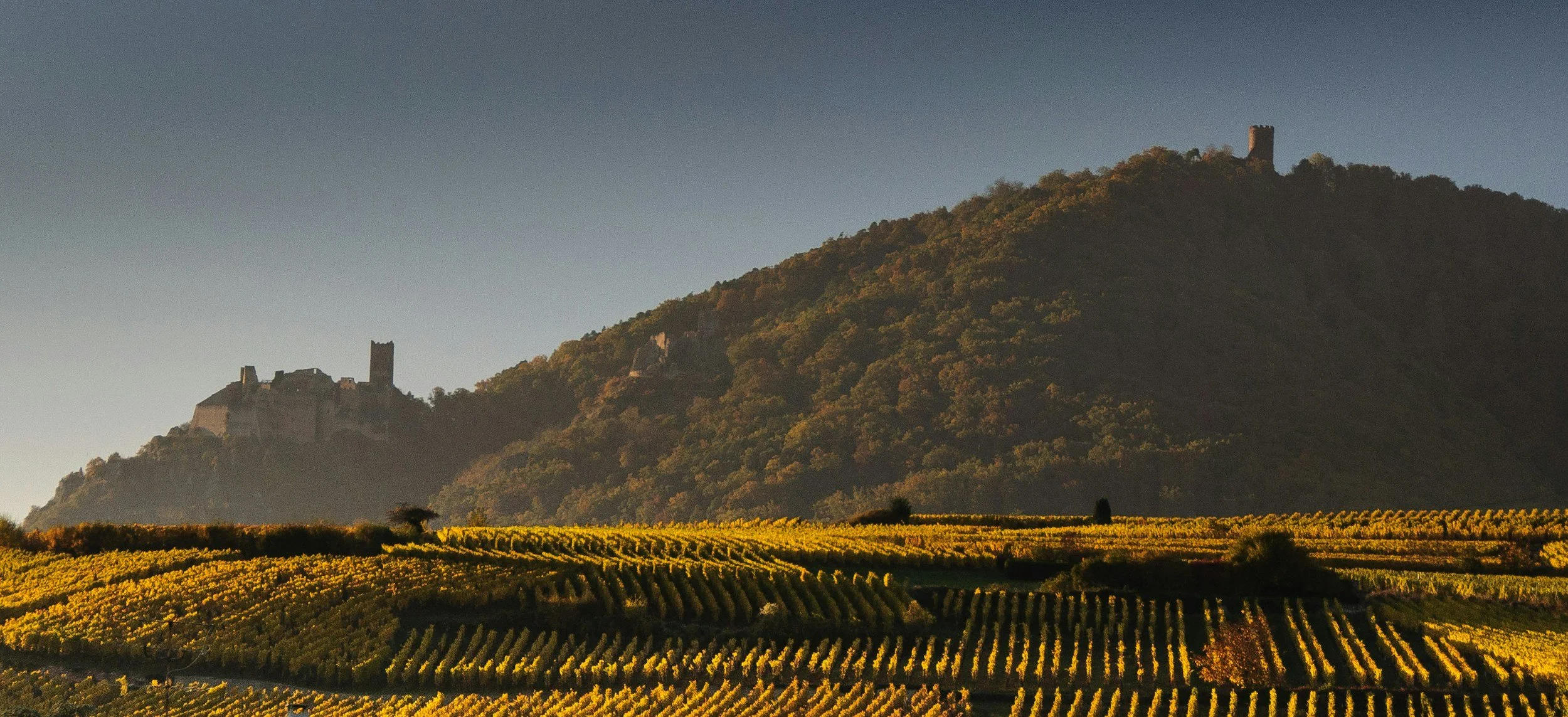
Alsace
From the granite slopes of the Vosges to the limestone plains of the Rhine, discover France's most dynamic natural wine region—where 12.8% of all biodynamic vineyards produce Riesling, Gewürztraminer and Pinot Gris of startling purity and precision
The New Generation
Young winemakers reshaping Alsace's natural wine future
Alsace is France's most geologically diverse wine region and its biodynamic capital. Despite representing less than 5% of France's vineyard acreage, Alsace accounts for 12.8% of the country's certified biodynamic vineyards. This is a region where natural wine isn't a trend—it's a tradition that dates back to the 1990s pioneers like Domaine Barmès-Buecher (certified 1998) and continues through a new generation of winemakers who are pushing boundaries with zero-sulfur wines, skin-contact cuvées, and experimental terroir expressions.
This guide focuses on the new generation of Alsace natural winemakers—producers who have inherited or founded small estates and are reimagining what Alsatian wine can be. From Anaïs Fanti's organic Gewürztraminer orange wines in Ammerschwihr to Léo Dirringer's elegant biodynamic cuvées in Dambach-la-Ville, from Patrick Meyer's zero-sulfur Rieslings in Nothalten to Pierre Weber's volcanic sandstone Pinot Noirs in Husseren-les-Châteaux, these are winemakers who combine respect for tradition with radical innovation.
What unites them is a commitment to organic or biodynamic farming, native yeast fermentation, and minimal sulfur (often zero). They work with the region's "noble grapes"—Riesling, Gewürztraminer, Pinot Gris, Muscat, Pinot Blanc, Sylvaner, and Pinot Noir—but treat them with a freedom that previous generations couldn't imagine. The result is wines that are pure, vibrant, and deeply expressive of Alsace's complex terroir—granite, limestone, marl, sandstone, and volcanic soils.
Key Facts
- Location: Northeast France, Vosges Mountains
- Size: 15,600 hectares
- Main Grapes: Riesling, Gewürztraminer, Pinot Gris
- Climate: Continental, dry, sunny
- Soils: 13 distinct types (granite, limestone, marl)
- Key Movement: Biodynamic pioneer (since 1998)
- Notable: 51 Grand Cru sites
From German Roots to French Natural Wine
2,000 years of history, 30 years of biodynamic revolution
Roman Plantings
Romans establish vineyards in Alsace, recognizing the potential of the Vosges foothills. The region's position on the Rhine makes it a strategic trading hub.
Thirty Years' War
The Treaty of Westphalia ends the war, but Alsace remains contested territory between France and Germany for centuries. This dual heritage shapes the region's wine culture.
Grand Cru System
Alsace establishes its Grand Cru classification, eventually recognizing 51 sites. Only four "noble grapes" (Riesling, Gewürztraminer, Pinot Gris, Muscat) are permitted in Grand Cru wines.
Biodynamic Pioneers
Domaine Barmès-Buecher converts to biodynamics, becoming one of the first certified estates in Alsace. The region quickly becomes France's biodynamic capital.
The Natural Wave
Producers like Patrick Meyer (Julien Meyer), Jean-Pierre Rietsch, and the Kumpf & Meyer family embrace organic farming, minimal sulfur, and native yeasts.
New Generation Arrives
Young winemakers like Anaïs Fanti (2020), Léo Dirringer, Léonard Dietrich, and Pierre Weber establish estates or take over family vineyards, bringing fresh energy and zero-zero experimentation to the region.
Granite, Limestone & Volcanic Soils
13 soil types in a 10-mile-wide strip
⛰️ Granite
The dominant soil of the Vosges foothills, providing structure and minerality. Riesling thrives here, developing laser-like acidity and aging potential. Found in Grand Crus like Rangen de Thann and Brand.
🗻 Limestone & Marl
Calcareous soils that give wines roundness and body. Gewürztraminer and Pinot Gris excel here. The marl-limestone mix of the Zotzenberg Grand Cru is famous for Sylvaner.
🌋 Volcanic Sandstone
Unique to sites like Heiligenstein (where Yannick Meckert works), this soil provides distinctive smoky, flinty character. Riesling from here has a particular savory quality.
🏔️ Gneiss & Schist
Metamorphic rocks that provide minerality and freshness. Found in the northern Alsace, these soils produce elegant, linear wines with pronounced acidity.
💨 The Vosges Rain Shadow
The mountains protect Alsace from Atlantic weather, making it one of France's driest regions. This allows organic farming with minimal disease pressure.
🌿 Grand Cru Diversity
51 distinct Grand Cru sites, each with unique soil and exposure. From the steep granite of Rangen to the gentle limestone of Hengst, Alsace offers unparalleled terroir expression.
Key Natural Wine Terroirs
| Terroir | Location | Soil | Natural Wine Character |
|---|---|---|---|
| Ammerschwihr | Central Alsace | Granite, sand | Anaïs Fanti's organic Gewürztraminer; historic village |
| Nothalten | Bas-Rhin | Gneiss, clay, shale | Patrick Meyer's biodynamic Riesling; multiple terroirs |
| Husseren-les-Châteaux | South of Colmar | Clay-limestone, marl | Pierre Weber's Grand Cru Eichberg; volcanic influences |
| Mittelbergheim | Bas-Rhin | Marl-limestone | Rietsch family's 7 generations; Zotzenberg Grand Cru |
| Dambach-la-Ville | Central Alsace | Granite, sand | Léo Dirringer's elegant biodynamic wines; 14 hectares |
| Rosheim | Near Strasbourg | Clay-limestone | Kumpf & Meyer's experimental cuvées; 1997 founded |
The Featured Producers
The new generation defining Alsace natural wine
The Rising Stars
The Innovators
The Young Visionaries
The Grapes of Natural Alsace
The "noble varieties" and the art of blending
Riesling
The most prestigious Alsace grape, achieving its greatest expression on granite and volcanic soils. Natural winemakers emphasize its purity and aging potential over residual sugar.
- Plantings: ~21% of vineyard
- Style: Lime, green apple, petrol, mineral
- Natural Wine Role: Zero sulfur, native yeast, long aging
- Top Producers: Meyer, Weber, Rietsch
- Notable: Can age 10-20+ years
Gewürztraminer
The "spice grape" of Alsace, known for intense aromatics. Natural winemakers use skin contact (maceration) to add structure and create "orange" wines that challenge traditional sweet styles.
- Plantings: ~18% of vineyard
- Style: Lychee, rose, ginger, tropical fruit
- Natural Wine Role: Skin contact for structure
- Top Producers: Fanti, Kumpf-et-Meyer, Dietrich
- Notable: "Orange" Gewürztraminer is signature
Pinot Gris
Full-bodied and rich, Pinot Gris responds well to skin contact and lees aging. Natural winemakers often macerate it to create complex, food-friendly wines.
- Plantings: ~15% of vineyard
- Style: Pear, honey, smoke, full body
- Natural Wine Role: Maceration wines ("Quand le Chat...")
- Top Producers: Rietsch, Meyer
- Notable: Often blended in "Gentil" cuvées
The Supporting Cast
Sylvaner: Once dismissed as "country wine," now prized for its mineral, saline character. The Zotzenberg Grand Cru permits Sylvaner—unique in Alsace. Rietsch and Meyer make profound examples.
Pinot Blanc & Auxerrois: Often blended, these provide fresh, apple-scented wines. Kumpf-et-Meyer's "Je Suis de Marne" blends them with Riesling and Gewürztraminer.
Pinot Noir: The only red grape permitted in Alsace AOC. Natural winemakers use whole cluster fermentation to create light, Burgundian-style reds. Weber, Meckert, and Fanti are Pinot Noir specialists.
Muscat: Two varieties (Muscat d'Alsace and Muscat Ottonel) produce aromatic, floral wines. Often made dry by natural winemakers.
Food Pairing & Gastronomy
Natural Alsace meets Franco-German cuisine
Pairings for Riesling & Co.
- Choucroute: Sauerkraut with sausages and pork
- Fish: Trout, pike-perch, simply prepared
- Cheeses: Munster, Comté, aged goat
- Asian: Thai, Vietnamese, spicy dishes
- Smoked: Salmon, trout, ham
- Local match: Tarte flambée (flammekueche)
Pairings for Gewürztraminer & Pinot Gris
- Exotic spices: Indian, Moroccan, Thai curries
- Strong cheeses: Roquefort, Époisses, washed rind
- Foie gras: The classic Alsace pairing
- Fruit desserts: Tarte tatin, fruit tarts
- Game: Venison with fruit sauces
- Local match: Kugelhopf (Alsatian cake)
Alsace Gastronomy
Alsace has a unique Franco-German culinary tradition. Choucroute garnie (sauerkraut with sausages, pork, and potatoes) is the regional dish, demanding dry Riesling to cut through the richness. Tarte flambée (flammekueche)—thin bread dough with crème fraîche, onions, and lardons—is the perfect pairing for young Pinot Blanc. Munster cheese, with its pungent aroma, requires Gewürztraminer's intensity. The region's gingerbread (pain d'épices) and Kugelhopf (yeast cake) are traditional desserts. Natural Alsace wines, with their purity and lack of residual sugar, pair more elegantly with this hearty cuisine than the heavy, sweet wines of the past.
Visiting Natural Alsace
From the Route des Vins to the hidden cellars of the Vosges
🍇 The Route des Vins
Start in Strasbourg and follow the 170km wine route south to Colmar. Visit Jean-Pierre Rietsch in Mittelbergheim, Yannick Meckert in Rosheim, and Léonard Dietrich in Dambach-la-Ville. The villages of Riquewihr and Eguisheim offer picture-perfect settings.
⛰️ The Grand Crus
Explore the 51 Grand Cru sites. Visit Pierre Weber in Husseren-les-Châteaux (Grand Cru Eichberg). Taste the difference between granite (Rangen), limestone (Hengst), and volcanic (Heiligenstein) terroirs. The views of the Vosges are spectacular.
🏔️ Colmar & the South
Base yourself in Colmar to visit Anaïs Fanti in Ammerschwihr, Léo Dirringer in Dambach-la-Ville, and Patrick Meyer in Nothalten. The Unterlinden Museum and the Petite Venise district are essential stops.
5-Day Natural Wine Itinerary
Day 1 - Strasbourg: Arrive in Strasbourg, explore the cathedral and Petite France. Dinner at a winstub (traditional Alsatian restaurant) with Yannick Meckert wines. Overnight in Strasbourg.
Day 2 - Northern Alsace: Drive to Mittelbergheim (40 minutes). Visit Jean-Pierre & Sophie Rietsch for macerated wines and family history. Continue to Rosheim to visit Kumpf & Meyer. Overnight in Obernai.
Day 3 - Central Alsace: Visit Léonard Dietrich in Dambach-la-Ville. Continue to Ammerschwihr to meet Anaïs Fanti and taste her orange Gewürztraminer. Lunch in Colmar. Afternoon at Léo Dirringer. Overnight in Colmar.
Day 4 - Grand Crus: Drive to Husseren-les-Châteaux to visit Pierre Weber and his Grand Cru Eichberg vineyards. Continue to Nothalten to meet Patrick Meyer and taste his biodynamic Rieslings. Overnight in Colmar.
Day 5 - Southern Alsace: Visit Fanny & Jules Kleinknecht in Mittelbergheim on your return north. Stop at the Haut-Koenigsbourg castle for views. Return to Strasbourg or extend to the Jura.