

Northeast France
Alsace
Where the Vosges Mountains meet the Rhine,
a mosaic of terroirs creates wines of crystalline purity
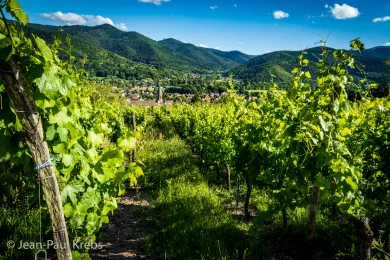
Nestled between the Vosges Mountains and the Rhine River, Alsace is France's northernmost wine region, yet paradoxically one of its driest and sunniest. This unique geography creates a semi-continental climate protected from western rains, allowing grapes to ripen slowly while retaining brilliant acidity.
A History Written in Stone
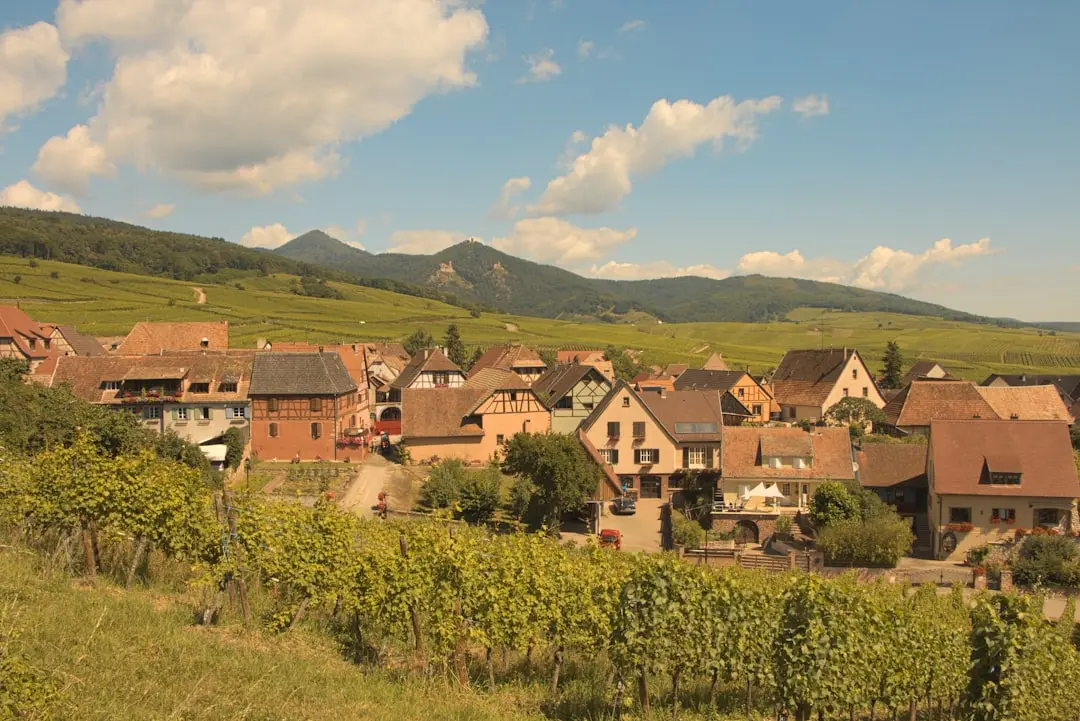
The story of Alsace wine begins over 2,000 years ago when Roman legions first planted vines along the Rhine. But it was the medieval monasteries that elevated viticulture to an art form, meticulously mapping the best slopes and establishing the foundation of today's Grand Cru sites.
The region's tumultuous history—oscillating between French and German control over centuries—created a unique hybrid culture. This is reflected in the tall, slender "flute" bottles (traditionally Germanic) and grape varieties like Riesling and Gewürztraminer that speak to Germanic roots, yet crafted with French precision.
"On April 20, 1972, four thousand winemakers brought Colmar to a standstill, protesting against bulk wine and advocating for the bottling of all Alsace appellation wines."
— The 1972 Revolution
1962
AOC Alsace officially recognized
1975
First Grand Cru sites designated (Schlossberg)
1983
Vendanges Tardives & SGN classifications added
2024
Pinot Noir authorized in Grand Crus; bottle shapes modernized
The Noble Seven
Alsace specializes in single-varietal wines—a rarity in France—allowing each grape's personality to express its terroir with crystalline clarity.
Riesling
21%The king of Alsace grapes. Not to be confused with sweet German versions, Alsatian Riesling is dry, racy, and mineral.
Top Grand Crus
Schlossberg, Rosacker, Sommerberg
Gewürztraminer
18%The most aromatic of all wine grapes. Alsace is the world's largest producer with over 2,200 hectares of this spicy, floral variety.
Top Grand Crus
Hengst, Mambourg, Kaefferkopf
Pinot Gris
17%Formerly called Tokay d'Alsace, this grape produces rich, smoky wines with surprising aging potential.
Top Grand Crus
Brand, Rangen, Vorbourg
Pinot Blanc
25%The workhorse of Alsace, often blended with Auxerrois. Fresh, easy-drinking, and the base for most Crémant d'Alsace.
Style
Crisp, light, perfect for apéritif
Muscat
3%Made from two varieties: Muscat d'Alsace (Muscat Blanc à Petits Grains) and Muscat Ottonel. Always dry and intensely grapey.
Unique Trait
Smells sweet, tastes completely dry
Sylvaner
4%The rising star of Alsace. Once maligned, now celebrated for its refreshing acidity and moderate alcohol in a warming climate.
Renaissance
Natural wine producers' favorite
Pinot Noir
Once a minor player, Pinot Noir now commands 13% of plantings. In 2024, Vorbourg joined Kirchberg and Hengst as the third Grand Cru authorized for red wine, recognizing Alsace's potential for structured, mineral-driven Pinot Noir.
The Mosaic of Terroirs
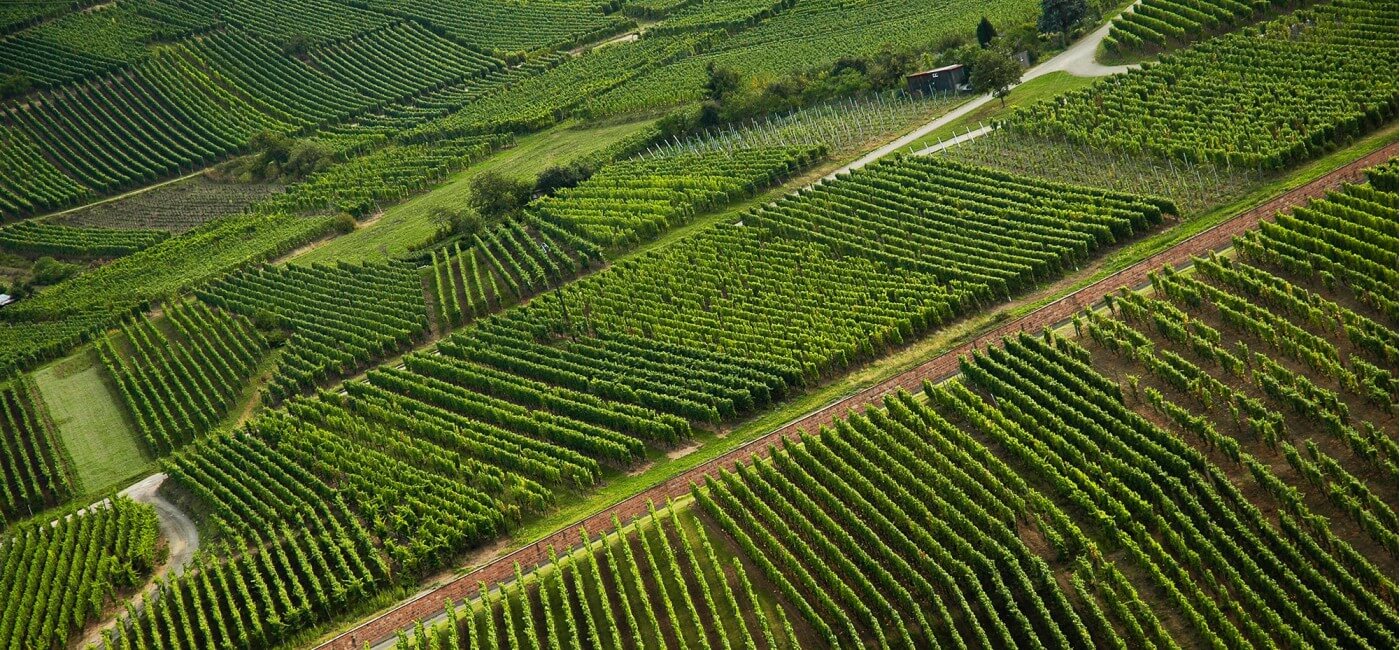
Alsace possesses one of the world's most geologically complex vineyards. The collision of tectonic plates created a patchwork of 13 distinct soil types across just 15,500 hectares.
Granite & Gneiss
Vosges SlopesAncient crystalline bedrock (>570 million years) producing coarse, acidic soils. Vines struggle here, creating low yields with intense concentration.
Wine Character: Crystalline purity, floral aromatics, laser-like acidity, stony minerality. Best for Riesling.
Examples: Schlossberg, Brand, Sommerberg
Limestone & Marl
Sub-Vosgian HillsMarine sedimentary rocks from Triassic and Jurassic seas. These alkaline soils provide structure and aging potential.
Wine Character: Broad acidity, substantial body, austere in youth, developing honeyed complexity with age.
Examples: Osterberg, Rosacker, Zinnkoepflé
Volcanic Tuff
Thann RegionAncient Permian basalt (300 million years old), dark and heat-retaining. The only true volcanic terroir in the region.
Wine Character: Smoky, flinty aromas, powerful structure, exceptional longevity. Intensely mineral.
Example: Rangen de Thann (sole Grand Cru)
Schist
Andlau RegionRare layered metamorphic rocks, rich in minerals. Excellent drainage and heat retention create wines of unique tension.
Wine Character: Nervy, racy acidity, smoky/stony notes, slow to open up. Wines of great longevity.
Example: Kastelberg (only Grand Cru on schist)
Soil Distribution Across the Region
Granite
Mixed
Volcanic
Vosges Mountains (West) → Rhine Plain (East)
The 51 Grand Crus
Established between 1975 and 2007, these exceptional terroirs represent the pinnacle of Alsace winemaking.
Schlossberg
Kaysersberg • Granite
The first Grand Cru (1975). Pure granite produces Rieslings of crystalline precision and incredible aging potential.
Hengst
Wintzenheim • Marl-Limestone
Powerful Gewürztraminer terroir. Heavy clay-limestone soils create opulent, spicy wines that evolve into truffle and dried fruit complexity.
Rangen
Thann • Volcanic Tuff
The only Grand Cru on 100% volcanic soil. Steep slopes (up to 60°) yield intensely smoky, mineral wines with massive structure.
Kastelberg
Andlau • Schist
The sole schist Grand Cru. Produces taut, austere Rieslings that demand patience but reward with incredible complexity.
Rosacker
Hunawihr • Limestone
Famous for both Riesling and Gewürztraminer. Muschelkalk limestone provides straight, structured wines with saline minerality.
Zotzenberg
Mittelbergheim • Marl
The only Grand Cru where Sylvaner is permitted. Produces rich, textured wines that challenge the variety's humble reputation.
Understanding the Hierarchy
AOC Alsace
The base appellation. Must be single-varietal (or Edelzwicker blend). 8 permitted grapes.
Communales & Lieux-Dits
Village-level designations (13 communes) and named vineyard sites (200-300 Lieux-dits) indicating specific terroirs.
Grand Cru
51 designated sites. Restricted to Riesling, Gewürztraminer, Pinot Gris, Muscat (plus Sylvaner at Zotzenberg and Pinot Noir at 3 sites).
The Natural Wine Revolution
Alsace isn't just preserving tradition—it's leading France's sustainable wine movement. The region was home to the first organic vineyard (1961) and first biodynamic vineyard (1969) in France.
Today, over 36% of vineyards are certified organic, making Alsace one of France's greenest regions. A new generation of vignerons is pushing boundaries with natural wines, orange wines, and zero-sulfur cuvées that challenge conventions while honoring terroir.
Key Producers to Know
Did You Know?
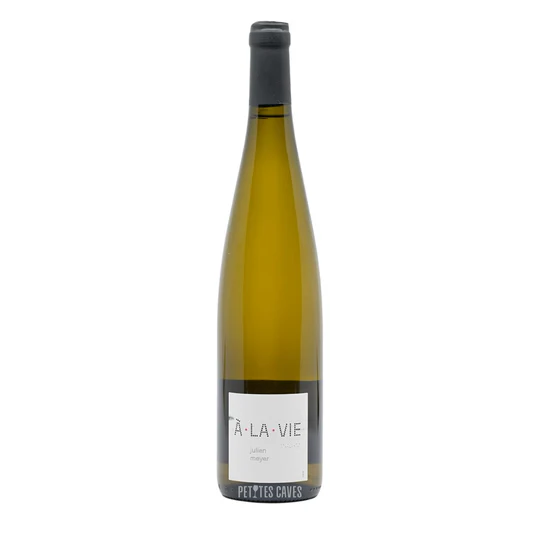
Alsace produces exceptional orange wines (macerated white wines), particularly from Pinot Gris and Gewürztraminer, offering tannins and structure rare in white wines.
Liquid Gold
Late Harvest & Noble Rot Wines
Vendanges Tardives (VT)
"Late Harvest" wines made from grapes left on the vine to achieve over-ripeness. Minimum sugar levels are strictly regulated.
- Rich, honeyed, often sweet (though can be dry)
- Dried fruit, apricot, caramel notes
- Exceptional aging potential (20+ years)
Sélection de Grains Nobles (SGN)
"Selection of Noble Berries"—grapes affected by Botrytis cinerea (noble rot), concentrating sugars and adding complex spice notes.
- Rare and expensive (selective hand harvesting)
- Honey, saffron, dried apricot, botrytis spice
- Legendary longevity (50+ years possible)
Crémant d'Alsace
Representing over one-third of all production, Alsace sparkling wine is made using the traditional method (same as Champagne) at a fraction of the price.
Blanc de Blancs
100% Pinot Blanc/Auxerrois. Fresh, light, perfect apéritif.
Rosé
100% Pinot Noir. Elegant red fruit character.
Prestige Cuvées
Aged on lees for up to 10 years. Complex and gastronomic.