

Valle d'Aosta
THE ALPINE FRONTIER
From Europe's highest vineyards in Morgex to the terraced slopes of Enfer d'Arvier, discover Italy's smallest wine region—where mountain grapes like Prié Blanc and Cornalin reach altitudes of 900 meters and isolation preserves ancient traditions
Italy's Mountain Sanctuary
Where the Alps meet the vine
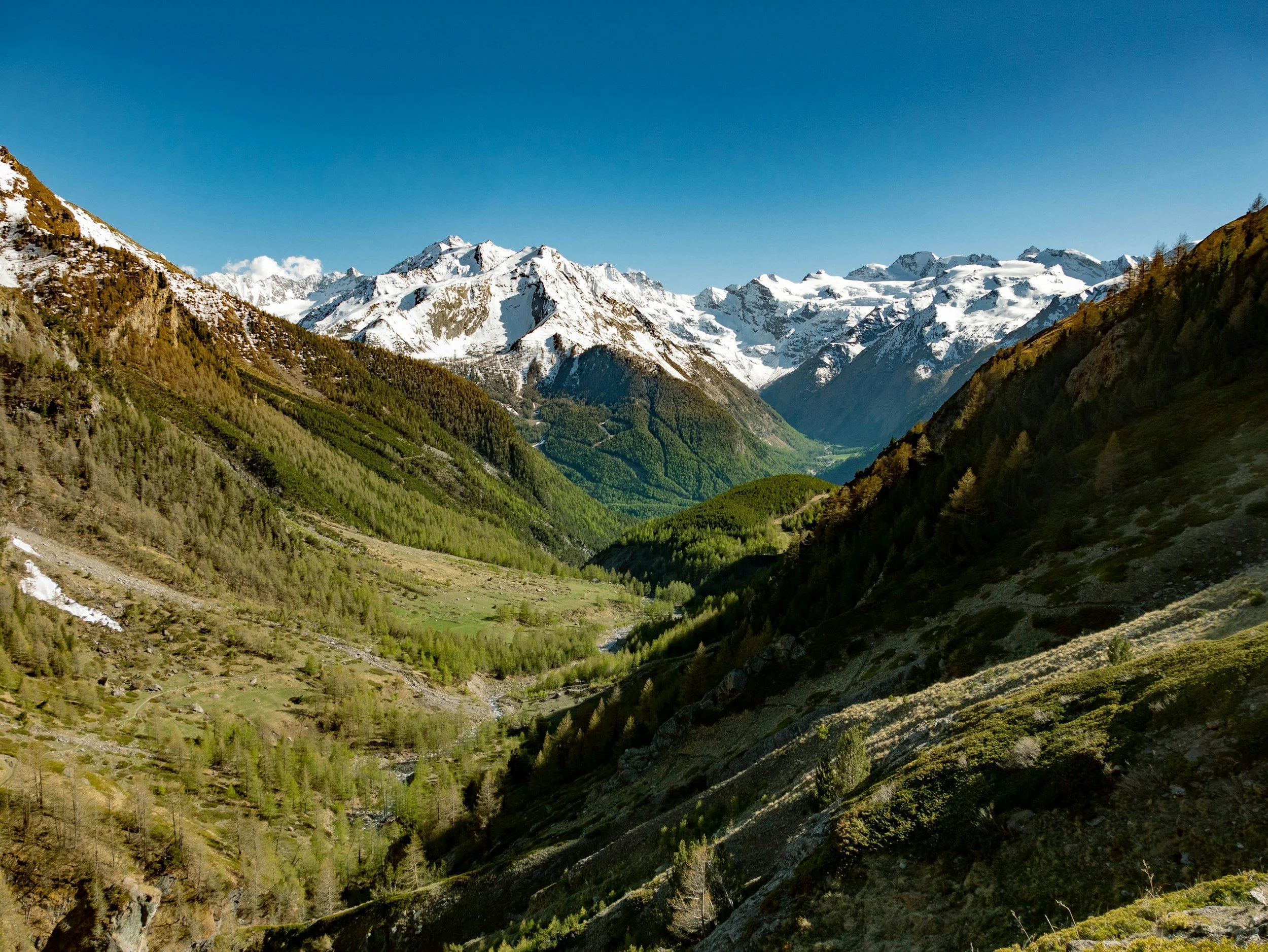
Valle d'Aosta—Italy's smallest and most mountainous region—nestles in the central Alps, bordered by France, Switzerland, and Piedmont. It is a place of extremes: Mont Blanc (Monte Bianco) rises to 4,808 meters while vineyards cling to slopes at 900 meters above sea level, making them the highest in Europe. This dramatic topography created a viticultural time capsule. While phylloxera and industrialization transformed the rest of Italy's wine landscape, Aosta's isolation—steep valleys accessible only by narrow mountain roads—preserved indigenous grapes found nowhere else on earth.
This guide explores the renaissance of Valle d'Aosta natural wine—a movement driven by young producers returning to ancestral terraces and rejecting industrial agriculture in favor of heroic viticulture. Costantino Charrère (Les Crêtes) pioneered the rediscovery of indigenous varieties like Petite Arvine and Cornalin in the 1980s. The Grosjean family (Saint-Pierre) crafts zero-sulfur Fumin and Mayolet from organic high-altitude vineyards. La Source (Aymavilles) experiments with skin-contact Prié Blanc and ancestral method pet-nats. Maison Anselmet (Villeneuve) bridges tradition and innovation with biodynamic mountain wines.
What distinguishes Aosta natural wine is altitude as terroir—the dramatic diurnal temperature shifts (hot days, freezing nights) create grapes with intense acidity, thick skins, and concentrated flavors without high alcohol. The wines are often shockingly mineral: salty Prié Blanc that tastes of glacier water, smoky Fumin with grip like Northern Rhône Syrah, and Petit Rouge with the crunch of alpine cranberries. Production is microscopic—often 500 cases per producer—but the quality rivals far more famous regions.
Key Facts
- Location: Northwestern Italy, central Alps
- History: Celtic, Roman, then Savoyard
- Key Regions: Morgex, Enfer d'Arvier, Torrette, Nus, Gamay
- Main Grapes: Petit Rouge, Prié Blanc, Fumin, Cornalin, Mayolet
- Method: Terraced, heroic viticulture, organic, high altitude
- Style: High acid, mineral, saline, elegant
- Notable: Highest vineyards in Europe (up to 1,200m)
From Roman Terraces to Alpine Heroes
Two millennia of mountain viticulture
Roman Conquest & Terraces
Roman legions under Aulus Terentius Varro Murena conquer the Salassi (Celtic tribe) and establish Augusta Praetoria (modern Aosta). They immediately terrace the steep valley walls using dry-stone techniques (murus a secco) to plant vines, recognizing the south-facing slopes' potential. The "Enfer" (Hell) d'Arvier gets its name from the intense heat reflecting off the stone walls. Viticulture becomes central to the local economy—wine taxes paid to Rome.
Monks & Mountain Fortresses
The Benedictines of Saint-Maurice d'Agaune and the Knights of Saint Maurice maintain vineyards to supply mountain monasteries and fortresses. The Dukes of Savoy (who rule from Chambéry and later Turin) promote Aosta wines as "mountain tonic" for their court. Phylloxera arrives late (1905) due to isolation and sandy soils in some areas, but ultimately devastates the region, reducing vineyard area by 80%. Many indigenous varieties nearly vanish.
The Extinction Crisis
Industrialization and depopulation threaten total collapse. Young people flee to Turin and Milan for factory work. Vineyards are abandoned as elderly farmers cannot maintain the back-breaking terraced slopes. Only a handful of families (Charrère, Grosjean, Anselmet) persist. Costantino Charrère begins researching and replanting nearly extinct varieties like Cornalin and Petite Arvine from isolated mountain plots, effectively saving them from extinction.
DOC Recognition & Revival
Valle d'Aosta receives its first DOC designation, legitimizing its unique terroirs: Enfer d'Arvier, Torrette, Nus, Morgex et de La Salle. This sparks renewed interest in indigenous grapes. The "heroic viticulture" movement begins—recognizing the difficulty of farming these steep terraces. Some producers experiment with organic farming, though the climate (heavy rain, cold) makes it challenging.
The Natural Wine Awakening
The Grosjean family (already organic since 1975) begins experimenting with zero-sulfur wines and indigenous yeast fermentation. Young producers return from university (Turin, Milan) to reclaim ancestral terraces. "La Source" (founded 2008) introduces natural wine techniques—skin contact, pet-nats, amphora aging—to traditional varieties. The "Alpine Wine" identity forms—distinct from Piedmontese or French Savoie wine, emphasizing altitude and minerality.
International Recognition
Aosta natural wine gains cult status in Paris, London, and New York. The extreme altitude and unique grapes (Prié Blanc, Fumin) attract sommeliers seeking alternatives to international varieties. Climate change ironically helps—warmer summers allow better ripening at high altitudes while maintaining acidity. However, glacier retreat and unpredictable weather threaten the delicate balance. The region remains tiny (450ha total) but influential beyond its size.
From Mont Blanc to Monte Rosa
Europe's highest vineyards and glacial soils
🏔️ Morgex et de La Salle
The highest vineyards in Europe (1,050-1,200m altitude) in the Valdigne (upper valley) beneath Mont Blanc. Prié Blanc is the only variety that ripens here, planted on glacial moraine and sandy soils. Extreme diurnal shifts (20°C difference day/night) create searing acidity. The "Blanc de Morgex et de La Salle" is the DOC—light, saline, mineral, with flavors of mountain herbs and glacial water. Natural winemakers (La Source, Cave du Vin Blanc de Morgex) use wild fermentation and sometimes skin contact. The vineyards are surrounded by glaciers—climate change is visible here.
🔥 Enfer d'Arvier
"Hell of Arvier"—named for the intense heat trapped by the valley walls and stone terraces. Small amphitheater of vineyards (600-850m) surrounding the village of Arvier. Petit Rouge is king here, producing wines of surprising power despite the altitude. Soil is granitic with iron-rich red sands (giving the "hellish" color). Organic farming is difficult due to the steepness (45° slopes) but rewarded with complex, spicy reds. The "Torrette" DOC overlaps here—Petit Rouge plus other indigenous varieties.
🍇 Nus
Valley floor and slopes around the village of Nus (500-800m). Mixed soils—glacial moraine, alluvial deposits, granite. Fumin thrives here (also called "Fumin de Nus"), producing smoky, peppery reds with firm tannins. Also Petite Arvine (white) which produces wines with grapefruit and saline notes. More accessible than Morgex or Enfer, with several established producers (Grosjean, Les Crêtes). The "Nus Malvoisie" (actually Pinot Grigio) is also produced but less interesting for natural wine.
🌲 Torrette
Central valley, surrounding Aosta city. Lower altitude (550-750m) than other sub-zones. Petit Rouge based blends (minimum 70%), often with Fumin, Cornalin, and Mayolet. Sandier, well-draining soils. The wines are lighter, fruitier, more approachable—"mountain glou-glou." Many younger natural producers work here due to slightly easier farming (less extreme than Enfer or Morgex). Good for discovering the entry-level character of Aosta reds.
⚪ Arnad-Montjovet
Lower valley (east), famous for "Lard d'Arnad" (cured pork fat) as much as wine. Mixed grape varieties including Nebbiolo (called Picotendro locally), Fumin, and Petit Rouge. Cooler, wetter climate. Terraced vineyards on schist and granite. Less developed for natural wine but traditional methods persist. The "Donnas" and "Carema" (technically Piedmont but culturally Aosta) overlap zones are here.
🗻 Gamay (Chambave)
Specific zone for Gamay (yes, the Beaujolais grape), planted in the Chambave area. Light, fruity reds and rosés. Not typically "natural wine" territory (Gamay is often industrial) but some producers make zero-sulfur versions. Also Moscato Bianco for passito wines. Represents the French/Savoyard influence in the region's viticulture.
Regional Natural Wine Character
| Zone | Altitude | Soil | Natural Wine Character |
|---|---|---|---|
| Morgex | 1,050-1,200m | Glacial moraine, sand | Saline, mineral, electric acid |
| Enfer d'Arvier | 600-850m | Granite, iron-rich | Spicy, structured, intense |
| Nus | 500-800m | Moraine, alluvial | Smoky, firm tannins, complex |
| Torrette | 550-750m | Sand, gravel | Light, fruity, approachable |
| Arnad | 400-600m | Schist, granite | Rustic, traditional, earthy |
The Featured Producers
Heroic viticulturists of the Alps
The Legends - Les Crêtes & Grosjean
The New Generation - Natural & Experimental
Morgex - The Highest Vineyards
The Grapes of the Alps
Indigenous varieties found nowhere else
Prié Blanc
Also called "Blanc de Morgex." Grows exclusively in Valle d'Aosta at extreme altitudes (900-1,200m), making it Europe's highest vineyard grape. Possibly brought by Burgundian monks or indigenous to the valley. Thick-skinned, late budding, resistant to frost. Produces wines of shocking acidity (7-8g/L tartaric), low alcohol (10-11%), and intense salinity. Natural winemakers use it for still whites, pet-nats, and orange wines. Flavors of lemon peel, mountain herbs (genepy), crushed stones, and glacier water. No oak needed—stainless steel or concrete preserves the purity.
- Style: High acid, mineral, saline, light
- Natural Wine Role: Pet-nat, orange wine, pure glacier expression
- Top Producers: La Source, Ermes Pavese, Cave du Vin Blanc
- Regions: Morgex et de La Salle only
- Notable: Highest altitude vines in Europe
Fumin
The "smoky" one (from Latin "fumus"—smoke). Deeply colored, thick-skinned red variety that produces wines with intense pigment, firm tannins, and notes of smoke, black pepper, and dark berries. Historically blended, now championed as a single variety by natural producers. Requires long maceration (20-30 days) to soften tannins. Aged in concrete or old oak. Similar to Northern Rhône Syrah but with alpine freshness. The "Fumin de Nus" is the classic expression, but grown throughout the valley. Natural versions often show earthy, gamey notes with age.
- Style: Dark, smoky, tannic, peppery
- Natural Wine Role: Whole cluster, long maceration, concrete aging
- Top Producers: Grosjean, Les Crêtes, Maison Anselmet
- Regions: Nus, Enfer d'Arvier, Torrette
- Notable: Name refers to smoky character
Petit Rouge
The most planted red grape in Aosta (25% of production). "Little Red" refers to the small berry size. Pale color but high acidity and surprising alcohol potential for the altitude. Produces light-to-medium bodied wines with flavors of cranberry, raspberry, white pepper, and herbs. The "Torrette" DOC is based on Petit Rouge (minimum 70%). Natural winemakers use carbonic maceration or whole-cluster fermentation to enhance the peppery, fruity character. Often compared to Grignolino or Poulsard—light color, crunchy tannins, very drinkable.
- Style: Light, peppery, acidic, fruity
- Natural Wine Role: Carbonic, glou-glou, chillable red
- Top Producers: Grosjean, Danilo Thomain, Cave des Onze
- Regions: Torrette, Enfer d'Arvier, Nus
- Notable: Despite name, can reach 13% alcohol
More Aosta Varieties
Cornalin: "Cornalin d'Aosta" (not to be confused with Swiss Cornalin). Nearly extinct, saved by Charrère. Deep color, violet aromatics, rustic tannins. Makes profound, age-worthy reds.
Mayolet: Elegant, floral red with Pinot Noir-like character but distinct alpine herbs. Thin-skinned, requires careful handling. Grosjean and Clos du Tuf specialize in it.
Vuillermin: Rare red (less than 10 hectares total). Floral (violets), spicy, medium body. Cave des Onze Communes makes the benchmark.
Petite Arvine: White grape (also grown in Valais, Switzerland). Grapefruit, saline, high acid. Charrère makes the Italian benchmark.
Pinot Noir: Planted by Savoyard nobility. Makes elegant, mineral reds at high altitude. Anselmet and Grosjean make excellent versions.
Minnus: Ancient white variety, nearly extinct, being revived by experimental producers. Herbaceous, acidic.
Food Pairing & Alpine Cuisine
Fontina, lard, and polenta concia
For Prié Blanc & High-Altitude Whites
- Fonduta: Fontina cheese fondue with egg yolk
- Raclette: Melted cheese over potatoes
- Crozets: Small buckwheat pasta with butter
- Trout: Fresh from alpine streams
- Jambon de Bosses: High-altitude cured ham
For Fumin & Structured Reds
- Carbonade: Beef stew with red wine
- Polenta concia: With Fontina and butter
- Wild boar: Stew or roasted
- Lard d'Arnad: Cured pork fat on bread
- Game birds: Ptarmigan, grouse
For Petit Rouge & Light Reds
- Valdostana charcuterie: Motzetta, salami, prosciutto
- Pizza: Aosta style with Fontina
- Bruschetta: With lard and herbs
- Monte bianco: Chestnut dessert (with sweet versions)
- Salad: With walnuts and local honey
For Orange & Pet-Nat Wines
- Carne cruda: Raw beef with lemon and oil
- Soufflé: Cheese soufflé (Seupa de Valpelline)
- Mushrooms: Porcini, chanterelles
- Spicy sausage: Mocetta (dried beef)
- Walnuts: Aosta valley is famous for them
Valle d'Aosta Culinary Traditions
Fontina DOP: The king of cheeses—cow's milk, nutty, melts perfectly. Required for fonduta and polenta concia. Pairs with Fumin and Cornalin.
Lard d'Arnad DOP: Cured pork fat seasoned with herbs, aged in wooden containers ("doils"). Eat raw on rye bread with honey. Perfect with Prié Blanc.
Polenta Concia: Polenta enriched with Fontina, butter, and sometimes egg—hearty mountain fuel for cold winters. Pairs with any red.
Seupa de Valpelline: Bread and cabbage soup with Fontina baked on top. The ultimate comfort food.
Genepy: Alpine herb liqueur (Artemisia) made by monks and farmers. Digestif after meals.
Café from Turin: While not Aosta, the proximity to Piedmont means excellent coffee culture in Aosta city.
Visiting Natural Aosta
From Mont Blanc to medieval castles
🏔️ The High Valley (Valdigne)
Base in Courmayeur (ski resort) or La Thuile. Morgex (visit Cave du Vin Blanc, Ermes Pavese). Views of Mont Blanc (Monte Bianco). Colle del Piccolo San Bernardo (mountain pass). Hiking in Parco Nazionale del Gran Paradiso. This is the "wild" Aosta—glaciers visible, extreme altitude, very traditional. Access: A5 motorway from Turin. Best in summer (vineyards accessible) or winter (ski + wine).
🔥 Central Valley (Enfer & Aosta)
Base in Aosta city (Roman ruins, charming old town). Enfer d'Arvier (Danilo Thomain, steep terraces). Les Crêtes (Aymavilles—appointment). La Source (Aymavilles). Grosjean (Saint-Pierre). Also visit Fénis Castle (medieval), Bard Fort (museum). This is the logistical center—good restaurants (Alpage, Petit Duke), wine shops (Cave des Onze Communes). Year-round access.
🍇 Lower Valley (Nus & Torrette)
Base in Saint-Vincent (casino town, spa) or Châtillon. Nus (Maison Anselmet, Grosjean). Torrette (various small producers). Chambave (Moscato country). Castello di Issogne (Renaissance castle with vineyards). Milder climate, easier driving. Good for autumn (harvest season, colors).
Valle d'Aosta Travel Tips
Language: Italian and French are both official. Most locals speak both. Road signs in French (Aoste, Morgex).
Access: Fly to Turin (1.5 hours) or Geneva (2 hours) or Milan Malpensa (2 hours). Car essential—public transport exists but vineyards are remote.
Timing: May-October for vineyard visits. Winter for skiing (Courmayeur, Cervinia, Pila). Harvest is late September (high altitude).
Walking: Comfortable shoes essential—even cellar visits require walking on steep terraces.
Altitude: Drink water and take it slow if coming from sea level. The wineries are at 600-1,200m.
Border: Easy day trips to Chamonix (France) or Martigny (Switzerland) for comparison.
Currency: Euro (Italy), though Swiss Francs useful if crossing to Valais.
5-Day Natural Wine Itinerary
Day 1 - Arrival Aosta: Arrive Aosta. Roman theater, cathedral. Dinner with local Fumin. Overnight Aosta.
Day 2 - Enfer & Central: Morning: Danilo Thomain (Enfer d'Arvier—steep terraces). Lunch: Arnad (try Lard d'Arnad). Afternoon: Les Crêtes (tasting with Costantino or family). Overnight Aosta.
Day 3 - Morgex & Mont Blanc: Drive to Morgex (1 hour). Ermes Pavese or Cave du Vin Blanc (highest vineyards). Lunch in Courmayeur (views of Mont Blanc). Hike Val Veny. Overnight Courmayeur.
Day 4 - Saint-Pierre & Nus: Grosjean (Saint-Pierre—zero sulfur tasting). Maison Anselmet (Nus). Fénis Castle. Overnight Saint-Vincent or Châtillon.
Day 5 - Torrette & Departure: La Source (Aymavilles—natural wine, pet-nats). Cave des Onze Communes (cooperative). Return to Turin or Milan for departure.
Alternative: Add 2 days for skiing (Courmayeur or Cervinia) in winter.