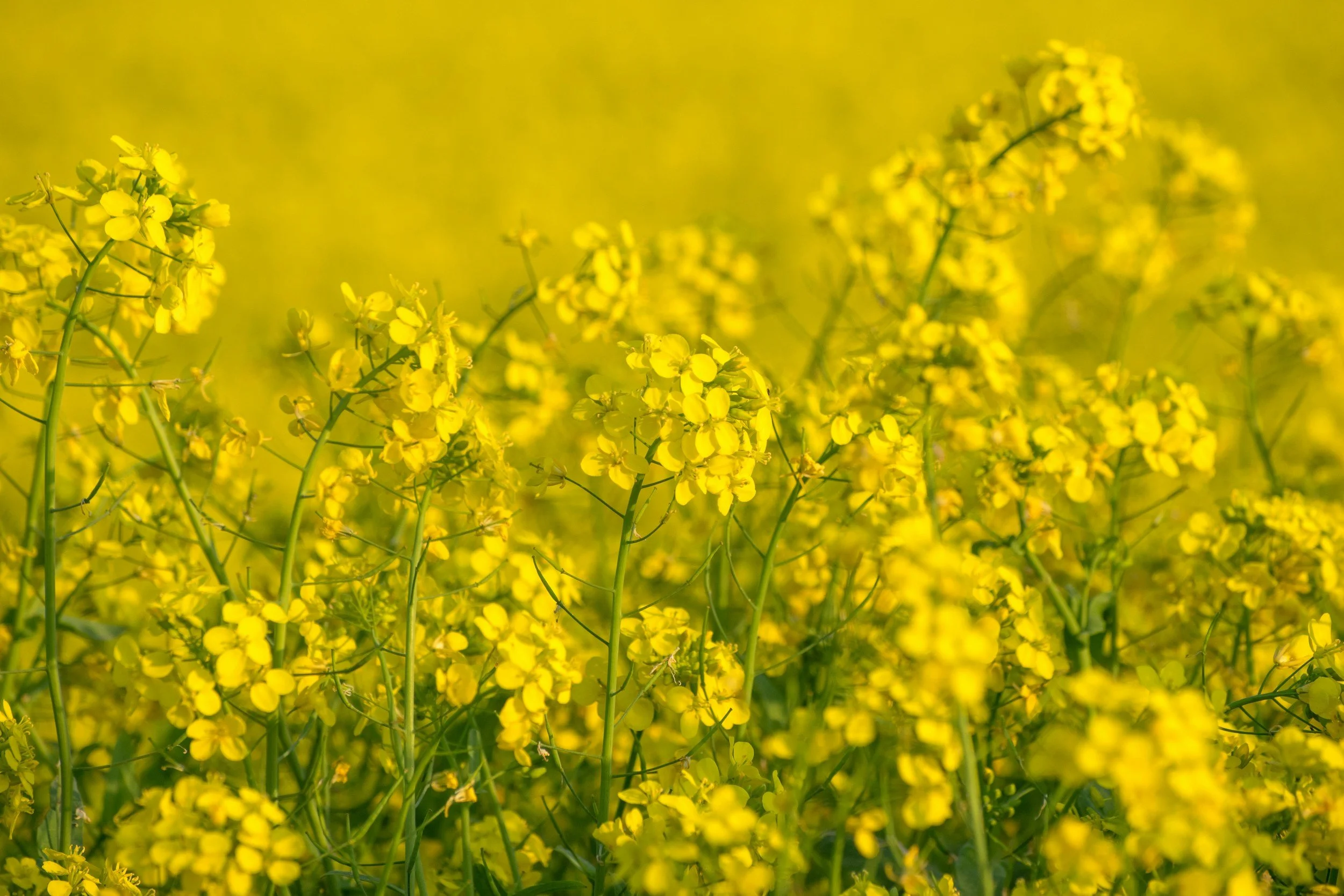
Today we mark 4 years ince the Ukraine war started,it's hard to believe it's been so long, In the spring of 2022, French supermarket shelves began emptying of an essential condiment. Dijon mustard—ubiquitous in French kitchens—became a precious commodity, with prices nearly doubling and consumers limited to one jar per visit.
The cause was a perfect storm: Canadian drought had reduced yields by 28%, and Russia's invasion of Ukraine in February 2022 severed supply lines that provided 55.6% of the EU's mustard seeds (Russia 42.4%, Ukraine 13.2%). For Dijon mustard manufacturers, who imported 80% of their seeds from Canada and the remainder from Eastern Europe, the crisis exposed a dangerous dependency. Ukraine had served as a critical "backup plan" to bridge gaps between harvests, but this safety net "fell through" overnight.
The Forgotten Vineyard Tradition
Long before the 2022 crisis, mustard was deeply entwined with Burgundy's vineyards. "In Burgundy, mustard is grown as a cover crop beneath the rows of vines, providing nutrients to the vines when it is ploughed under," notes one regional history. This wasn't merely agricultural convenience—it was an ecological partnership refined over centuries.
Historically, mustard thrived in the Côte-d'Or's woodland charcoal clearings, where potash-rich ash from charcoal burners created ideal growing conditions. But the practice of sowing mustard between vine rows was equally traditional. Medieval monks and early vignerons recognized that mustard's bright yellow blooms (appearing February through March) signaled the approaching bud break while performing vital ecosystem services.
The War's Silver Lining: A Return to Roots
The 2022 shortage catalyzed an urgent relocalization. The Burgundy Mustard Association (AMB), founded in 1992 to revive local production, saw membership surge. Production grew from 4,000 tons in 2021 to 6,000 tons in 2022, with targets of 15,000 tons—enough to supply 40% of French demand.
Critically, farmers turned to organic cultivation to offset higher labor costs. With organic mustard seed prices fixed at €3,500 per tonne (versus €1,500 for conventional), the economics became viable despite lower yields (2-3 quintals/hectare versus 15+ in Canada).
Ecological Benefits: Why Mustard Belongs in Vineyards
The revival isn't merely about food security—it represents a convergence of terroir and sustainable viticulture. When grown as a cover crop, mustard provides specific ecological benefits that chemical inputs cannot replicate:
Natural Biofumigation
Mustard belongs to the Brassicaceae family, containing glucosinolates—compounds that break down into isothiocyanates when incorporated into soil. These natural biofumigants suppress nematodes (microscopic worms that damage vine roots) and soil-borne pathogens, reducing or eliminating the need for synthetic pesticides. Some vineyards have even developed "extra spicy" mustard cultivars specifically bred for high glucosinolate content to maximize this effect.
Soil Structure and Erosion Control
With its fibrous root system, mustard stabilizes soil on Burgundy's slopes during winter rains, preventing nutrient runoff into waterways. When plowed under in spring (before flowering to preserve nitrogen content), it adds organic matter and improves soil aggregation—critical for water retention and aeration in limestone-heavy Burgundian soils.
Protected Geographical Indication
The Moutarde de Bourgogne PGI (2009) mandates that seeds be grown in Burgundy (Côte-d'Or, Nièvre, Saône-et-Loire, or Yonne) and use AOC Burgundy white wine rather than vinegar, ensuring a true link to local terroir.
Biodiversity Support
The early yellow blooms (peaking mid-February) provide crucial forage for pollinators and beneficial insects when little else is flowering. This creates habitat for predatory insects that naturally control vineyard pests, supporting integrated pest management systems.
Nutrient Cycling
While mustard doesn't fix nitrogen like legumes, it efficiently scavenges and recycles soil nutrients, preventing leaching during winter rains. When incorporated as green manure, it releases these nutrients back to the vines precisely when they need them for spring growth.
A Sustainable Model Emerges
By 2024, Burgundy's mustard cultivation had expanded to 11,000 hectares (up from 2,000 in the 1990s), with 7,000 in Côte-d'Or alone. Fallot Mustard Mill in Beaune remains the only major producer using 100% Burgundy-grown seeds, maintaining traditional stone-grinding methods while sourcing from local organic farmers.
The war-driven revival has established a new paradigm: high-value organic mustard production integrated with vineyard ecosystems. As climate change threatens Canadian harvests and geopolitical instability continues in Eastern Europe, Burgundy's vineyard-compatible mustard offers a model of agroecological resilience.