Supreme Court Strikes Down Trump Tariffs.
Lets get shipping Wine
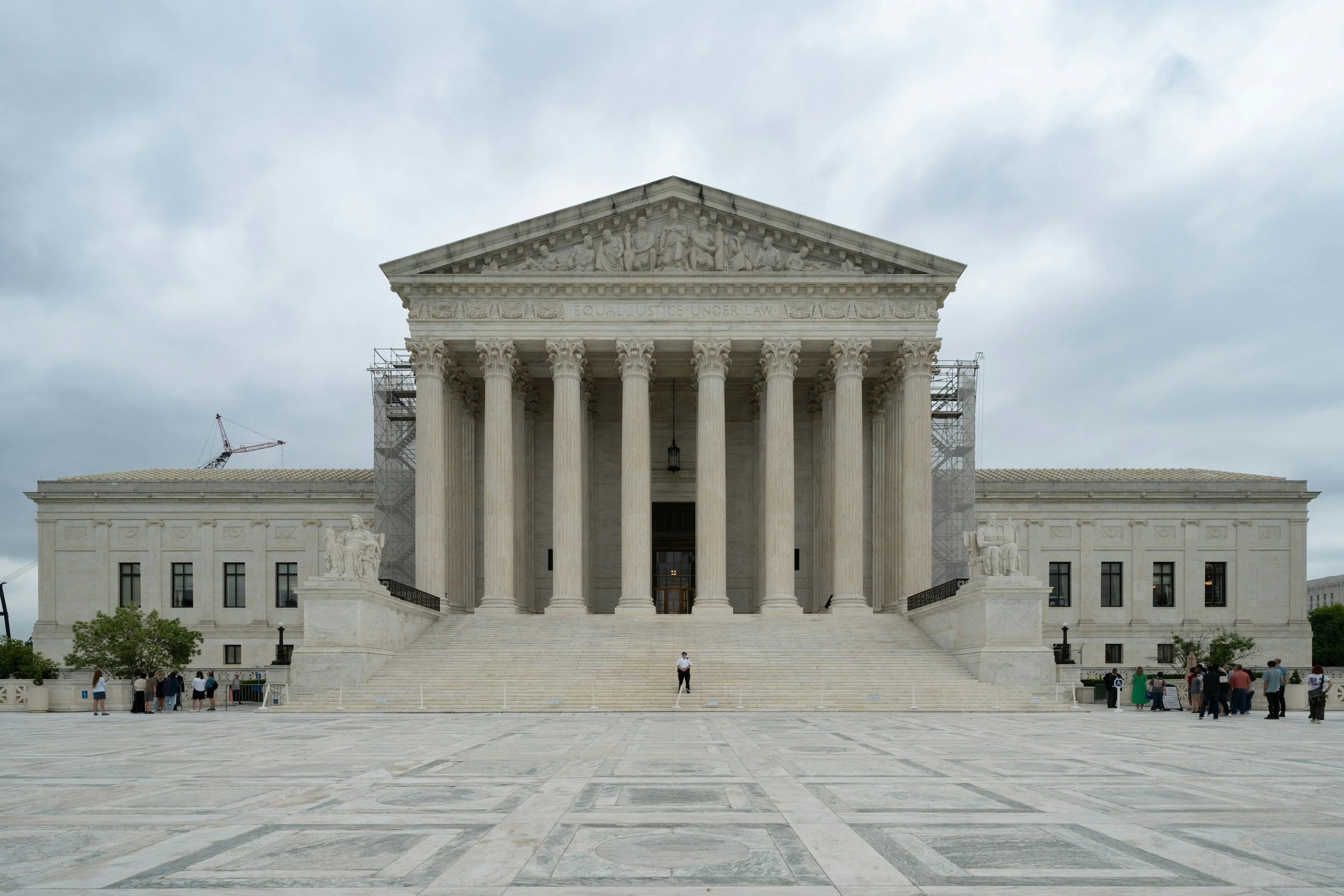
In a landmark decision, the Supreme Court on Friday struck down a significant portion of President Donald Trump’s sweeping tariff agenda, delivering a major blow to one of the central pillars of his economic policy.
In a 6–3 ruling, the court held that the law underpinning the tariffs “does not authorize the President to impose tariffs.” Chief Justice John Roberts delivered the majority opinion. Justices Clarence Thomas, Samuel Alito, and Brett Kavanaugh dissented.
The ruling marks a substantial setback for Trump, who has made tariffs — and his claimed authority to impose them unilaterally, without congressional approval — a defining feature of his administration’s trade and foreign policy strategy.
Limits on Presidential Authority
At the heart of the case was the administration’s use of the International Emergency Economic Powers Act (IEEPA), a statute that grants the president authority to regulate certain economic transactions after declaring a national emergency in response to “unusual and extraordinary” threats.
However, the majority found that IEEPA does not explicitly authorize tariffs. While the law allows the president to “regulate … importation” of foreign property transactions, the court concluded that such language does not extend to imposing broad import duties.
“Trump’s legal stance would represent a transformative expansion of the President’s authority over tariff policy,” the majority wrote. To justify what the court described as “extraordinary” tariff powers, the president would need to “point to clear congressional authorization. He cannot.”
The court also noted that no previous president had used IEEPA “to impose any tariffs, let alone tariffs of this magnitude and scope.”
The decision did not address whether businesses that have already paid the higher tariffs would be entitled to refunds.
A Sweeping Trade Overhaul
Since returning to the White House, Trump has dramatically reshaped U.S. trade relationships by imposing an extensive array of import duties affecting nearly every country. Many of those tariffs were implemented under a novel interpretation of IEEPA.
Among them were Trump’s near-global “reciprocal” tariffs, as well as duties aimed at Mexico, Canada, and China in response to allegations that those countries had allowed the deadly drug fentanyl to enter the United States.
The president unveiled his reciprocal tariff plan during a high-profile White House event he dubbed America’s “Liberation Day.” The announcement triggered market volatility, prompting the administration to pause the tariffs temporarily. Since then, the policies have been repeatedly revised, delayed, and reinstated, contributing to ongoing uncertainty in global markets.
Before the Supreme Court’s ruling, both a federal trade court and a federal appeals court had determined that Trump’s IEEPA-based tariffs were unlawful.
Revenue Claims and Political Stakes
Tariffs have been central to Trump’s economic message. He has repeatedly argued that they generate substantial federal revenue and serve as a powerful negotiating tool with foreign governments. He has also claimed that foreign nations bear the cost of the duties, despite acknowledgments from his administration that U.S. importers pay the tariffs.
Trump has suggested that tariff revenue could eventually replace the federal income tax and has floated the idea of sending Americans $2,000 “tariff dividend” checks.
In a recent Truth Social post, he claimed, “We have taken in, and will soon be receiving, more than 600 Billion Dollars in Tariffs.”
However, other estimates are lower. The Bipartisan Policy Center estimated U.S. gross tariff revenue in 2025 at approximately $289 billion. U.S. Customs and Border Protection reported collecting about $200 billion between January 20 and December 15, with roughly $129 billion attributed specifically to IEEPA-based tariffs as of December 10.
In the lead-up to the ruling, Trump warned of dire consequences if the court invalidated his tariff strategy. “If the Supreme Court rules against the United States of America on this National Security bonanza, WE’RE SCREWED!” he wrote on January 12.
Administration officials, including Treasury Secretary Scott Bessent, had expressed confidence that the court would uphold what they described as the president’s “signature” economic policy.
Instead, the Supreme Court’s decision firmly reasserts congressional authority over tariff policy, reshaping the legal landscape of presidential trade powers and casting uncertainty over the future of Trump’s aggressive trade agenda.