

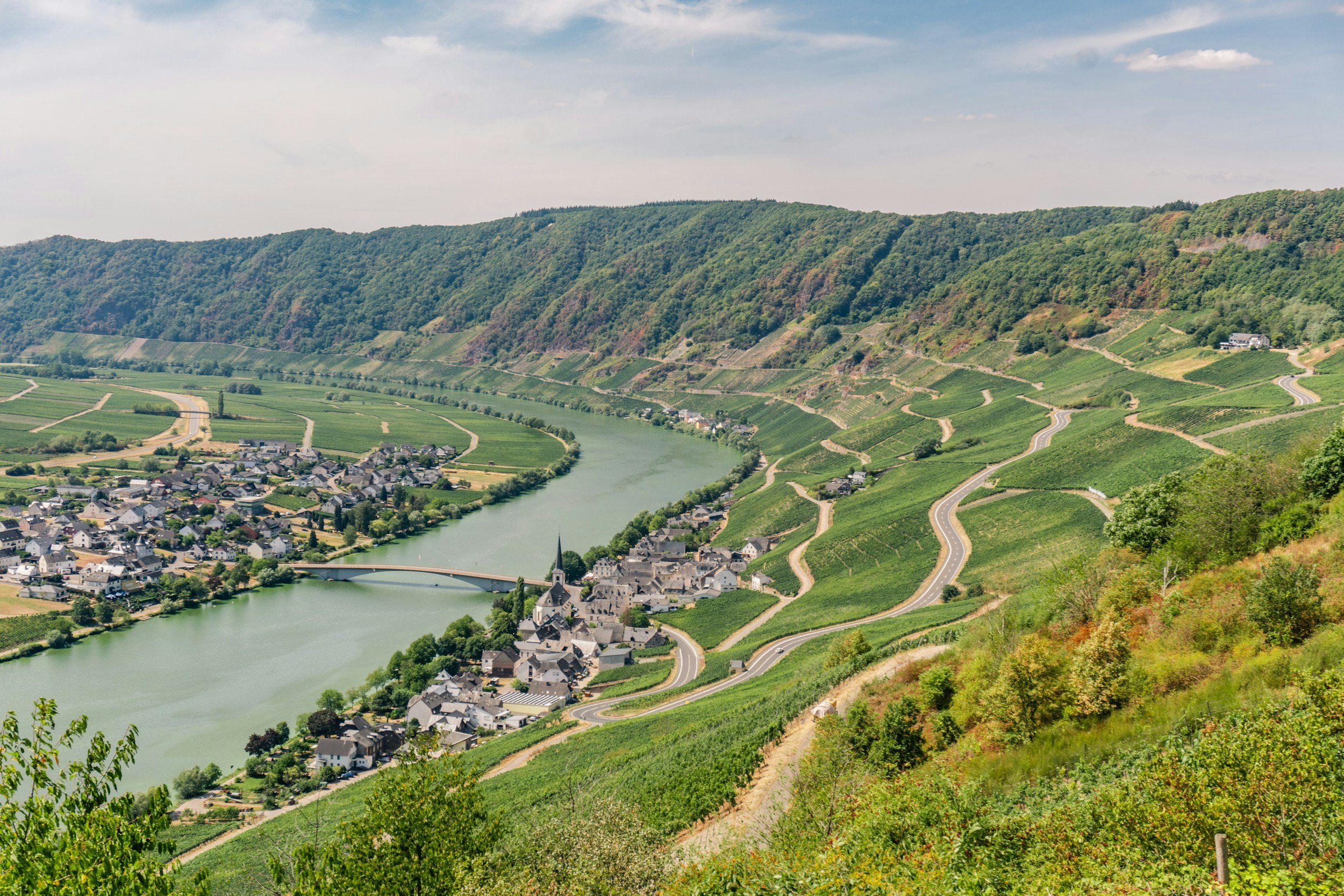
Germany
FROM MOSEL TO FRANKEN
From the steep slate slopes of the Mosel to the ancient terraced vineyards of Franken, discover how Germany's natural winemakers are revolutionizing Riesling, reviving forgotten varieties, and creating wines of crystalline purity and radical authenticity
The Land of Precision & Punk
Where ancient tradition meets avant-garde innovation
Germany's natural wine scene represents one of the most fascinating paradoxes in the wine world: a country famous for precision engineering and classical winemaking traditions is now home to some of Europe's most adventurous and punk-rock natural winemakers. From the world's oldest continuously operating winery (Staffelter Hof, founded 862 AD) to cutting-edge experiments with disease-resistant varieties (PIWIs) and vitiforestry, German natural wine spans the entire spectrum from ancient to futuristic.
This guide focuses on the new wave of German natural winemakers—producers who combine organic and biodynamic farming with minimal intervention winemaking. From Jan Matthias Klein's revolutionary PIWI and vitiforestry experiments at Staffelter Hof to Daniel & Jonas Brand's zero-sulfur Pur range in the Pfalz, from Stefan Vetter's terraced Franken masterpieces to Wasenhaus's Burgundian-inspired Baden Pinots, these winemakers are redefining what German wine can be.
What unites them is a commitment to organic or biodynamic farming, native yeast fermentation, minimal or zero sulfur, and an embrace of both tradition (Riesling, Silvaner) and innovation (orange wine, pet-nat, PIWIs). The result is wines that are vibrant, alive, and deeply expressive of Germany's diverse terroirs—from slate to limestone to volcanic soils.
Key Facts
- Location: Central Europe
- History: Roman times, organized viticulture
- Key Regions: Mosel, Rheinhessen, Pfalz, Baden, Franken
- Main Grapes: Riesling, Silvaner, Spätburgunder, Müller-Thurgau
- Method: Organic, biodynamic, minimal intervention
- Style: Precise, mineral, experimental
- Notable: World's oldest winery (Staffelter Hof, 862 AD)
From Roman Vines to PIWI Revolution
2,000 years of evolution, 10 years of revolution
Roman Introduction
Romans bring viticulture to the Rhine and Mosel valleys. The steep slate slopes of the Mosel prove ideal for wine production, with the river reflecting sunlight and storing heat.
Staffelter Hof Founded
The world's oldest continuously operating winery is established in Kröv on the Mosel. Originally a monastery winery, it passes to the Klein family in 1805 after Napoleon secularizes the monasteries. Still operated by the same family today.
The Golden Age
German wines, particularly from the Rheingau and Mosel, command prices higher than Bordeaux and Burgundy. The Bocksbeutel bottle becomes iconic for Franken wine. Riesling establishes its reputation as Germany's noble grape.
Industrialization & Decline
Post-war industrialization leads to high-yield clones, chemical farming, and mass production. The reputation of German wine suffers internationally due to cheap, sweet Liebfraumilch. Traditional steep slope viticulture becomes economically unviable.
The Natural Wine Awakening
Young winemakers return to family estates with experience from Burgundy, Austria, and Australia. The Klitzekleine Ring forms to save abandoned steep slope vineyards. Jan Matthias Klein at Staffelter Hof experiments with natural wine; Daniel & Jonas Brand convert to organic; Stefan Vetter revives terraced Franken sites.
The PIWI & Vitiforestry Revolution
Climate change forces innovation. Jan Matthias Klein plants disease-resistant varieties (PIWIs) and launches "The Grape Resistance" label. Vitiforestry—integrating trees into vineyards—becomes a model for sustainable viticulture. Berlin's natural wine scene explodes with bars like Drunk By Nature and Naturales.
Mosel, Pfalz, Baden & Franken
The diverse terroirs shaping German natural wine
⛰️ Mosel
Steep slate slopes (45-65° gradient) along winding river valleys. Blue Devonian slate dominates, with red slate in some sites. The river moderates temperature and reflects sunlight. Home to the world's oldest winery (Staffelter Hof) and some of Germany's most ageworthy Rieslings. Cool climate produces wines of high acidity and elegance.
🌾 Pfalz
Germany's second-largest wine region, protected by the Haardt Mountains. Warmer and drier than most German regions, with diverse soils: limestone, sandstone, loess, and volcanic. The "Deutsche Weinstraße" (German Wine Road) runs through here. Northern Pfalz (where Brand Bros are) is cooler and more mineral.
🌲 Baden
Germany's warmest and third-largest region, stretching from Heidelberg to the Swiss border. Almost Mediterranean climate allows red wine production (40% of plantings). Volcanic soils in Kaiserstuhl, limestone in Markgräflerland. Wasenhaus and Enderle & Moll produce Burgundian-inspired Pinots here.
🏰 Franken
Main River valley with continental climate, cold winters, warm summers. Keuper soils (ancient stone and minerals) predominate. Famous for Silvaner and the Bocksbeutel (flattened round bottle). Steep, terraced vineyards require hand cultivation. Stefan Vetter and Andi Weigand are reviving abandoned sites here.
🌊 Rheinhessen
Germany's largest wine region, "the land of a thousand hills." Diverse soils: Roter Hang (red slate), limestone, loess, and volcanic. Once known for quantity, now quality-focused with young winemakers experimenting. "Natürlich Weinreich" represents the natural wine movement here.
🌿 The PIWI Revolution
Germany leads Europe in developing disease-resistant grape varieties (PIWIs = Pilzwiderstandsfähige Rebsorten). These crosses reduce spraying by 80-90%. Jan Matthias Klein's "Grape Resistance" project proves they can make serious natural wine. Varieties include Souvignier Gris, Muscaris, Donauriesling, and Satin Noir.
Key Natural Wine Regions
| Region | Climate | Soil | Natural Wine Character |
|---|---|---|---|
| Mosel | Cool, continental | Devonian slate | High acid, elegant, experimental |
| Pfalz | Warm, protected | Limestone, sandstone, loess | Diverse, mineral, zero-sulfur |
| Baden | Warm, almost Mediterranean | Volcanic, limestone | Pinot-focused, Burgundian |
| Franken | Continental, cold winters | Keuper, limestone | Silvaner, terraced, ancient |
| Rheinhessen | Mild, varied | Red slate, limestone, loess | Experimental, diverse varieties |
| Württemberg | Warm, sunny | Keuper, limestone | Red wine focus, Trollinger |
The Featured Producers
The pioneers defining German natural wine
Mosel – The Ancient & The Future
Pfalz – The Pur Movement
Baden – Burgundian Inspiration
Franken – The Terraced Revolution
Rheinhessen – The Experimental Zone
The Grapes of Natural Germany
Riesling, Silvaner, Spätburgunder & the PIWI revolution
Riesling
Germany's most important grape, accounting for 23% of plantings. Thrives in cool climates and slate soils. Naturally high acidity, aromatic, capable of expressing terroir with precision. Natural winemakers emphasize dry styles, longer skin contact, and minimal sulfur.
- Style: Citrus, stone fruit, petrol (with age), mineral
- Natural Wine Role: Extended skin contact, zero sulfur
- Top Producers: Staffelter Hof, Brand Bros, Trossen
- Regions: Mosel, Rheinhessen, Pfalz
- Notable: Can age for decades in natural versions
Silvaner
Ancient variety (possibly from Austria), Franken's signature grape. World's largest plantings in Rheinhessen. Neutral aroma, high acidity, expresses terroir purely. Often called "the thinking person's wine" for its subtlety.
- Style: Herbal, mineral, subtle, fresh
- Natural Wine Role: Old vine expressions, skin contact
- Top Producers: Stefan Vetter, Andi Weigand, 2Naturkinder
- Soil: Keuper, limestone
- Notable: 50+ year old vines in Franken
Spätburgunder (Pinot Noir)
Germany's most planted red grape (11% of total), thriving in warmer regions like Baden and Pfalz. Cool climate expressions are elegant and mineral; warmer sites produce richer wines. Natural winemakers favor whole bunch fermentation, carbonic maceration, and minimal extraction.
- Style: Red cherry, earthy, spicy, elegant
- Natural Wine Role: Whole bunch, carbonic, low sulfur
- Top Producers: Wasenhaus, Enderle & Moll, Ziereisen
- Regions: Baden, Pfalz, Ahr
- Notable: Ahr Valley produces Germany's most structured Pinots
The PIWI Revolution & Ancient Varieties
Souvignier Gris: PIWI cross of Seyval Blanc × Zähringer. White variety with Sauvignon Blanc-like character but disease resistant. Jan Matthias Klein's "The Grape Resistance" label features this variety.
Muscaris: Aromatic PIWI cross (Solaris × Gelber Muskateller). Muscat character with fungal resistance. Used in natural blends and orange wines.
Donauriesling: PIWI cross for Riesling lovers. Maintains Riesling character with 80% less spraying. Part of the sustainable viticulture future.
Satin Noir: PIWI red variety. Disease resistant, suitable for organic farming without copper treatments.
Elbling: Ancient variety (possibly Roman), nearly extinct. High acidity, neutral character, perfect for pet-nat and sparkling wines. Trossen and Staffelter Hof champion it.
Scheurebe: Cross of Riesling × Bukettrebe. Aromatic, grapefruit and blackcurrant notes. Andi Weigand uses it in his "Zusammen" blend.
Bacchus: Cross of (Silvaner × Riesling) × Müller-Thurgau. Aromatic, early ripening, floral. Popular in natural wine blends for its exuberance.
Food Pairing & German Gastronomy
Natural wine meets hearty German cuisine
Pairings for Riesling
- Spicy foods: Thai, Indian, Sichuan cuisine
- Pork: Schnitzel, roast pork with crackling
- Fish: Smoked trout, pickled herring
- Cheese: aged Bergkäse, goat cheese
- Vegetarian: Spätzle, potato dishes
- Local match: Handkäse mit Musik (marinated cheese)
Pairings for Silvaner
- Asparagus: The classic German pairing
- White fish: Simply prepared, with herbs
- Vegetable dishes: Green beans, peas
- Light meats: Veal, chicken
- Cheese: Fresh cheeses, young goat
- Local match: Grüne Soße (green sauce) with potatoes
The Berlin Natural Wine Scene
Berlin has become one of Europe's natural wine capitals, with a vibrant scene of bars, restaurants, and shops dedicated to low-intervention wines. Drunk By Nature (opened 2022) is a "micro wine bar" with just 14 seats, focusing on minimal intervention wines and a "microscopic level of detail." Naturales (opened 2023) is a natural wine bar and shop in Neukölln with weekly changing wine lists and a focus on "organic, biodynamic, and natural wines." These venues serve as hubs for the German natural wine community, hosting tastings, meet-the-maker events, and fostering a culture of wine exploration that bridges traditional German wine regions with urban sophistication.
Visiting Natural Germany
From the steep slate of Mosel to the terraced hills of Franken
⛰️ Mosel
Base yourself in Kröv or Bernkastel-Kues. Visit Staffelter Hof in Kröv to see the world's oldest winery and taste Jan Matthias Klein's PIWI experiments and natural wines. Weingut Trossen in Kinheim offers biodynamic pyramid wines. Combine with hiking the steep slate vineyards and visiting Roman wine presses. Best time: September-October (harvest).
🌾 Pfalz
Stay in Bockenheim or Deidesheim. Visit Brand Bros for zero-sulfur Pur wines and grandmother's art labels. Müller-Ruprecht in Gimmeldingen offers orange wines and Vampire Soda Pet-Nat. The Pfalz is warmer and more Mediterranean than other German regions—combine wine tasting with cycling the Deutsche Weinstraße. Best time: May-June or September.
🏰 Franken
Base in Iphofen or Volkach. Visit Stefan Vetter's terraced vineyards and taste old-vine Silvaner. Andi Weigand offers amphora wines and collaborations. 2Naturkinder in Volkach combines urban winery with wildlife conservation. Explore the Bocksbeutel bottle tradition and Keuper soil terroir. Best time: September (Bavarian wine month).
10-Day Natural Wine Itinerary
Day 1-2 - Berlin: Arrive, explore natural wine bars Drunk By Nature and Naturales. Meet the German natural wine community.
Day 3-4 - Mosel: Drive/train to Kröv (6 hours). Visit Staffelter Hof, taste PIWI wines and natural Riesling. Hike steep slate vineyards. Overnight in Kröv.
Day 5 - Mosel: Visit Weingut Trossen for biodynamic pyramid wines. Continue to Pfalz (2 hours). Overnight in Bockenheim.
Day 6-7 - Pfalz: Visit Brand Bros for Pur range tasting. Müller-Ruprecht for orange wine and Pet-Nat. Cycle the Deutsche Weinstraße. Overnight in Deidesheim.
Day 8 - Baden: Drive to Staufen (1.5 hours). Visit Wasenhaus for Burgundian-style Pinots. Continue to Franken (3 hours). Overnight in Iphofen.
Day 9 - Franken: Visit Stefan Vetter and Andi Weigand. Tour terraced vineyards, taste amphora-aged Silvaner. Visit 2Naturkinder in Volkach.
Day 10 - Return: Return to Berlin or Frankfurt for departure (4-5 hours).