

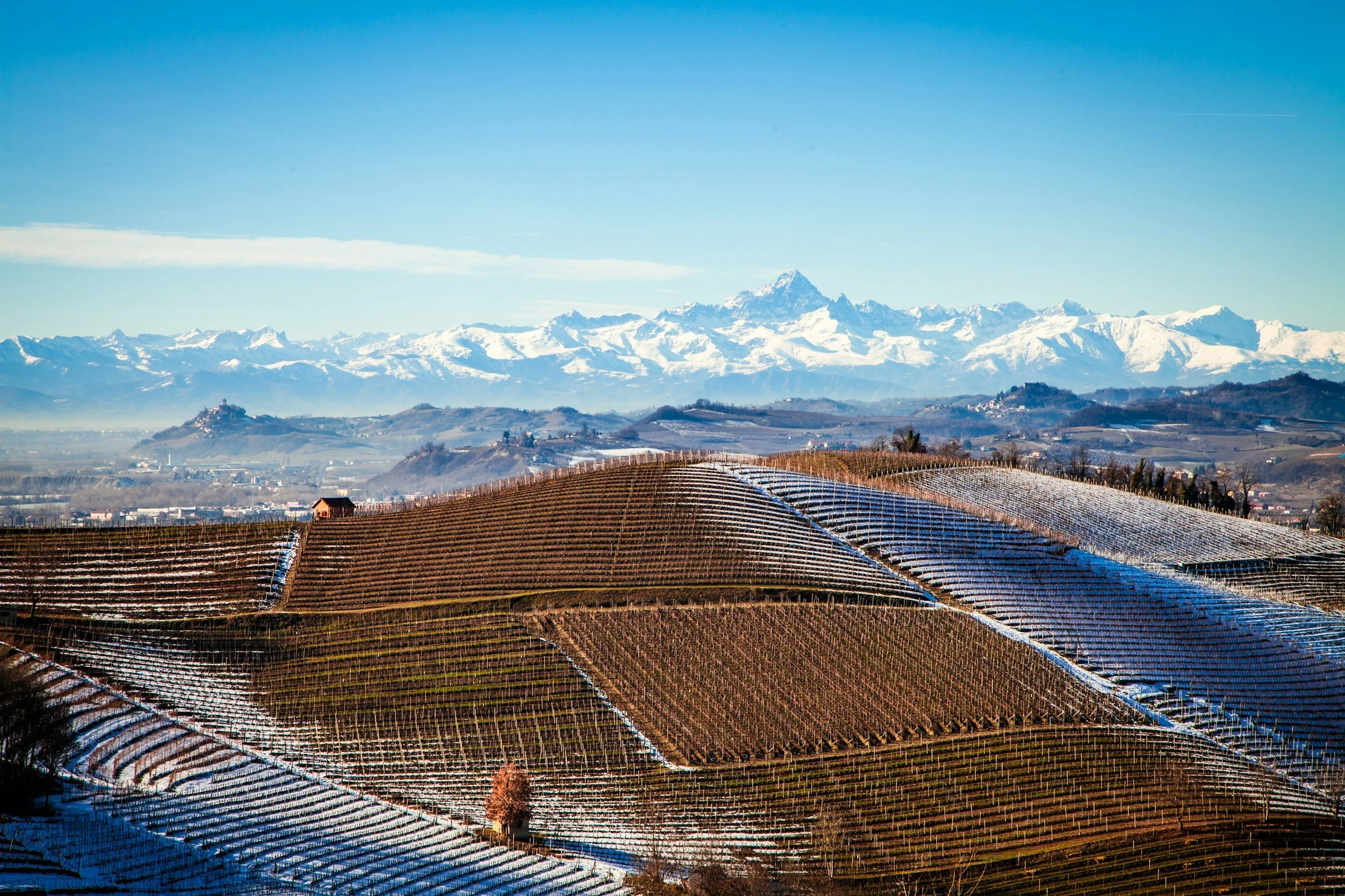
Piedmont.
THE KINGDOM OF NEBBIOLO
From the Tortonian marls of Barolo to the sandy slopes of Roero, discover Piedmont's natural wine renaissance—where traditionalists meet radicals, and Nebbiolo returns to concrete and wild yeast
Beyond Barolo & Barriques
When tradition meets radical naturalism
Piedmont—"foot of the mountains"—sits in Italy's northwest, cradled by the Alps to the north and the Apennines to the south. It is Italy's most Burgundian region: fiercely terroir-focused, dominated by small growers, historically bound to native grapes (Nebbiolo, Barbera, Dolcetto), and obsessed with food and wine pairing. For centuries, Barolo and Barbaresco were Italy's "wines of kings," traditionalists battling modernists over French barriques versus large Slavonian casks.
This guide explores the third way of Piedmontese wine—the natural wine movement that rejects both the heavy extraction of 1980s modernism and the rigid orthodoxy of traditionalism. Stefano Bellotti (Cascina degli Ulivi, Gavi) pioneered biodynamic farming and amphora aging of Timorasso before his passing in 2018, inspiring a generation. Valli Unite (Alessandria) formed as a cooperative in 1991, proving that Barbera and Dolcetto could be made without sulfur by communal labor. Alex della Vecchia (Casa Belfi) revolutionized Moscato d'Asti by making it dry, pet-nat, and wild-fermented. Nadia Verrua (Cascina Tavijn) transforms Grignolino and Ruché into glou-glou naturals from her Monferrato garage.
What distinguishes Piedmont natural wine is terroir extremism—the belief that Tortonian marl (Helvetian) versus Serravallian sandstone matters profoundly, even when making zero-sulfur wine. It is a region where the "garagiste" (garage winemaker) culture thrives alongside ancient noble estates, where a producer might vinify Nebbiolo in concrete eggs or Georgian qvevri while their neighbor maintains 19th-century tradition. The result is wine with structure: natural Barolo that ages 20 years, living Moscato that ferments in bottle, and field blends that taste of the fog (nebbia) from which Nebbiolo takes its name.
Key Facts
- Location: Northwest Italy, Alpine foothills
- History: Celtic, Roman, then Savoyard
- Key Regions: Langhe, Roero, Monferrato, Gavi, Tortona
- Main Grapes: Nebbiolo, Barbera, Dolcetto, Moscato, Arneis
- Method: Biodynamic, concrete, old wood, wild yeast
- Style: Structured, acidic, tannic, terroir-driven
- Notable: Highest concentration of biodynamic producers in Italy
From Roman Vines to Valli Unite
Two millennia of alpine foothill viticulture
Roman Foundations
Roman consul Marcus Aemilius Scaurus establishes Alba Pompeia (modern Alba). Titus Livius mentions "Alban wines" as prized throughout the empire. The Taurini (Celtic tribe) already cultivated vines before Roman arrival. The Ligurians and Celts contributed to the genetic diversity of local grapes. The "Vitis vinifera" arrived via Greek colonies in Liguria, then moved inland to the Po Valley.
Monasteries & Marchesi
Benedictine and Cistercian monks (Staffarda, Casanova) preserve viticulture through the Dark Ages. The Marchesi di Barolo, Marchesi di Saluzzo, and Counts of Cavour establish feudal vineyard systems. Nebbiolo emerges as the noble variety, distinguished from "common" Barbera and Dolcetto. The "Nebbia" (fog) reference appears in 13th century documents. The House of Savoy promotes Piedmontese wine in Turin and across Europe.
The Birth of Barolo
Camillo Benso, Count of Cavour (statesman), and Giulia Colbert Falletti, Marchesa di Barolo, employ French oenologist Louis Oudart to create "Barolo" as a dry, structured wine (previously sweet and fizzy). The "King of Wines, Wine of Kings" is born. Barbaresco follows. The "traditional" method—long maceration (20-30 days), large Slavonian oak "botti"—is established. Phylloxera hits later than France (1880s), devastating the region.
The Modernist Wars
Elio Altare and Angelo Gaja introduce French barriques (small oak), rotary fermenters, and "green harvesting" to Barolo. The "Barolo Wars" divide the region: traditionalists (Bartolo Mascarello, Giuseppe Rinaldi) defend long maceration and large casks; modernists favor new oak and short extraction. The debate shapes global perception of Italian wine. "Natural wine" barely exists as a concept, though some traditionalists use native yeast and minimal sulfur.
Valli Unite & The Cooperative Revolution
Three friends (Carpente, Degiacomi, Ferracuti) establish "Valli Unite" in the Alessandria hills (Monferrato), combining their vineyards into a communal, organic farm. They reject industrial agriculture and wine chemicals entirely. This coincides with the arrival of "biodynamics" (Steiner's theories) in Barolo (Bartolo Mascarello experiments). The "natural wine" seed is planted in the Langhe, though met with skepticism by the establishment.
The Third Wave
Stefano Bellotti (Cascina degli Ulivi) becomes the philosophical father of Piedmont natural wine, aging Timorasso in amphorae and refusing certifications. Nadia Verrua (Cascina Tavijn) and others champion "vinification integrale" (whole cluster, wild ferment). Casa Belfi (Alex della Vecchia) revolutionizes Moscato. The "Barolo Boys" generation gives way to their children— Elena Rinaldi, Maria Teresa Mascarello—who often embrace lower sulfur and organic farming, bridging traditional and natural. Today, over 200 producers identify as "natural" or "low-intervention" in a region of 18,000 growers.
Langhe, Roero & Monferrato
Tortonian marls, sandstones, and the Tanaro River
🍷 The Langhe
South of Alba, the heartland of Nebbiolo. Divided into Barolo (11 villages including La Morra, Serralunga, Monforte) and Barbaresco (3 villages: Barbaresco, Neive, Treiso). Two soil types dominate: Tortonian (blue/grey marl, younger, produces elegant, aromatic wines—La Morra) and Helvetian/Serravallian (white/ grey, older, sandstone-heavy, produces structured, tannic wines—Serralunga). Altitude 200-500m. Natural winemakers here (Le Strette, Brezza) emphasize vineyard expression over cellar manipulation. The "Tajarin" pasta zone.
🌸 Roero
North of Alba, across the Tanaro River. Sandy soils (from ancient seabeds) dominate, creating lighter, more aromatic expressions of Nebbiolo (Roero DOCG requires 95% Nebbiolo, 95% minimum). Also home to Arneis (white grape, "little rascal"), which natural winemakers skin-ferment into orange wines. Less prestigious than Langhe historically, but natural producers (Malvira, etc.) champion its transparency. Steep, sandblasted hills prone to erosion.
🍇 Monferrato
East and south of Asti, rolling hills of calcareous clay and sandstone. The kingdom of Barbera (Barbera d'Asti DOCG) and Moscato (d'Asti). Also Dolcetto, Grignolino, and Freisa. More democratic wine culture than the aristocratic Langhe. Valli Unite operates here (Alessandria hills). The "infernot"—underground cellars carved in tufa rock—characterize the landscape. Natural wine thrives here due to lower land costs and experimental spirit.
🌿 Gavi
Southeast Piedmont (Alessandria province), bordering Liguria. Cortese grape (white) is king, producing Gavi DOCG. Historically neutral and acidic, natural winemakers (Stefano Bellotti legacy) treat it with skin contact and amphora aging, creating structured, age-worthy whites. Clay-limestone soils with iron-rich red sands (ferretto). Colli Tortonesi nearby is home to Timorasso—the "white Barolo."
⛰️ Colli Tortonesi
Far eastern Piedmont, on the border with Emilia-Romagna and Liguria. Volcanic and calcareous soils. Home to Timorasso (Derthona), an ancient white grape nearly extinct, revived by Walter Massa and championed by natural producers. Also Ortrugo and Malvasia. Mountainous, wilder, less touristy than Langhe. The "wild west" of Piedmont natural wine.
🌊 Alto Piemonte
North, near Lake Maggiore and the Alps (Ghemme, Gattinara, Lessona). Alpine foothills, porphyry and volcanic soils. Nebbiolo (called Spanna locally) produces lighter, more ethereal, mineral wines than Barolo. Historic region (once more famous than Barolo) devastated by phylloxera and industrialization. Natural producers (Antoniotti, Sperino, Roses) reviving old vines and traditional "piemontese" methods with minimal sulfur.
Regional Natural Wine Character
| Region | Soil | Key Grapes | Natural Wine Character |
|---|---|---|---|
| Barolo | Tortonian/Helvetian marl | Nebbiolo | Structured, tannic, age-worthy |
| Barbaresco | Tortonian limestone | Nebbiolo | Elegant, floral, refined |
| Roero | Sand, limestone | Nebbiolo, Arneis | Aromatic, lighter, sandy texture |
| Monferrato | Calcareous clay | Barbera, Moscato | Juicy, acidic, glou-glou |
| Gavi/Tortona | Clay, limestone, ferretto | Cortese, Timorasso | Mineral, textured whites |
The Featured Producers
From Barolo traditionalists to Monferrato radicals
Langhe – Nebbiolo Unfiltered
Monferrato & Alessandria – The Radical Hills
Gavi, Colli Tortonesi & Whites
The Grapes of Piemonte
Nebbiolo, Barbera, and the unsung heroes
Nebbiolo
Piedmont's noble grape, named for the "nebbia" (fog) that covers the Langhe in October harvest. High polyphenols (tannin and acid), light color, complex aromatics (tar, roses, cherries). Barolo requires 100% Nebbiolo, aged 38 months (18 in wood). Barbaresco requires 26 months (9 in wood). Natural winemakers often extend maceration (40-60 days) to soften tannins without oak, or use whole cluster to add spice. Also made as "Langhe Nebbiolo" (younger, fresher) and "Nebbiolo d'Alba." The ultimate test of terroir—translates soil differences vividly.
- Style: Tannic, acidic, aromatic, long-lived
- Natural Wine Role: Long maceration, whole cluster, old wood
- Top Producers: Le Strette, Punset, Brezza
- Regions: Barolo, Barbaresco, Roero, Alto Piemonte
- Notable: 3 distinct sub-varieties (Lampia, Michet, Rosé)
Barbera
High-yielding, high-acid, low-tannin grape covering more acres than Nebbiolo in Piedmont. Historically "everyday wine" for farmers. "Barbera d'Asti" and "Barbera d'Alba" are the main DOCGs. Natural winemakers (Valli Unite, Franco Rocca) embrace its natural acidity, making juicy, purple, glou-glou wines or serious, aged versions. Unlike Nebbiolo, it ripens earlier and avoids autumn rains. Flavors of sour cherry, blackberry, and spice. Natural versions often show a "funk" or " Brett" that complements the acid—controversial but beloved.
- Style: High acid, low tannin, fruity, purple
- Natural Wine Role: Glou-glou, carbonic, everyday drinking
- Top Producers: Valli Unite, Franco Rocca, Nadia Verrua
- Regions: Monferrato, Alba, Asti
- Notable: 3x more planted than Nebbiolo
Grignolino
"Little grapes" or possibly from "grignole" (pips)—the grape is full of seeds, making it tannic despite light color. Grown in Monferrato and Asti. Makes pale, translucent, peppery, herbaceous wines similar to Poulsard or Pinot Noir. Natural winemakers (Nadia Verrua) champion it as the ultimate "vin de soif"—chillable, low alcohol (11-12%), perfect for summer. Often bottled with crown caps. Historically undervalued, now a natural wine darling. Flavors of white pepper, strawberry, rhubarb, and herbs.
- Style: Light, peppery, tannic, herbaceous
- Natural Wine Role: Chillable red, carbonic, crown cap
- Top Producers: Cascina Tavijn (Nadia Verrua)
- Regions: Monferrato, Asti
- Notable: Many pips (seeds) = high tannin, low color
More Piedmont Varieties
Dolcetto: "Little sweet one" (actually dry). Early-ripening, dark, fruity, bitter almond finish. Natural versions from Le Strette and others are juicy and immediate.
Ruché: Rare aromatic red from Castagnole Monferrato. Spicy, floral (rose), medium body. Nadia Verrua makes a cult version.
Freisa: Related to Nebbiolo, tannic, often slightly fizzy ("Freisa Frizzante"). Can be challenging; natural versions embrace the wildness.
Pelaverga: From Verduno (Barolo village). Peppery, strawberry notes, light color. Used to add spice to Barolo blends historically.
Timorasso: The "white Barolo" from Tortona. Aromatic, mineral, ages 20+ years. Bellotti and Massa are the masters.
Arneis: "Little rascal" from Roero. Historically difficult, now popular white. Natural versions skin-fermented for texture.
Moscato: Muscat Blanc à Petits Grains. Usually sweet sparkling (Asti), but natural winemakers (Casa Belfi) make it dry and pet-nat.
Cortese: Gavi's grape. Neutral, acidic; natural winemakers use skin contact to add interest.
Food Pairing & Piemontese Cuisine
Tajarin, truffles, and bagna cauda
For Barolo & Barbaresco
- Brasato al Barolo: Beef braised in Barolo wine
- Carne cruda: Raw beef with truffle, olive oil, lemon
- Agnolotti: Pasta pockets with meat filling, butter, sage
- Guinea fowl: Roasted with hazelnuts
- Aged Parmigiano: 36-month cheese
For Barbera & Dolcetto
- Vitello tonnato: Cold veal with tuna-caper sauce
- Bagna cauda: Hot anchovy-garlic dip for vegetables
- Fritto misto: Fried mixed meats and vegetables
- Polenta: With mushrooms or sausage
- Pizza: Alba style with local cheese
For Grignolino & Light Reds
- Salumi: Salame di cavallo (horse salami), finocchiona
- Insalata russa: Russian salad with vegetables, mayo
- Acciughe: Anchovies with butter and bread
- Tomato salad: With basil and olive oil
- Fried fish: From Lake Maggiore or Tanaro River
For Whites & Pet-Nats
- Tajarin: Thin egg-yolk pasta with butter and truffle
- Fonduta: Fontina cheese fondue
- Crostacei: Langoustines, shrimp (with Timorasso)
- Zabaione: Dessert with Moscato (traditional)
- Amaretti: Almond cookies with sweet wines
Piemontese Culinary Traditions
Tartufo Bianco: White truffle from Alba (October-December). Shaved raw over tajarin, eggs, or risotto. Never cook it. Paired with old Barolo or Barbaresco.
Slow Food: Born in Bra (Piedmont) in 1986. The philosophy aligns with natural wine—anti-industrial, pro-terroir, pro-small producer. Visit the University of Gastronomic Sciences in Pollenzo.
Antica Trattoria: Traditional restaurants (Da Cesare, Bovio, etc.) often have the best cellars for traditional Barolo, but natural wine bars (Consorzio, La Fiorida) offer the new wave.
Merenda Sinoira: The "afternoon snack" that becomes dinner—bagna cauda, raw vegetables, boiled meats. Natural Dolcetto or Grignolino are perfect here.
Chocolate: Turin is the chocolate capital. Gianduja (hazelnut chocolate) with Brachetto (sweet red) or Moscato.
Visiting Natural Piemonte
From Alba's towers to Asti's hills
🍷 Langhe & Barolo
Base in Alba (train from Turin). Barolo village: Marchesi di Barolo (historic), Brezza (natural-leaning), Bartolo Mascarello (shrine to traditionalism). La Morra: Le Strette (appointment). Monforte: Serralunga producers. Novello: Le Strette. Eat at Bovio (La Morra, view) or Piazza Duomo (Alba, 3 Michelin stars). Sleep in Barolo or Serralunga (agriturismos). Visit WiMu (Wine Museum in Barolo castle).
🌸 Monferrato & Asti
Base in Asti or Moncalvo. Nadia Verrua (Cascina Tavijn—appointment, garage winery experience). Franco Rocca (Barbera country). Valli Unite (Vho, communal meal possible). Canelli: Underground cathedrals (Unesco, for sparkling wine). Less touristy than Langhe, more "authentic" rural Italy. Visit Infernot (underground cellars in Monferrato). Eat bagna cauda at local trattorias.
🌿 Gavi & Tortona
Base in Tortona or Novi Ligure. Cascina degli Ulivi (Stefano Bellotti's legacy—appointment essential, spiritual experience). Walter Massa (Timorasso master). Valli Unite also has presence here. Visit Volpedo (birthplace of painter Pellizza da Volpedo). Colli Tortonesi are wilder, less polished than Langhe. Great for hiking between vineyards. Eat tortello di Tortona (herb-filled pasta).
7-Day Natural Wine Itinerary
Day 1 - Turin: Arrive Torino (Turin). Eataly (birthplace) for dinner. Overnight Turin.
Day 2 - Barolo: Drive/train to Barolo. WiMu museum. Marchesi di Barolo (historic). Dinner at Bovio. Overnight Barolo.
Day 3 - La Morra & Serralunga: Le Strette (tasting with Giorgio). Brezza (Barolo). Cavallotto (organic). Overnight Barolo.
Day 4 - Barbaresco: Drive to Barbaresco. Punset (Marina Marcarino). Produttori del Barbaresco (co-op, contrast). Overnight Neive or Alba.
Day 5 - Monferrato: Drive to Asti. Nadia Verrua (garage visit). Franco Rocca. Valli Unite (communal lunch if possible). Overnight Asti.
Day 6 - Colli Tortonesi: Drive to Tortona. Cascina degli Ulivi (Bellotti's estate—emotional visit). Walter Massa. Overnight Tortona.
Day 7 - Return: Return to Turin or Milan (1 hour) for departure.
Timing: Visit October-November for truffle season (expensive, crowded) or May-June for spring (green, quiet). Avoid harvest (September) unless you have appointments.