

Sicily
BEYOND MARSALA & BULK NERO
From the smoking terraces of Mount Etna to the limestone plains of Vittoria, discover Sicily's natural wine revolution—where amphorae hold volcanic reds and ancient grape varieties defy Mediterranean heat
Revolution on Europe's Volcano
When the "new" Old World rediscovers its Greek roots
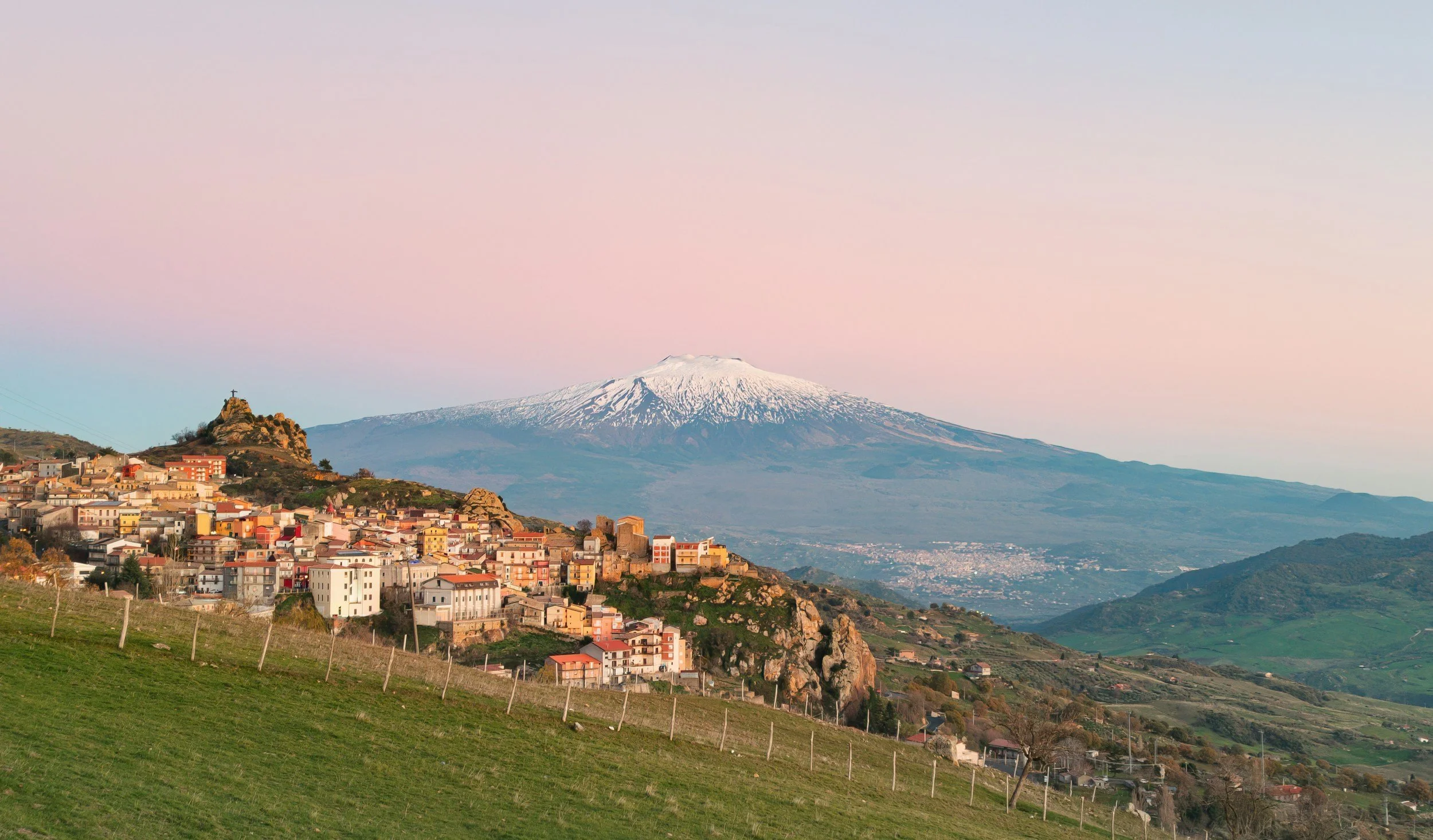
Sicily—Europe's largest island, the Mediterranean's crossroads, home to Mount Etna (Europe's most active volcano)—has undergone the most dramatic wine transformation in Italy. For decades, it was known for sweet Marsala (cooking wine), bulk Nero d'Avola shipped to northern Italy for blending, and oxidated whites. Today, it is the epicenter of natural wine innovation, where ancient amphora traditions meet volcanic terroir in ways that challenge Burgundy and the Rhône.
This guide explores the Etna renaissance and Vittoria revolution—where natural wine is not just a philosophy but a necessity given the extreme conditions. Arianna Occhipinti (Vittoria) is the global icon of Sicilian natural wine, proving that Frappato and Nero d'Avola can express limestone terroir with zero sulfur and native yeast. COS (Giambattista Cilia, Giusto Occhipinti, Pinuccia Strano) revolutionized Italian winemaking by importing Georgian qvevri (clay amphorae buried in the ground) to Vittoria in 2000, creating the "Pithos" movement. On Etna, Frank Cornelissen (Belgian outsider) produces extreme natural wines from indigenous varieties that challenge every preconception of winemaking.
What distinguishes Sicilian natural wine is volcanic terror management—Etna's vines grow at 600-1,200 meters on active lava flows, creating wines of smoke, ash, and electric acidity. It is defined by amphora/qvevri aging—the return to pithos (buried clay jars) for fermentation and maturation, a technique abandoned for millennia but revived by COS. And it is characterized by indigenous preservation—grapes like Nerello Mascalese, Carricante, Frappato, and Zibibbo (Muscat of Alexandria) grown nowhere else in Europe, saved from extinction by natural producers seeking authenticity over yield.
Key Facts
- Location: Southern Italy, Mediterranean island
- History: Greek colonies (Magna Graecia), Arab influence
- Key Regions: Etna, Vittoria, Faro, Noto, Pantelleria
- Main Grapes: Nerello Mascalese, Frappato, Nero d'Avola, Carricante
- Method: Amphora/qvevri, volcanic farming, bush vines (alberello)
- Style: Volcanic reds, salty whites, amphora-aged
- Notable: Fastest growing natural wine scene in Italy
From Greek Kolonai to Qvevri Revolution
Magna Graecia, Arab Zibibbo, and the amphora renaissance
Greek Colonization
Greek settlers from Corinth and Naxos establish colonies at Megara Hyblaea and Naxos (modern Giardini-Naxos), bringing vines and the amphora tradition. The "Alberello" (bush vine) training system develops to survive heat and wind. Wines are exported across the Mediterranean in clay amphorae. The Etna slopes are already cultivated—the Greeks recognize the volcanic soil potential. "Mamertino" wine (from Messina) is mentioned by Pliny as Julius Caesar's favorite.
Arab Rule & Zibibbo
Arab (Saracen) rule brings irrigation, distillation (for medicinal purposes), and new grape varieties. Zibibbo (Muscat of Alexandria) arrives, cultivated on Pantelleria island using the "alberello pantesco" (bush vines in hollows to catch moisture). The technique of drying grapes (passito) is refined. The name "Zibibbo" derives from the Arabic "zabib" (dried grape). Marsala area begins sweet wine production.
Marsala & British Trade
English merchant John Woodhouse creates fortified Marsala wine, adding alcohol to survive sea voyage to England. Sicily becomes a supplier of bulk wine to northern Europe. The interior focuses on quantity over quality—Nero d'Avola becomes a workhorse grape for blending. Etna's terraced vineyards are abandoned as labor costs rise and emigration to America empties mountain villages. Phylloxera hits later than mainland Italy but causes devastation.
COS & The Vittoria Awakening
Three friends (Cilia, Occhipinti, Strano) found COS in Vittoria, naming it after their initials. Initially conventional, they gradually embrace organic farming. The key revelation comes with the discovery that their ancestors used clay amphorae (giare) buried in the ground—like Georgian qvevri. They import qvevri from Georgia in 2000, creating "Pithos" (the Greek word for jar)—wines fermented and aged in clay, no wood, no temperature control, wild yeast. This revolutionizes Italian natural wine.
Arianna Occhipinti & The New Generation
At age 21, Arianna Occhipinti (Giusto's niece) bottles her first wine—SP68 (named for the road passing the winery). She focuses on Frappato (light, aromatic, previously disdained as "inferior") and Nero d'Avola from limestone soils, using zero sulfur, native yeast, and cement tanks. Her success proves that natural wine can be elegant, clean, and commercially viable. She becomes the international face of Sicilian natural wine.
The Etna Gold Rush
International attention focuses on Etna as "the Burgundy of the Mediterranean." Andrea Franchetti (Passopisciaro) establishes the zone's credibility, though more conventional. Frank Cornelissen (Belgium) arrives in 2000, buying vineyards at extreme altitudes (1,000m+) and making "extreme natural" wines with no sulfur, no filtration, and long skin contact (amphorae and fiberglass). Lamoresca (Filippo Rizzo) and Portelli join the movement. The island becomes a magnet for young natural winemakers from across Europe seeking affordable volcanic land and ancient varieties.
Etna, Vittoria & The Islands
Volcanic lava, limestone plains, and sea winds
🌋 Etna (Northeast)
Europe's most active volcano creates unique terroir: black lava soils (basalt, pumice, ash) rich in minerals but poor in organic matter. Vines grow at 600-1,200 meters elevation on terraced vineyards (contrade—single vineyards like Burgundy crus). The climate is extreme—hot days, cold nights, high UV radiation due to altitude. Nerello Mascalese (red) and Carricante (white) are the autochthonous grapes. The wines are characterized by smoke, ash, iron, and electric acidity. Natural producers work with alberello (bush vines) on pre-phylloxera rootstock (own-rooted) in some old vineyards.
🍇 Vittoria (Southeast)
The Valle dell'Acate and surrounding hills feature white limestone (chalk) and red clay soils—rare in Sicily where most soil is sand or lava. This is the home of Cerasuolo di Vittoria DOCG (Frappato + Nero d'Avola). The climate is hot but mitigated by sea breezes from the Mediterranean (15 km away). COS and Occhipinti are here. The limestone gives wines freshness and salinity despite the southern latitude. Perfect for natural wine—good acidity preserves wines without sulfur.
⚓ Faro (Northeast Tip)
The Straits of Messina—where Sicily nearly touches the mainland. Extreme winds, schist and sandy soils, and four indigenous grapes: Nerello Mascalese, Nerello Cappuccio, Nocera, and Acitana. Palari (Salvatore Geraci) revived this nearly extinct DOC, farming organically on terraces overlooking the sea. The wines are saline, windy, with intense minerality. Very small production—natural by necessity due to isolation.
🏝️ Pantelleria (Island)
A volcanic island closer to Tunisia than Sicily (37°N latitude). Extreme heat, no freshwater (rainwater capture), and constant wind. The Zibibbo (Muscat of Alexandria) vines are grown as low bushes (alberello pantesco) in hollows (conche) to protect from wind and capture moisture. Marco De Bartoli (Marsala, now deceased) and his sons make natural passito here. The "Passito di Pantelleria" is one of the world's great sweet wines—naturally dried on mats in sun, fermented with native yeast, oxidatively aged. Also makes dry Zibibbo (rare).
🏛️ Noto (Southeast)
The Baroque towns of Noto and Pachino sit on white limestone cliffs. Famous for Nero d'Avola (originally from here, not Avola—the name is a corruption) and Moscato Bianco. The Eloro DOC covers this area. Gulfi (Vito Catania) makes biodynamic Nero d'Avola here, though more conventional. Natural producers focus on the autochthonous varieties and bush vines. The sea influence is strong—wines show salt and Mediterranean scrub (macchia) character.
🌾 Marsala & Trapani (West)
Historically the bulk wine capital, now seeing natural revival. Flat, sandy, limestone soils. Grillo and Catarratto (whites) and Perricone (red, rare). Marco De Bartoli revolutionized Marsala by making "Vecchio Samperi"—unsweetened, unfortified, oxidatively aged Marsala (essentially natural wine). His children continue. Valdibella cooperative near Camporeale makes natural Catarratto and Perricone. The area is hot—challenging for natural wine without altitude, but sea breezes help.
Regional Natural Wine Character
| Zone | Soil | Grapes | Natural Wine Character |
|---|---|---|---|
| Etna | Volcanic lava, basalt, ash | Nerello Mascalese, Carricante | Smoky, salty, high acid |
| Vittoria | White limestone, red clay | Frappato, Nero d'Avola | Elegant, floral, chalky |
| Faro | Schist, sand, wind-blown | Nerello, Nocera, Acitana | Salty, windswept, mineral |
| Pantelleria | Volcanic, obsidian, pumice | Zibibbo (Muscat) | Aromatic, honeyed, volcanic |
| Noto | White limestone, coastal | Nero d'Avola, Moscato | Dark, rich, saline |
The Featured Producers
Volcanic pioneers and amphora revolutionaries
Vittoria – The Amphora Heartland
Etna – The Volcanic Extremists
The Islands & West – Salt and Sun
The Grapes of Sicily
Volcanic reds and ancient aromatics
Nerello Mascalese
The "Pinot Noir of the Mediterranean"—light-colored, transparent, high-acid, grown on Etna's lava terraces. Indigenous to Etna, possibly related to Sangiovese but distinct. Thrives at 600-1,200m altitude on black volcanic soils. Naturally high in acidity and moderate tannins make it perfect for natural winemaking—resists oxidation better than Nero d'Avola. Flavors: red cherry, rose petal, smoke, ash, balsamic, iron-blood minerality. When made in qvevri/amphora, shows tea-like tannins and savory umami notes.
- Style: Light color, high acid, smoky
- Natural Wine Role: Amphora aging, whole cluster
- Top Producers: Cornelissen, Graci, Vino di Anna
- Regions: Etna, Faro, Vittoria (high altitude)
- Notable: Own-rooted (pre-phylloxera) vines 100+ years old
Frappato
Vittoria's treasure—light, aromatic, fruity, low tannin. Previously blended away or ignored, now celebrated by natural producers for its transparency. DNA shows it's related to Sangiovese but genetically distinct. Makes wines of violet, wild strawberry, white pepper, and pomegranate. Usually blended with Nero d'Avola for Cerasuolo di Vittoria DOCG (40-50% required), but monovarietal expressions (Occhipinti, COS) show its potential as Sicily's answer to Pinot Noir or Gamay. Naturally low in phenolics, requires gentle handling.
- Style: Light, aromatic, floral, low tannin
- Natural Wine Role: Monovarietal, carbonic, chillable
- Top Producers: Occhipinti, COS, Lamoresca
- Regions: Vittoria (Ragusa province)
- Notable: DOC requires 40% minimum in Cerasuolo blends
Carricante
Etna's white grape—high acid, mineral, smoky, grown at high altitude (800m+). Usually blended with Catarratto in Etna Bianco DOC (min 60% Carricante), but pure expressions show racy acidity, lemon, almond, and volcanic ash character. Naturally high in acid (8-9 g/L tartaric), making it ideal for natural wine without sulfur. Aged in qvevri or cement, it develops saline, almost iodine notes. One of Italy's most ageable whites—10+ years easily.
- Style: High acid, mineral, smoky, saline
- Natural Wine Role: Qvevri aging, long lees contact
- Top Producers: Graci, Benanti, Vino di Anna
- Regions: Etna (east slope best)
- Notable: Must be 800m+ elevation for quality
More Sicilian Varieties
Nero d'Avola: Sicily's most famous red—dark, rich, chocolatey, from Noto. Natural versions (Occhipinti) show limestone elegance rather than overripe jam.
Zibibbo (Muscat of Alexandria): Ancient aromatic grape from Pantelleria. Makes Passito (dried sweet) or dry whites. Natural versions are intensely floral, orange-blossom, with volcanic salt.
Catarratto: Most planted white in Sicily—usually neutral. Skin-contact natural versions (Valdibella, Guccione) show almond, herb, and tannic structure.
Grecanico: Same as Garganega (Soave), grown in western Sicily. Mineral, citrusy, often blended.
Perricone: Rare red from Marsala area—tannic, dark, herbal. Nearly extinct, saved by natural producers.
Nocera: Faro DOC component—aromatic, spicy, rare.
Grillo: Marsala grape, now making crisp whites. Natural versions are saline, lemony, textured.
Food Pairing & Sicilian Cuisine
Caponata, seafood, and volcanic agriculture
For Etna Reds (Nerello)
- Pasta alla Norma: Eggplant, tomato, ricotta salata
- Grilled swordfish: With salmoriglio (lemon/garlic)
- Caponata: Sweet/sour eggplant agrodolce
- Pasta con le sarde: Sardines, fennel, pine nuts
- Pecorino pepato: Peppery sheep cheese
For Vittoria (Frappato/Amphora)
- Scacce: Ragusa-style stuffed flatbread
- Caciocavallo: Aged cow cheese (Ragusano DOP)
- Porcini mushrooms: Grilled with rosemary
- Tuna: Cured or grilled (Marzamemi)
- Chocolate: Modica chocolate (with Frappato)
For Amphora/Skin-Contact Whites
- Arancini: Fried rice balls (meat or butter)
- Sarde a beccafico: Stuffed sardines
- Panelle: Chickpea fritters (Palermo)
- Olive ascinate: Breaded fried olives
- Anchovies: Fresh or marinated
For Passito & Sweet Wines
- Cannoli: Ricotta-filled pastries
- Cassata: Ricotta cake with marzipan
- Granita: Almond or coffee (breakfast!)
- Amaretti: Almond cookies
- Mostarda: Mustard-preserved fruit
Sicilian Culinary Traditions
Agrodolce: The sweet-and-sour balance (capers, raisins, pine nuts, vinegar) reflects Arab influence. Perfect with Etna's acidic reds.
Street Food: Palermo is famous for arancini, panelle, crocche. Catania for cipollina (onion pastry). Natural Frappato is the perfect street wine.
Seafood: Sicily is surrounded by sea—swordfish (pesce spada), tuna tonnara (traditional fishing), anchovies, sardines. Etna whites (Carricante) match perfectly.
Pistachio: Bronte (Etna slopes) produces the world's best pistachios (DOP). Used in pesto, pastries, and paired with Etna Bianco.
Citrus: Mount Etna's foothills grow blood oranges (Tarocco). The acidity mirrors Carricante wines.
Ricotta: Sheep ricotta is sacred—in pasta, cannoli, cassata. Salty aged ricotta (ricotta salata) grates over pasta alla Norma with Nerello.
Visiting Natural Sicily
From Catania to the limestone plains
🌋 Etna (North Slope)
Base in Randazzo (medieval town, highest on Etna) or Passopisciaro. Frank Cornelissen (appointment, steep dirt road). Graci (Passopisciaro, easier access). Vino di Anna (Alcara, near Randazzo). Combine with Catania (Baroque city, fish market) and Taormina (touristy but beautiful). Visit Bronte for pistachios. Best in May-June (flowering) or September-October (harvest, grapes visible). Avoid August (tourist crowds, extreme heat on coast—Etna is cooler).
🍇 Vittoria & Southeast
Base in Ragusa Ibla (UNESCO Baroque town) or Scicli (charming, less touristy). Arianna Occhipinti (appointment essential—tastings in stunning winery). COS (tastings in historic palmento). Lamoresca (more casual, call ahead). Combine with Noto (Baroque architecture), Marzamemi (fishing village), and Modica (chocolate). Best in spring (April-May) or autumn (September).
🏝️ Pantelleria & Islands
Fly or ferry to Pantelleria (from Trapani or Palermo). Marco De Bartoli estate (Bukkuram vineyard—iconic caper bushes and Zibibbo vines). Stay in dammusi (traditional stone houses with domed roofs). Combine with Trapani (salt flats) and Marsala (De Bartoli main winery). Also visit Aegadian Islands (Favignana) for tuna and Grillo wines. Best in May-June or September (avoid July-August heat).
Sicily Natural Wine Travel Tips
Timing: Harvest is early—late August for Nero d'Avola, mid-September for Etna (later due to altitude). October is ideal (vendemmia festivals, cooler weather).
Transport: Car essential. Sicily is large—Etna to Vittoria is 2.5 hours. Roads are good but winding. Plan 1 week minimum for multi-region visits.
Language: English spoken at main natural estates (Occhipinti, COS, Cornelissen). Less so at smaller places (Valdibella). Sicilian dialect is strong—distinct from Italian.
Etna Safety: Check volcanic activity—eruptions are frequent but usually safe for tourists. The north slope (where most wineries are) is generally safer than east. Wear sturdy shoes for vineyard visits (lava rock is sharp).
Food Integration: Sicily has Italy's best street food. Plan lunches at wineries (often included in tastings) but save appetite for evening antipasti tours in Catania or Palermo.
Amphora Acquisition: Some producers (COS) sell used qvevri or can connect you to Georgian amphora makers. Shipping is expensive but possible.
Island Hopping: Ferries connect Sicily to Pantelleria, the Aeolian Islands (Vulcano, Salina—Malvasia), and mainland. Aeolians have their own natural wine scene (Malvasia delle Lipari).
10-Day Natural Wine Itinerary
Day 1 - Catania: Arrive Catania. Fish market lunch. Drive to Etna foothills. Overnight Randazzo.
Day 2 - Etna North: Morning: Graci or Vino di Anna. Lunch in Randazzo. Afternoon: Cornelissen (appointment). Overnight Randazzo.
Day 3 - East Coast: Drive to Taormina (touristy but beautiful Greek theater). Continue to Noto. Overnight Noto.
Day 4 - Vittoria: Morning: Arianna Occhipinti (tasting). Lunch: Winery or Scicli. Afternoon: COS. Overnight Ragusa Ibla.
Day 5 - Southeast: Explore Ragusa Ibla and Modica (chocolate tasting). Lamoresca (if appointment). Overnight Marina di Ragusa (beach).
Day 6 - Agrigento & West: Drive west (3 hours). Valley of Temples (Agrigento). Continue to Marsala. Overnight Marsala.
Day 7 - Marsala: Morning: Marco De Bartoli (tasting/lunch). Afternoon: Salt flats at sunset. Overnight Trapani.
Day 8 - Palermo: Drive to Palermo (1.5 hours). Street food tour (Panelle, arancini). Guccione or Valdibella (appointment). Overnight Palermo.
Day 9 - Monreale: Morning: Cathedral (Byzantine mosaics). Afternoon: Portelli or free time. Overnight Palermo.
Day 10 - Departure: Fly from Palermo or Catania.
Alternative: Add 3 days for Pantelleria (ferry from Trapani) or Aeolian Islands (hydrofoil from Milazzo).