

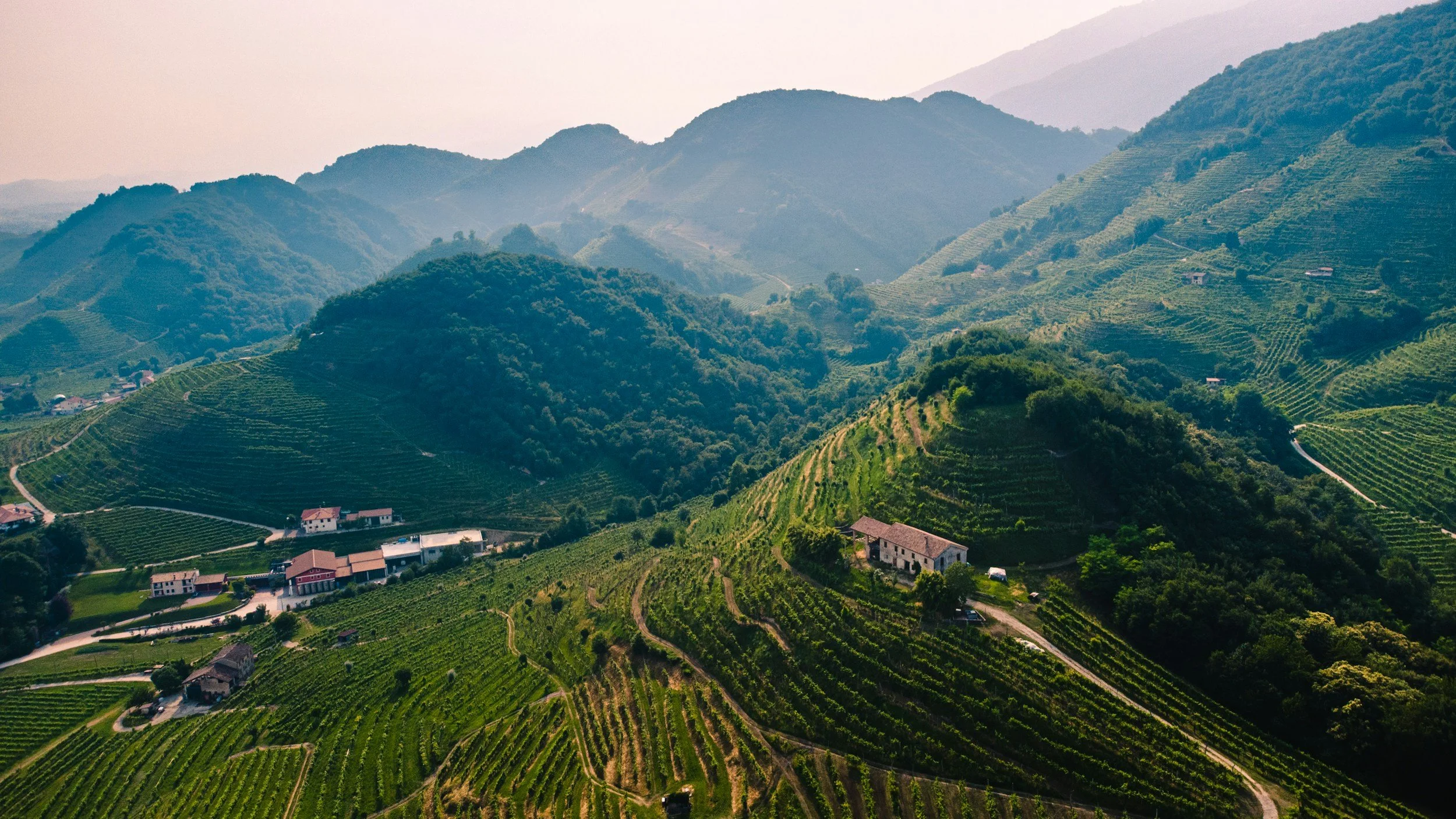
Veneto
From the volcanic hills of Gambellara to the limestone valleys of Valpolicella, discover Veneto's natural wine resistance—where Garganega meets skin-contact amber and ancestral method Prosecco challenges industrial tanks
Overview — The Machine and the Revolt
Veneto produces more wine than any other Italian region — over a fifth of the national total. It gave the world Prosecco, Amarone, and Soave, and built the most efficient, brand-driven wine industry in Italy: DOC lines stretching from the Alpine foothills to the Adriatic, tankers, cooperatives, and supermarket shelves from Melbourne to Minneapolis.
Beneath the machine, another Veneto never disappeared. In the Prosecco hills around Valdobbiadene and Conegliano, small growers kept making col fondo — Prosecco re-fermented and aged on its lees in the bottle, cloudy and unfiltered, the way it was made before the autoclave. Estates like Ca' dei Zago and Casa Coste Piane turned this "peasant" method into a cult object for natural wine drinkers. In Soave, Filippi farms the extinct volcano's basalt biodynamically, while Gambellara's La Biancara proves Garganega can be as profound as any white in Italy.
In Valpolicella, the natural wave is younger and louder: Jacopo Stigliano makes whole-cluster, low-extraction wines that drink closer to cru Beaujolais than to blockbuster Amarone; Valentina Cubi farms the family's old pergolas organically; and experimentalists like Davide Xodo and Fora Wines push blends and amphora work into new territory. And from the Lessini mountains, Alex Della Vecchia bottles Durella col fondo — a wine the region had all but forgotten. Thirty-three estates profiled below map the whole revolt.
History — From Roman Roads to Prosecco Boom
Twenty centuries of trade, technique and terroir — from the Via Claudia Augusta to the stainless-steel tank and back to the bottle.
Roman Era — The Via Claudia Augusta
Roman legions drive the Via Claudia Augusta through the Alpine passes, planting vines along the route and founding the trading ports of the Venetian lagoon. The hills north of Verona — Valpolicella — become celebrated for their sweet Recioto, the ancestor of every wine made from dried grapes in Italy.
Middle Ages — The Serenissima
The Republic of Venice turns wine into commerce: lagoon cicchetti bars codify wine-by-the-glass culture, and Veneto wines sail the Mediterranean. The pergola veronese training system spreads through Valpolicella — vines trained overhead like pergolas, built to shade and to carry heavy crops of drying grapes.
1700s–1800s — Bottle and Sparkle
Refermented bottle wines — the future col fondo — become the farmhouse standard of the Treviso hills, cellared through winter on their lees. In the Lessini mountains, the high-acid Durella grape keeps its fizz naturally; in Soave, Garganega climbs the volcanic slopes below the Scaglieri castle.
1960s–1990s — The Machine Age
The Charmat (tank) method industrializes Prosecco; DOC rules tame it into clear, consistent, fruity fizz. Soave expands onto the plains in quantity; Valpolicella answers with ever-bigger, ever-riper Amarone. Veneto becomes the template of modern branded wine — efficient, global, and increasingly soulless at the volume end.
2000s — The Col Fondo Return
Small growers in Valdobbiadene and Asolo quietly re-bottle the old way. Ca' dei Zago ferments its Prosecco with nothing added and nothing taken away; Casa Coste Piane works centenary Glera vines. In Soave, Filippi converts to biodynamics. Natural wine bars in London, Paris and Copenhagen discover the cloudy bottles — and the revolt goes international.
2010s–Present — The Natural Wave
A new generation — many trained in the region's big wineries — breaks away: whole-cluster Valpolicella from Jacopo Stigliano, experimental bottlings from Davide Xodo, Durella col fondo from Alex Della Vecchia. The Rive crus of Valdobbiadene and the volcanic cru of Soave give the natural movement terroir vocabulary the old bulk regions never had. Veneto, of all places, becomes a natural wine frontier.
"Fondo in bottiglia, come una volta" — lees in the bottle, like the old days: the sentence that restarted Prosecco.
— Old saying of the Valdobbiadene hillsTerroir — From Dolomite Foothills to Extinct Volcanoes
Six wine worlds in a hundred kilometers — glacial hills, basalt slopes, limestone valleys and volcanic Euganean islands.
🌄 Valdobbiadene & Conegliano
The Prosecco heartland — steep, south-facing morainic hills of sandstone and clay, lashed by cool Alpine air. The Rive designation names the steepest single-vineyard crus. Here Glera keeps razor acidity; here col fondo was born. The Cartizze hill is the region's grand cru — and its tourist magnet.
🏰 Asolo & Montello
The "other" Prosecco DOCG, west of Treviso around the poetic town of Asolo — Queen Cornaro's hilltop retreat. Cooler and more marginal than Valdobbiadene, it gives leaner, more mineral sparkling wine and is a stronghold of small col fondo growers like Bele Casel and Case Paolin.
🌋 Soave
An extinct volcano west of Verona: basalt and tuff slopes below the medieval castle, where Garganega ripens late into waxy, almond-scented, age-worthy whites. The classico zone on the volcano is tiny compared to the flatlands' oceans of generic Soave — the contrast that defines the quality battle. Gambellara, its volcanic sibling to the east, makes Garganega's most electric natural wines.
⛰️ Valpolicella
Three limestone valleys north of Verona — Negrar, Marano, Fumane — climbing from the plain to 500 meters. Corvina rules, trained on pergolas; the appassimento method dries grapes into Recioto and Amarone. The best natural producers reject the drying-house ripeness in favor of fresh, whole-cluster reds from the upper valleys.
♨️ Colli Euganei
A cluster of ancient volcanic hills rising suddenly from the Po plain near Padua — hot, mineral, Mediterranean in microclimate. Reds from Merlot and indigenous varieties, and the aromatic Fior d'Arancio Muscat, with Ca' Lustra farming the old terraces naturally.
🪨 Lessini Mountains
The high limestone country between Verona and Vicenza — cool, windswept, sitting on volcanic tuff from the same ancient eruptions as Soave. Home of Durella, an iron-acid white grape that keeps its fizz and its nerve: the raw material of the region's most exciting col fondo, and Alex Della Vecchia's home ground.
The Winemaker Series — Thirty-Three Estates of the Veneto Revolt
Full profiles of the people reshaping wine in Veneto — col fondo traditionalists, volcanic Soave pioneers, and the young naturalists of Valpolicella. Click through to read each profile.
Prosecco Hills & Treviso — The Col Fondo Guard
Ca' dei Zago
Valdobbiadene. The reference point of the col fondo revival: nothing added, nothing taken away, and "Dagor" — a skin-contact Glera that rewrote what Prosecco could be.
Casa Coste Piane
Valdobbiadene. Centenary Glera vines on the steep Rive, fermented in the bottle with indigenous yeast — col fondo of depth and lineage.
Case Paolin
Montebelluna. Old-vine col fondo with a natural-farmer's discipline: low yields, patient lees aging, zero makeup.
Bele Casel
Asolo. Small-grower col fondo from the cooler western hills — lean, mineral, quietly authoritative.
Sorelle Bronca
Valdobbiadene. Sisters Antonella and Ersiliana run a benchmark estate of the DOCG — organic farming and single-vineyard precision in the land of blends.
Malibran
Valdobbiadene. A historic family with deep roots in Serrai di Rolle — traditional-method patience in the heart of tank-ferment country.
La Vigna di Sarah
The Prosecco hills. Small-scale, hands-on sparkling wine from family vineyards — the personal face of the hills.
Col Sandago
Colli Trevigiani. A hilltop estate farming the quieter countryside beyond the DOCG glare for characterful local wines.
Riva dei Frati
Prosecco country. Family vineyards on the sunny riva — the "friars' bank" — worked with restraint.
Terre Grosse
Treviso hills. Deep clay soils give weight to Glera; the estate bottles both DOC fizz and col fondo versions.
Antica Torre del Roccolo
Near Lake Garda's morainic amphitheatre. A tower estate between lake air and Alpine wind, growing classic Veronese varieties.
Alla Costiera
Verona province. A family farm estate on the slopes between the plain and the first hills — quietly natural in approach.
Soave, Gambellara & the Volcano — Garganega Territory
La Biancara
Gambellara. Organic since the 1990s and the natural movement's Garganega bible — "Sassaia" is one of Italy's great mineral whites.
Filippi
Soave, Castelcerino. Biodynamics on the volcano's top cru — Garganega with grip, smoke and long aging curves.
Gini
Soave Classico. A traditional benchmark of the appellation — old-vine Contrada Salvarenza proving Soave's aging nobility.
Suavia
Soave. The Tessari sisters farm pure volcanic terroir — Monte Carbonare is a cru of basalt, pressure and precision.
Coffele
Soave. An organic family estate in the classico zone — Garganega of clarity and a benchmark Recioto di Soave.
I Stefanini
Soave. Family farming in the hills east of Verona — traditional Garganega with an honest, agrarian footing.
Valpolicella & Verona — The Young Naturalists
Jacopo Stigliano
Valpolicella. The young standard-bearer of natural Valpolicella — whole-cluster, low-extraction reds from high-pergola vineyards that drink with impossible freshness.
Valentina Cubi
Valpolicella, Marano. Third-generation family estate turned organic — old pergolas, hand-dried grapes done with restraint, and a fiercely personal vision.
Corte Sant'Alda — Corte Santalda
Valpolicella. High-altitude vineyards in the Marano valley, farmed biodynamically before it was fashionable — aromatic, lifted Corvina.
Corte Bravi
Valpolicella. A family courtyard estate in the classic zone — traditional methods, organic conversion, unhurried cellar work.
Corte Mainente
Valpolicella. Natural-leaning wines from the hills around San Pietro in Cariano — purity over power in Amarone country.
Garganuda
Valpolicella. The name fuses Garganega's wit with Valpolicella's soul — small-lot natural wines from the valley floor's old plots.
Antica Valpolicella
Valpolicella. Guardians of the old ways — pergolas, patience and the classic trio of Corvina, Rondinella and Molinara.
Davide Xodo
Verona. The region's most experimental young winemaker — field blends, amphora and no-sulfur bottlings from borrowed vines and native grapes.
Fora Wines
Verona. A small natural label born in the city — garage-scale production with a clear eye on heritage varieties.
Edoardo Sacchetto
Treviso. The Sacchetto family's natural-minded generation — col fondo and still wines with zero additions from Piave country vines.
Lessini, Euganei & Beyond — The Frontier
Alex Della Vecchia
Lessini mountains. The Durella col fondo evangelist — high-acid, leesy, mountain sparkling that made the wine world look up from the Prosecco plain.
Ca' Lustra
Colli Euganei. Organic farming on the volcanic hills above Padua — old terraces, indigenous varieties and untamed Fior d'Arancio.
Montedallora
Colli Euganei. Volcanic-soil estate wines from the sunny southern slopes of the Euganean hills.
Montetondo
Veneto hills. A round-hill family farm — honest local varieties worked with a light hand.
Rarefratte
Veneto. The name says "rare fronds" — small parcels, rare varieties, and a natural cellar kept deliberately quiet.
The Grapes — From Glera to Durella
Glera
The Sparkler — Prosecco HillsThe grape of Prosecco — neutral, floral, apple-and-pear scented, prized for its ability to carry fizz and its forgiving nature. In the hands of col fondo producers it becomes something else: cloudy, savory, textural, with the vineyard's terroir stamped on the lees. Natural Glera is picked early, pressed gently, and left alone.
Garganega
The Volcanic White — Soave & GambellaraOne of Italy's great white grapes, thriving on basalt and tuff: waxy texture, white peach, chamomile, almond and a smoky mineral core. Late-ripening and high-acid, it builds — Soave Classico and Gambellara age for a decade or more. The natural movement treats it like white Burgundy: old vines, long lees contact, nothing added.
Corvina (with Rondinella & Molinara)
The Valley Red — ValpolicellaCorvina brings sour-cherry brightness, almond skin and the ability to dry without rotting; Rondinella adds color and Molinara acidity. Traditional Valpolicella is fresh and food-driven; appassimento concentrates it into Recioto and Amarone. The natural generation makes whole-cluster, carbonic-inflected Valpolicella that drinks like cru Beaujolais — the grape's most honest expression.
Durella
The Mountain Acid — LessiniVeneto's high-wire grape: thick-skinned, iron-acid, grown on volcanic tuff at altitude in the Lessini mountains. Almost abandoned, it was resurrected by col fondo producers — the wine finishes fermenting in the bottle and keeps its nerve for years. Saline, citrus-pith, mineral — the anti-Prosecco.
More Veneto Varieties — The Supporting Cast
Tai Rosso (Tocai Rosso): the light, peppery red of the Colli Berici, cousins to Grenache. Raboso: Piave country workhorse — fierce tannin and acid, being rediscovered by naturalists. Incrocio Manzoni: professor-bred crossing (Riesling × Pinot Bianco) with perfumed, Riesling-like wines. Fior d'Arancio: the Euganei Muscat of orange-blossom aromatics, dry and sparkling styles. Turbiana: the mineral white of Lake Garda's south shore. Glera Lunga: an aromatic, harder-to-grow relative of Glera prized by col fondo traditionalists.
Food — Cicchetti, Polenta & the Venetian Table
For Col Fondo & Prosecco
Venetian cicchetti — the small plates eaten standing at the bacaro counter: sarde in saor (sweet-sour sardines), baccalà mantecato (whipped salt cod) on crostini, polpette, artichoke hearts. The wine's leesy savor is the perfect foil for fried and marinated things.
For Soave & Garganega
Verona's lake fish: coregone (whitefish) from Garda, grilled sardines, bigoli in salsa (thick spaghetti with anchovy and onion), and the city's risotto al tastasal. The wines' almond-bitter finish mirrors the cuisine's sweet-sour register.
For Valpolicella & Natural Corvina
Risotto all'Amarone (for the ambitious), pastissada de caval (horse-meat stew, Verona's Sunday classic), polenta with sopressa (the local salami), and Monte Veronese cheese — the mountain pastures' answer to Asiago.
For the Sweet & Bubbly Endings
Recioto di Soave with tiramisù — invented in Treviso in the 1960s — or pandoro, Verona's star-shaped Christmas cake, drowned in mascarpone cream. Fior d'Arancio sparkling with zaeti, the Euganean cornmeal biscuits.
Veneto Culinary Traditions
Cicchetti culture: Venice's standing wine-bar ritual — a small glass (ombra) and a bite, hopping from bacaro to bacaro. Polenta: the maize staple of the foothills, soft with cheese or grilled with sopressa. Baccalà: salt cod in two liturgies — mantecato (whipped) in Venice, alla vicentina (slow-cooked with milk) in the hinterland. Risi e bisi: Venice's rice-and-peas soup, half risotto, half soup. Spritz: born in the Veneto under Austrian rule — Aperol or Select with prosecco and soda, the region's unofficial flag.
Visiting — Three Worlds in a Week
🌄 The Prosecco Hills
Base in Valdobbiadene or Conegliano. Drive the Prosecco Road (Strada del Prosecco) through Santo Stefano and San Pietro di Barbozza; walk the Cartizze hill; eat at an osteria senz'oste — the honesty-menu hilltop inns. Treviso, with its canals and tiramisù, is the gateway. Best April–June and September–October.
🌋 Soave & Verona
Base in Verona — one of Italy's most beautiful cities, and walkable with a glass. Day-trip to Soave, a perfect walled town inside its castle's vines, and to Gambellara next door. The Soave Cru tastings in the castle courtyard happen each spring. Lake Garda is 30 minutes west.
⛰️ Valpolicella
The three valleys north of Verona — Fumane, Marano, Negrar — are dotted with Romanesque churches, dry-stone terraces and family courtyards (corte). Most estates welcome visits by appointment; the natural producers are young and usually pour at the cellar door themselves. Combine with Sant'Ambrogio and the Valpantena.
Travel Tips
Timing: harvest is September–October; avoid the Cartizze weekend crowds of late summer. Transport: fly into Venice or Treviso (Prosecco), Verona (Soave/Valpolicella); trains are excellent, but a car unlocks the hills. Book ahead: cellar visits are by appointment almost everywhere. Backup plan: Venice itself — a cicchetti crawl covers half the region's wine styles in one evening.
7-Day Natural Wine Itinerary
Day 1 — Venice: arrive, evening cicchetti crawl in Cannaregio. Day 2 — Prosecco Hills: train to Conegliano, pick up car; Valdobbiadene, Cartizze walk, dinner at an osteria senz'oste. Day 3 — Col fondo day: tastings with Ca' dei Zago, Casa Coste Piane or Bele Casel (appointments); sunset at the Rive. Day 4 — Transfer to Verona: stop at Asolo — "the town of a hundred horizons" — for lunch. Day 5 — Soave: castle, volcanic-cru tastings (Filippi, Suavia, La Biancara in Gambellara); Verona evening. Day 6 — Valpolicella: the three valleys; appointments with Jacopo Stigliano, Valentina Cubi and friends; dinner at a rural trattoria. Day 7 — Garda or Euganei: Lake Garda's south shore or the Colli Euganei thermal hills; fly out of Verona or Venice. Alternative: add 2 days for the Lessini mountains and Durella country.