

Ben WalgateFrom Natural Wine to Terroir
Once "Mr English Natural Wine" at Tillingham—now crafting precise, terroir-driven wines at Walgate & Co. in an industrial warehouse in Rye, with qvevri, ambition, and a newfound clarity.
From Lincolnshire farm boy to Tillingham founder to warehouse winemaker—the evolution of English wine's most prominent voice.
Ben Walgate grew up on a farm in Lincolnshire, where his family still farms today. He left at 18 to study Classics in London—"completely ignoring the idea of farming," as he admits. But wine intervened. He fell in love with it at university, studied at Plumpton College, and spent years running a vineyard before the pull of the land brought him full circle [^73^].
In 2017, Ben founded Tillingham at Dew Farm in Peasmarsh near Rye—a 13th-century mixed farm where he planted vines, installed Georgian qvevri in a traditional oast house, and built a cult following for his pét-nats, orange wines, and experimental blends. Tillingham became the destination for London's natural wine scene: hotel, restaurant, bar, yoga, sourdough pizza, and wines that "pushed the winemaking to the edge" [^70^][^72^].
At Tillingham, Ben made as many as 27 different wines plus ciders in a single vintage, trialing everything from regenerative agriculture to biodynamic preparations. He worked with 11 vineyards and 13 varieties, experimenting with skin contact, qvevri fermentation, and zero-sulphur winemaking. The wines gained listings at trendy bars and glowing press—but Ben was restless [^76^].
"I gave it my all, but it was time to move on: I needed to move on. I learned a lot from my time there, and The Winery Rye and my new eponymous wine brand, Walgate, represent the next stage."
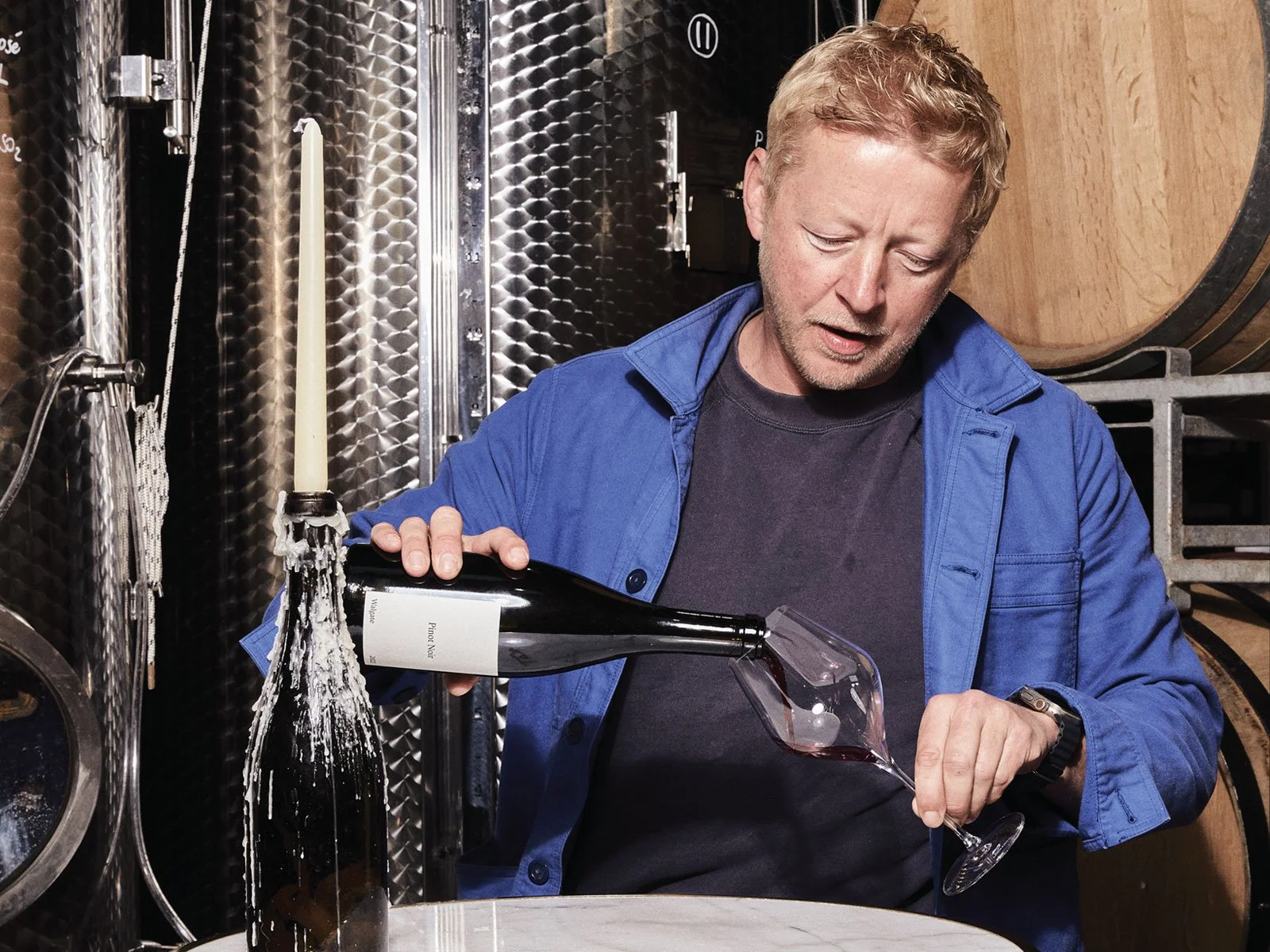
In 2022, Ben left Tillingham. In April 2023, he moved his operation to Bridgepoint in Rye—a warehouse on the site of an old boatyard—launching Walgate & Co. The new wines surprised many: alongside experimental qvevri blends stood a delightful Pinot Blanc reminiscent of Northern Italy and a Pinot Noir Reserve built to age—more Savile Row than Hoxton Square [^70^][^80^].
"Uncomfortable about being described as a natural winemaker"—the shift from experimentation to terroir.
Ben's evolution represents a maturation of the English natural wine movement. He recently stated he is "uncomfortable about being described as a natural winemaker and has been for some time now." The reason? Quality. "If we are awash with natural wines that are dirty, made poorly, released too young, before they are ready, no wonder the end is nigh for natural wine." [^70^]
At Walgate & Co., the approach is low-intervention but precise. Ben still uses the qvevri he buried at Tillingham—14 vessels of various sizes, the largest 800 liters—fermenting with indigenous yeasts and minimal sulphur. But the focus has shifted from "pushing to the edge" to terroir expression and age-worthy structure [^76^].
The new winery in Rye is industrial and intentional. Italian tanks, Austrian barrels, Slovenian presses. A bar for tastings and community. Ben's vision includes evenings at The Winery where people can learn about English wine, get involved with winemaking, and "hang out"—democratizing wine education while maintaining exacting standards [^72^].
From qvevri experiments to age-worthy Pinot—Walgate & Co.'s diverse portfolio.
A revelation in Ben's new portfolio—reminiscent of Northern Italy. Precise, mineral, and age-worthy. This wine demonstrated Ben's shift toward classical expression while maintaining his low-intervention ethos. Delightful and unexpected from English soil [^70^].
Aged potential
2022 vintage
Ben's most serious red to date—"will age beautifully". Structured, complex, and built for the cellar. This represents the new Walgate philosophy: not just drinkable young, but transformative with time. The 2022 vintage marks a watershed in English still wine ambition [^70^].
Structured
Reserve level
Chardonnay, Pinot Noir, Gamay, and Pinot Meunier all fermented together in Georgian qvevri. The ancient clay vessels buried under the oast house at Tillingham continue to shape Ben's most experimental wines—textural, complex, and unlike anything else in England [^70^][^76^].
Qvevri aged
Unfiltered
Classic traditional method sparkling from Chardonnay. While Ben made his reputation with pét-nats and Col Fòndo styles, this wine shows his mastery of conventional techniques—zero dosage potential, lees-aged, and precise. The balance and weight suggest serious aging capability [^79^].
Lees aged
Chardonnay
Still white Chardonnay that "tastes like nothing else" according to tasters—distinctively savoury and salty. Fermented and aged with attention to texture, this represents Ben's continued fascination with skin contact and lees aging applied to classical varieties [^77^][^80^].
Textural
Savoury profile
Ben's first qvevri wine—Ortega with five days skin contact, buried for seven months. Despite oxidation and flor development, the wine transformed into something "incredibly resilient" and evolving. A landmark in English orange wine that proved these techniques could work in the UK [^76^].
5-day maceration
7-month qvevri
The Evolution
Ben Walgate's career traces the arc of English natural wine—from fringe experimentation to mainstream acceptance to critical self-reflection. At Tillingham, he proved that England could produce serious natural wine—qvevri-fermented, skin-contact, zero-sulphur wines that stood alongside Jura and Austria. He also proved that a vineyard could be a holistic ecosystem—farm, restaurant, hotel, and community [^73^][^75^].
But the experimental phase gave way to something more sustainable. The new Walgate & Co. wines—Pinot Blanc, Pinot Noir Reserve, precise Chardonnay—show that Ben has "matured into making small adjustments" rather than chasing extremes. The packaging changed: "simple chic labels, more Savile Row than Hoxton Square" [^70^].
Ben remains at the forefront of English still wine—a category he championed when others focused only on sparkling. His work with hybrid varieties (Regent, Müller-Thurgau) and forgotten grapes proved that England's potential extends far beyond Champagne clones. Whether in a qvevri buried under an oast house or a tank in a Rye warehouse, Ben Walgate continues to define what English wine can be [^76^].
- Lincolnshire farm upbringing
- Classics degree, London
- Plumpton College trained
- Tillingham founder (2017)
- 14 Qvevri installed
- 27 wines per vintage
- Left Tillingham (2022)
- Walgate & Co. (2023)
- The Winery Rye
- Bridgepoint warehouse
- Pinot Noir Reserve
- Pinot Blanc specialist
- From natural to terroir