

Titch HillAncient Land, New Wine
Alex Tristram and Sam Bunker craft holistic natural wine on a 250-year family farm where the South Downs meet the English Channel—sheep graze between vines, chalk cliffs loom, and PIWI varieties point to the future.
From Plumpton College to a 250-year family farm—two friends building a vineyard where environmental restoration began in the 1980s.
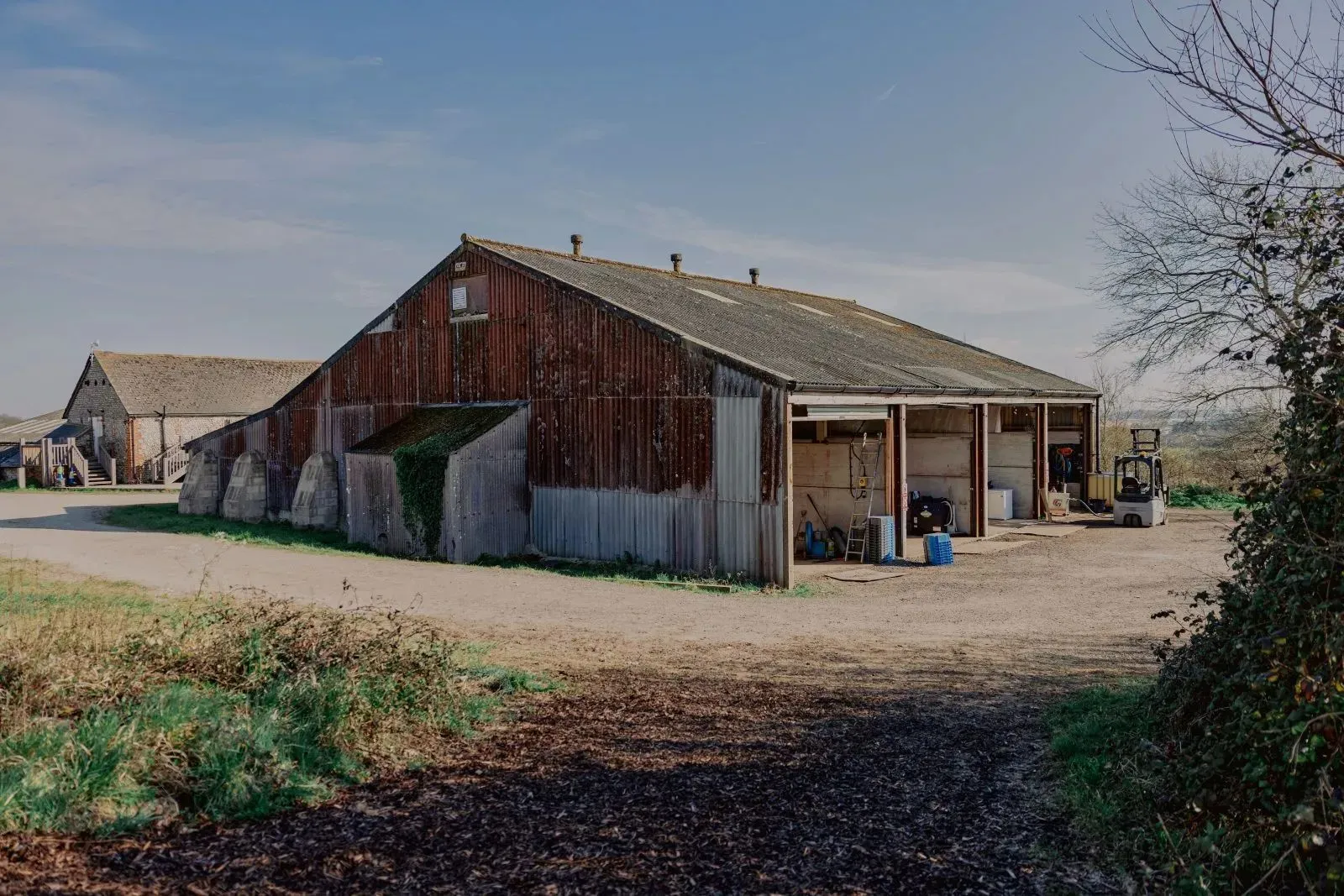
Alex Tristram and Sam Bunker met while studying winemaking at Plumpton College in 2017. It was a fortuitous meeting that would lead them back to Alex's family farm in Sompting, West Sussex—land that has been in his family for over 250 years [^42^][^57^].
The farm itself carries a legacy of environmental stewardship. In the early 1980s, Alex's uncle began environmental restoration work, repairing the damage done across the UK by post-war industrial farming. This holistic approach to land management would become the foundation of Titch Hill's philosophy [^42^].
After finishing at Plumpton, Alex returned home to begin the winemaking project. Sam, who grew up nearby, soon joined as his collaborator. Together, they planted 3.5 hectares of Chardonnay, Pinot Noir and Pinot Meunier in May 2019 on a south-facing chalky slope of the Sompting Downs, nestled between Worthing and Steyning and just 3km from the sea—making them perhaps one of the closest vineyards to the coast in the UK [^42^][^56^].
In the last couple of years, they expanded with 4.5 hectares of 12 different PIWI varieties (fungus-resistant grapes)—all with a view to completely reducing their input, allowing more time to focus on soil health and diversity [^42^][^44^].
Nature-first farming, nothing-added winemaking, and the future of PIWI.
Titch Hill operates on organic principles, currently in conversion and soon to be certified. Their approach is holistic: the vineyard integrates within the patchwork of the surrounding farmed landscape, buzzing with wildlife—bees, butterflies and much more. Mixed native species hedges provide windbreaks while broad grass margins allow cowslips and wildflowers to thrive [^42^][^56^].
The coastal influence is immediately apparent on the high chalk of the South Downs. In the winery, work is as minimal as possible to allow the fruit to speak for itself—they are strictly no additions. No added sulphites, no fining, no filtration beyond coarse racking [^42^][^43^].
Looking forward, they will treat the vines exclusively with herbal and plant teas with fungicidal properties. So far, only minimal amounts of copper and sulphur have been used. The 12 PIWI varieties (including Regent, Rondo, Seyval Blanc, Reichensteiner, and Schönburger) represent the future: grapes with natural resistance to downy and powdery mildew, reducing chemical inputs to nearly zero [^42^][^55^].
- Organic Conversion
- No Additions Winemaking
- Sheep Integration
- PIWI Varieties
- Herbal Teas Only
High chalk, coastal winds, and holistic farming on England's south coast.
Classic Hectares
Original planting of Chardonnay, Pinot Noir and Pinot Meunier in May 2019. These vines represent the foundation of Titch Hill—traditional Champagne varieties adapted to the South Downs terroir, facing south on chalky slopes [^42^][^44^].
PIWI Hectares
12 different PIWI varieties planted in 2023 including Regent, Rondo, Seyval Blanc, Reichensteiner, and Schönburger. These disease-resistant hybrids require minimal intervention, representing the future of sustainable viticulture [^42^][^55^].
From the Sea
Perhaps one of the closest vineyards to the coast in the UK. The maritime influence moderates temperatures and brings distinctive saline character to the wines. The vineyard connects woodland wildlife on three sides [^42^][^56^].
Wild combinations, joyful expressions, and zero additions—wines that taste like Sussex.
Wild Combination
A seven-grape masterpiece blending Schönburger, Bacchus, Pinot Noir, Reichensteiner, Rondo, Regent, and Seyval Blanc across two vintages. Still Pinot Noir and Seyval Blanc from 2023 introduced to fermenting juice from 2024. Bright, juicy, red fruit-driven with crunchy apple, strawberry, pepper, and rose petals. Zero additives, disgorged by hand [^43^][^48^][^55^].
2 Vintages
10% ABV
Love Streams
High-energy pét-nat made with négociant fruit from London, Wiltshire, and East Sussex. Primarily Bacchus and Reichensteiner, this is heady with citrus, elderflower and wild hedgerows. "Think Spring in a glass"—invigorating, vibrant juice bottled with no additions. The grapes are pressed directly and initially fermented separately before bottling together to finish [^54^][^58^].
Reichensteiner
Disgorged 2024
Dreamhouse
A super crisp skin contact white with gooseberry, orange zest and apricot on the nose. High acidity with vibrant texture from the skin contact. Notes of gooseberry, green apple, and Sussex hedgerows. Complex and age-worthy while remaining immediately drinkable—an excellent introduction to English orange wine [^46^][^67^].
Native Yeast
Unfiltered
Demesne
From the estate vineyards on the Titch Hill farm. A white wine that truly expresses the chalk terroir of the South Downs—mineral, saline, and textured. Made with minimal intervention to showcase the unique coastal influence of this site, just kilometers from the English Channel [^69^].
South Downs
No Additions
Lanterns
A light, fresh red made from Pinot Noir grown on the estate. Reflecting the cool coastal climate, this wine shows bright red fruit, earthy undertones, and a saline minerality. Fermented with indigenous yeasts and bottled with zero sulphur—an English red that drinks like a Beaujolais but speaks of Sussex [^60^].
9% ABV
Whole Berry
Future Releases
As the PIWI vineyards mature, expect new expressions from Rondo, Regent, and the other ten varieties planted in 2023. Alex and Sam continue to experiment with co-fermentations, extended skin contact, and ancestral method sparkling wines. Each vintage brings new discoveries from this dynamic young project [^42^][^55^].
Co-ferments
Ancestral Method
The Future of English Wine
Titch Hill represents a new generation of English natural wine—technically trained (Plumpton College), deeply rooted in place (250-year family farm), and forward-thinking (PIWI varieties). Alex and Sam prove that English wine can be natural, sustainable, and serious without being precious [^42^][^59^].
Their Wild Combination—a seven-grape, two-vintage blend—demonstrates the creativity possible when winemakers work without AOC constraints. Their commitment to organic conversion and holistic farming (sheep grazing, herbal teas, biodiversity corridors) shows that the future of wine is regenerative. And their coastal location proves that England's southern coast can produce distinctive, terroir-driven wines that could only come from the South Downs [^42^][^58^].
- Plumpton College graduates (2017)
- 250-year family farm
- Closest vineyard to sea in UK (3km)
- Organic conversion
- Sheep integration (winter grazing)
- 12 PIWI varieties (disease-resistant)
- Zero additions (no SO2)
- High chalk South Downs terroir
- Herbal tea vineyard treatments
- Mixed farm (wheat, barley, livestock)
- Négociant & estate production
- Hand disgorged pét-nats
- Environmental restoration legacy (1980s)