When the Dream Sours: California Wineries Sit Unsold as Owners Walk Away
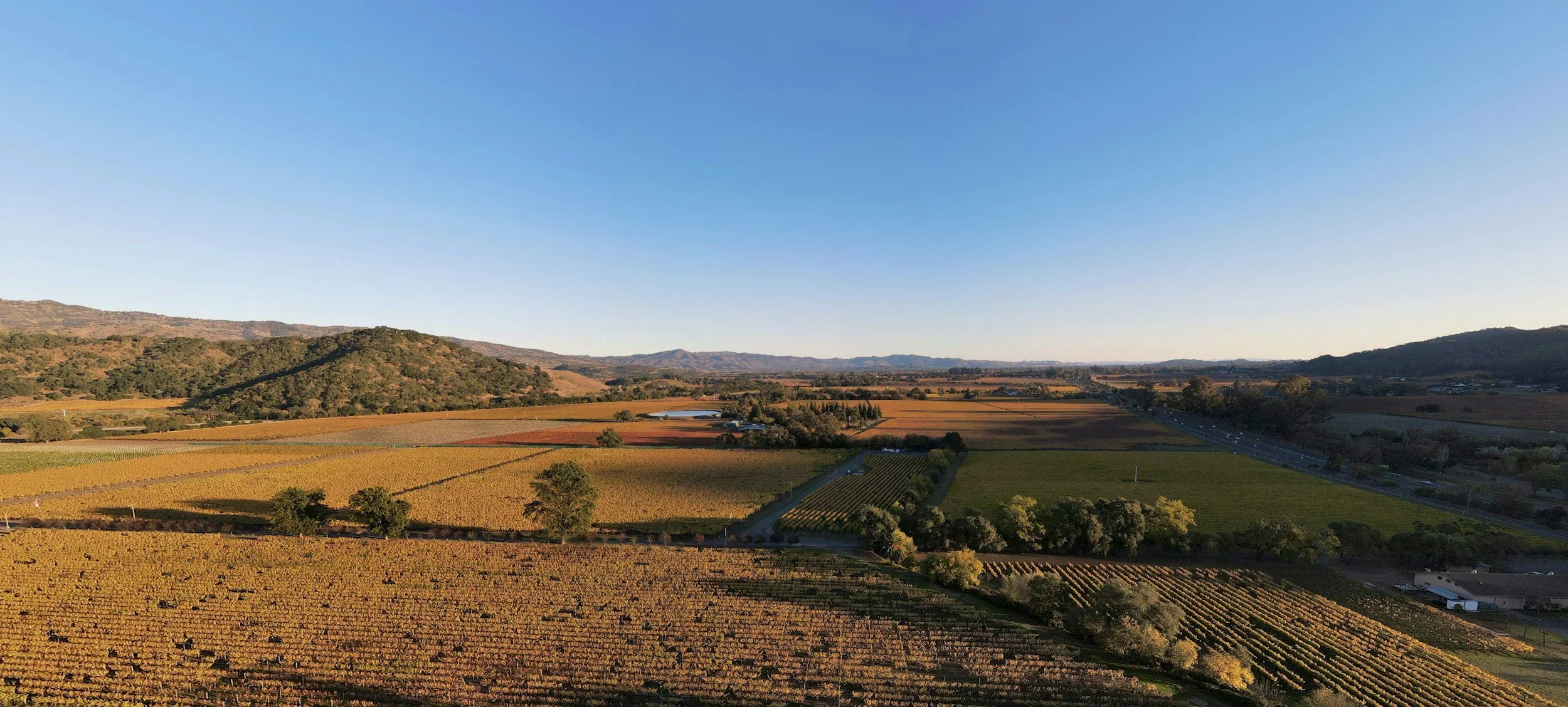
On a quiet weekday in wine country, the “For Sale” signs don’t always stand at the curb. Many listings live online now—estate wineries, vineyard parcels, bonded facilities—waiting for calls that don’t come. In the past, a Napa address alone could spark a bidding war. Today, brokers and bankers describe a market where even great properties can linger, and some owners decide the cleanest exit is to shut down instead of selling.
“There are plenty of wineries for sale in California right now, but buyers are thin on the ground,” Wine-Searcher reported in early February, capturing the mood that has spread from tasting rooms to barrel halls. (Wine-Searcher)
This isn’t just a story about luxury real estate. It’s a shakeout driven by falling consumption, oversupply, higher costs, and a structural reality: most wineries are small, and small businesses can’t survive many years of shrinking margins.
“About 85 percent of wineries in the US are smaller than 5000 cases,” said Pat DeLong, founder of Azur Associates. “There are far more wind-downs than sales. They just don’t get publicized.” (Wine-Searcher)
The backdrop is stark. U.S. wine consumption has fallen sharply since its pandemic-era peak.
Per-resident consumption dropped from 3.16 gallons (2021) to 2.54 gallons (2024).
Total U.S. wine consumption dropped from 1.06 billion gallons (2021) to 870 million (2024). (Wine Institute)
Those aren’t abstract numbers in Napa and Sonoma. They show up as slower tasting rooms, fewer case-club shipments, and reduced wholesale pull-through.
One Sonoma Coast producer, Ernest Vineyards, is closing after 14 years—an outcome that’s becoming less rare.
“Like many small producers, it’s a very challenging time with costs escalating and sales declining,” owner Erin Brooks said. “It’s really quite that simple.” (San Francisco Chronicle)
She watched visitor behavior shift in real time: “In the beginning, people were enthusiastically buying cases of wine when they visited us,” Brooks said. “By 2025… they’d visit, pay for a tasting and leave without taking anything home.” (San Francisco Chronicle)
Napa is “safest”—and still uneasy
If any region should be insulated, it’s Napa Valley: global brand equity, high average bottle prices, and limited room for new plantings. Even so, the conversation has changed from expansion to triage.
Cody Jennings, a director at BMO Capital, said investors still view Napa as a safer bet: “In Napa and Sonoma there’s a finite amount of land available… Everyone that we’ve spoken to thinks Napa’s the safest bet because of that simple fact.” (Wine-Searcher)
But “safest” doesn’t mean invulnerable. DeLong relayed a concern that would have sounded heretical a decade ago: Napa may have “planted too much Cabernet.”
“There was a lot of talk about places that got planted to Cabernet and shouldn’t have,” DeLong said. “It will probably help to not have all 45,000 acres planted to Cabernet. Some of that’s going to come out.” (Wine-Searcher)
In other words: the region that perfected scarcity economics is now debating whether it needs less of its signature grape.
Sonoma, Lodi, the Central Valley: the squeeze is sharper
Outside Napa, the pain is often more immediate—especially for growers and mid-tier wineries competing in crowded price points.
In Lodi and across the Central Valley, the downturn looks physical: vines on the ground, fruit left to rot, acreage disappearing.
“Last year, there was probably an estimated 400-thousand tons left unharvested across California, and it probably be that amount this year,” said Stuart Spencer of the Lodi Wine Commission. (ABC7 San Francisco)
And it isn’t just numbers. “The grapes being left unharvested is painful to see,” Spencer said. (ABC7 San Francisco)
A statewide mapping effort commissioned by the California Association of Winegrape Growers found growers removed nearly 40,000 acres of vineyards between October 2024 and August 2025—about 7% of the state’s winegrape acreage. (agalert.com)
At a press conference cited in that report, Allied Grape Growers president Jeff Bitter described the moment as a turning point for decision-making: “We have a lot of information now about the acreage in the state… and being able to make better predictions about where we’re going in the future.” (agalert.com)
Even within the same county, some vineyards aren’t being “removed” so much as abandoned until removal pencils out. San Joaquin County grower Aaron Lange said: “I’m sure we have in Lodi a few thousand acres… abandoned or minimally farmed… likely going to come out in the next couple of years once money allows.” (agalert.com)
The human decision: sell, shutter, or start over
For owners who entered wine as a calling, walking away can feel like betrayal—until it feels like survival.
Brooks, after selling assets and planning final releases, summarized a kind of emotional closure that’s increasingly common: “Candidly, I really doubt it’s in the wine industry.” (San Francisco Chronicle)
And yet, even in the downturn, there’s a future being negotiated: fewer vines, tighter portfolios, new farming practices, and a customer base that may buy differently—but not necessarily disappear.
“The new capital is seeking opportunistic plays,” Jennings said. “Historically… there’s been some big successes. But the risk is a lot higher.” (Wine-Searcher)
California wine isn’t ending. It’s resetting—and the reset is leaving properties unsold, families exhausted, and a century of assumptions up for revision.