Timothée PlaceFrom Sommelier to Vigneron
From Parisian sommelier to Valais vigneron—trained at Domaine Cornulus, mentored by Chérouche, farming 1.1 hectares across three communes at 600-850m with zero inputs, no fining, no filtration.
From Paris to Valais—how a sommelier at Hôtel des Bains became a vigneron mentee of Domaine de Chérouche.
Timothée Place's journey to winemaking began not in a vineyard but in a restaurant. A trained sommelier with a diploma from Paris, he spent several years working at the Hôtel des Bains in Charavines—a lakeside hotel where his passion for wine was ignited through years of catering and advising clients on pairings [^247^][^262^].
In 2017, Timothée moved to Switzerland, continuing his sommelier career while gradually shifting focus toward production. His first practical experience came at Domaine Cornulus in Sierre, where he learned the rudiments of the craft from Dany and Stéphane—experienced organic winegrowers who have been farming without chemicals for over 30 years. This foundational period gave him essential knowledge of the Valais terroir and technical aspects of viticulture [^249^][^262^].
The real turning point came in 2019 when Timothée met Marc Balzan and Andrea Grossmann of Domaine de Chérouche. This encounter would prove transformative—they not only trained him in pruning, winemaking, and working in harmony with nature, but also provided the opportunity to take over his first plots in the commune of Ayent (specifically in Cocagne and Echert) at the end of 2021. The exchanges and moments spent with the couple continue to perfect his apprenticeship to this day [^247^][^249^].
La Momoterie was born, named with a nod to the French word for "mute" or perhaps the silence of the steep mountain slopes. Timothée now farms 1.1 hectares across three communes—Savièse, Ayent, and Vetroz—living his vines daily with the help of a dedicated team of friends including India, Morgan, Guillaume, Auguste, Romain, Tim, Padre, and Lucas Madonia (his fellow Chérouche mentee) [^247^][^249^].
Read the full story about Timothée Place and La Momoterie on The Grape Reset (alongside Lucas Madonia):
Read Article on The Grape Reset"In the cellar everything happens naturally"—zero inputs, no fining, no filtration, and the magic of the vintage.
Timothée's philosophy centers on minimal intervention and maximum attention. In the vineyard, he strives to be as attentive as possible to the vines' needs, favoring the fauna and flora naturally present. No machines are used—the estate is worked entirely by hand, with treatments limited to the absolute minimum [^249^][^247^].
The goal is always to bring in the healthiest harvest possible to avoid unpleasant surprises in the cellar. This means meticulous vineyard management throughout the season—little intervention during green work, keeping as many leaves as possible to prevent sunburn and preserve the yeast environment. In the 2022 vintage, there were barely 3 treatment passes, using less than 1 kilogram of copper per hectare [^247^].
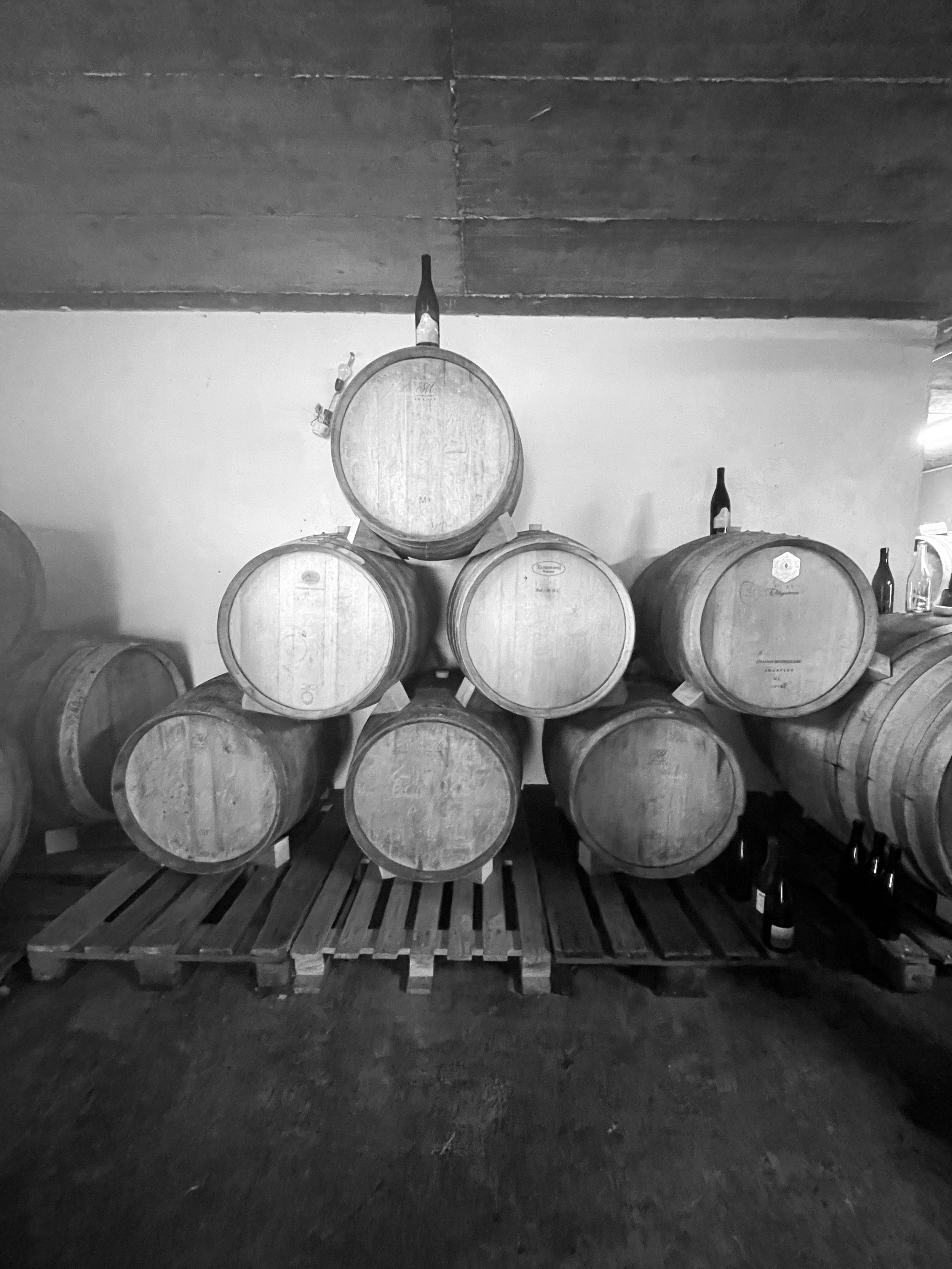
In the winery, everything happens naturally: zero inputs, no fining, no filtration. The magic of the vintage operates on its own. Certain grapes are destemmed through a manual sieve which allows final sorting, while others go into maceration as whole harvests. All these decisions are made in the final stretch before harvest and can vary depending on the profile of the vintage. Fermentations are fairly long, often ending in spring, with aging on lees. For the 2022 vintage, no barrels were used—instead stainless steel or fiber vats. From 2023 onward, all cuvées are aged in Burgundian demi-muids [^249^][^206^].
No Fining
No Filtration
Three communes, ten varieties, 30+ year old vines—diverse soils from 600 to 850 meters.
Meters Altitude
Vines are planted between 600 and 850 meters above sea level across three distinct communes—Savièse, Ayent, and Vetroz—each contributing different soil types and exposures to the range of wines [^248^][^249^].
Year Old Vines
All vines are minimum 30 years old, with deep root systems that have taken root in thousand-year-old subsoils. Yields are controlled at approximately 40 hectoliters per hectare—lower than conventional farming to ensure concentration [^248^][^249^].
Varieties
Timothée works with around 10 different grape varieties typical of Valais: Petite Arvine, Merlot, Chasselas, Gamay, and others—each vinified separately according to its place of production to showcase origin and preserve authenticity [^249^].
From Petite Arvine to Merlot—each plot vinified separately to express its unique terroir.
L'Arvine Gaie
From Petite Arvine—one of Valais's most celebrated indigenous varieties. Vinified to express the grape's characteristic saltiness, citrus aromatics, and alpine freshness. First vintage 2022. Aged in stainless steel or fiber (2022), then Burgundian demi-muids (2023+). A wine of joy and lightness that captures the high-altitude terroir [^254^][^247^].
Zob of the Dog
100% biodynamically farmed Chasselas from Ayent in the Valais. Chasselas is Switzerland's most widely planted white grape, often underrated, but here given the natural treatment it deserves. Zero/zero (no additives, no sulfites), high-elevation mountain wine with purity and expression. The curious name adds to the wine's playful character [^251^][^264^].
Merlot L'Enchanteur
A Merlot that challenges expectations of the variety in Valais. From old vines (30+ years) at altitude, vinified with minimal extraction and long élevage. Shows the enchanting side of Merlot when farmed organically and handled with care—fresh, with mountain herbs and red fruit rather than the heavy, oaky style often associated with the grape [^263^].
Gamay / Humagne Rouge
Gamay brings lightness and bright red fruit; Humagne Rouge (an indigenous Swiss variety known for its medicinal history and wild character) adds structure and alpine herbs. Both are vinified separately to express their distinct terroirs, then potentially blended or bottled alone depending on the vintage's character [^249^].
Cocagne / Echert
Named after the specific parcels in Ayent where Timothée first began his adventure with Chérouche. These wines represent the beginning of his journey—field blends or single-variety expressions from the Cocagne and Echert vineyards, vinified with the same zero-intervention philosophy [^247^][^249^].
Savièse / Vetroz
Wines from the other two communes in Timothée's portfolio—Savièse and Vetroz—each contributing different soil types and exposures. Savièse brings schist and granite influences; Vetroz offers its own unique microclimate. Each plot is vinified separately to showcase its specific terroir [^249^].
The Sommelier Turned Vigneron
Timothée Place represents a unique path in the natural wine world—from sommelier to vigneron, from advising on wine lists to crafting the bottles himself. His transition, guided by the experienced hands at Domaine Cornulus and the mentorship of Marc Balzan and Andrea Grossmann at Chérouche, demonstrates the collaborative spirit of the Valais natural wine community. His close friendship and shared cellar with Lucas Madonia (another Chérouche mentee) creates a dynamic duo in the Ayent area [^247^][^249^].
With just 1.1 hectares spread across three communes, Timothée proves that small-scale, high-attention viticulture can produce wines of profound authenticity. His commitment to zero inputs, no fining, no filtration, and his willingness to learn from each vintage—"successes, errors, moments of doubt"—places him firmly in the new generation of Swiss natural winemakers. The 2022 vintage, marked by heat and drought, produced powerful wines with remarkable maturity thanks to his meticulous vineyard management. From 2023, the introduction of Burgundian demi-muids signals continued evolution in his winemaking journey [^247^][^206^].
- Trained sommelier (Paris diploma)
- Worked at Hôtel des Bains, Charavines
- Moved to Switzerland 2017
- First employers: Domaine Cornulus (Dany & Stéphane)
- Mentors: Marc Balzan & Andrea Grossmann (Chérouche)
- First plots in Ayent (Cocagne, Echert) 2021
- Domaine La Momoterie established
- 1.1 hectares across 3 communes
- Savièse, Ayent, Vetroz
- 600-850m altitude
- 30+ year old vines
- ~40 hl/ha yields
- 10 different grape varieties
- Zero inputs in cellar
- No fining, no filtration
- Manual destemming via sieve
- Whole harvest or destemmed (vintage dependent)
- Long fermentations (end in spring)
- Aging on lees
- 2022: Stainless steel/fiber
- 2023+: Burgundian demi-muids
- First vintage 2022
- Shares cellar with Lucas Madonia